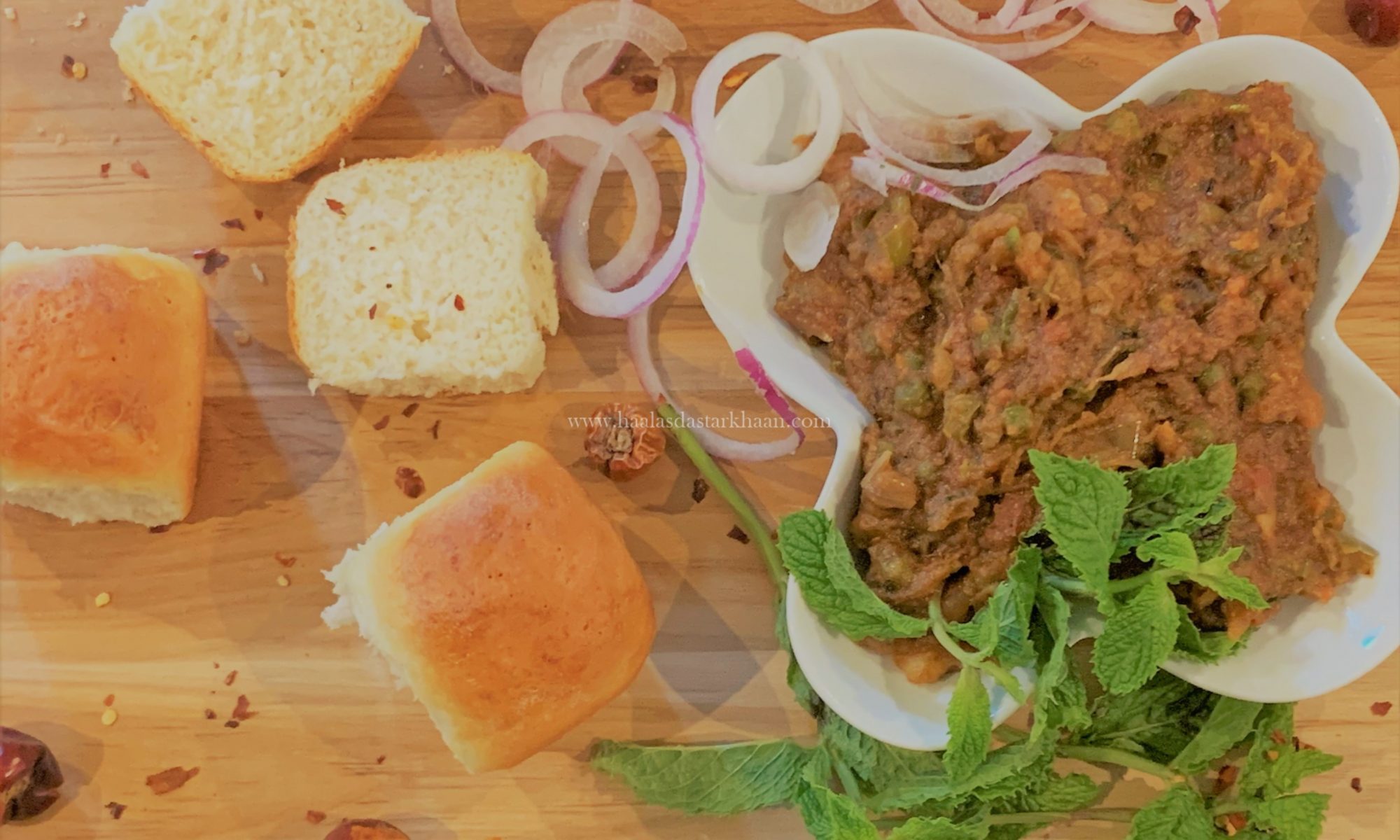
Paav Bhaaji

For me, Pav Bhaji is not just a dish — it’s a memory, a time capsule that takes me straight back to childhood.

I still remember when the Pav Bhaji trend first arrived in my town. I was in elementary school, and almost overnight it became everyone’s favorite food. The rich aroma, the buttery pav, the vibrant, spicy bhaji — it felt exciting and new, like a taste of a bigger world arriving in our quiet little city. My whole family fell in love with it instantly, especially me.

I never got to experience it the way many people did — standing at a bustling roadside stall, eating straight off a hot griddle. I always wanted to, but in the small town where I grew up, it wasn’t considered proper for women to eat at street-side vendors. It sounds like something from another era, yet it wasn’t that long ago — just a few decades. Writing about it now, I’m amazed at how much my town has changed since then. The transformation is exciting, but also a little unsettling.

Small towns have a magic of their own. Life moves slower, people are warmer, and relationships feel closer. Back then, I could walk down the street and run into dozens of familiar faces — neighbors, shopkeepers, school friends, distant relatives. Today, I might still see just as many people, but that easy sense of connection feels softer, almost faded. Progress brings many good things, but sometimes it quietly takes a few precious ones away too.

Since I couldn’t go to the stalls, my father would bring Pav Bhaji home as takeaway, and those evenings felt like celebrations. We would gather around, tearing into buttery pav, scooping up the spicy bhaji, savoring every bite. Eventually, my mother began recreating it at home using store-bought Pav Bhaji masala, and soon her version became just as beloved. Over time, she developed her own blend — simple, balanced, and deeply comforting. It’s the same masala I still use today, and every time I cook with it, it feels like bringing a piece of her kitchen into mine.

I’ve made Pav Bhaji countless times over the years, and it never loses its charm. My mother liked to add a variety of vegetables — cauliflower, carrots, peas — making it wholesome and hearty. I, however, prefer a simpler version with just potatoes and bell peppers. Somehow, that minimal approach brings me closer to the bold, buttery street-style flavor that first captured my heart.

The pav in this recipe are homemade too, and they’re surprisingly easy to make. If you follow the steps carefully, you’ll be rewarded with soft, pillowy buns that rival any bakery version. Of course, these buns are wonderful with many dishes, but paired with bhaji, they become something truly special.

For the best experience, slice the buns in half, spread a generous layer of butter, sprinkle a little Pav Bhaji masala, and toast them on a hot tava or pan until golden and fragrant. That simple step transforms them completely — crisp on the outside, soft on the inside, and infused with buttery spice.

Some foods nourish the body. Others nourish the heart. For me, Pav Bhaji does both.

Click and make your own Paav at home
Homemade Buns / Paav – Haala’s Dastarkhaan

Bangalore Muslim Kheema

Kheema curry can be prepared in countless ways, each region and family giving it a personality of its own. Growing up in Rajasthan, the kheema I knew was always my mother’s — simple, comforting, and almost always reserved for picnics and long road trips. She would typically make Kheema with aaloo (potatoes) or Kheema with matar (peas). What I never saw in her kitchen was a version loaded with multiple vegetables together.

I do remember her mentioning that my grandmother liked adding cauliflower to kheema, though I don’t recall ever tasting it myself. And to be honest, I’ve never attempted it either — mostly because Mr. Parveez isn’t a fan of cauliflower. Some culinary traditions quietly skip a generation, especially when family preferences step in.

Then there were the unforgettable versions from our travels. In Old Delhi, near the Jama Masjid area, we would wake up early just to enjoy a hearty breakfast of kheema served with hot tandoori roti. Sometimes it would be accompanied by nahari or paaye — rich, slow-cooked dishes that could turn any ordinary morning into something special. Another favorite that captured my heart was Mumbai’s Kheema Paav, with its slightly tangy tomato base, often made with chicken, and served with buttery toasted buns. Those breakfasts are memories I still cherish, and recipes for both the kheema and the paav will be coming soon.

But the recipe I’m sharing here is completely different from all of those. This one comes from Mr. Parveez’s family — a style of kheema commonly prepared in many Bangalore Muslim homes. Passed down from his mother, we fondly call it “Ammi wala Kheema,” because it carries her unmistakable touch and warmth.

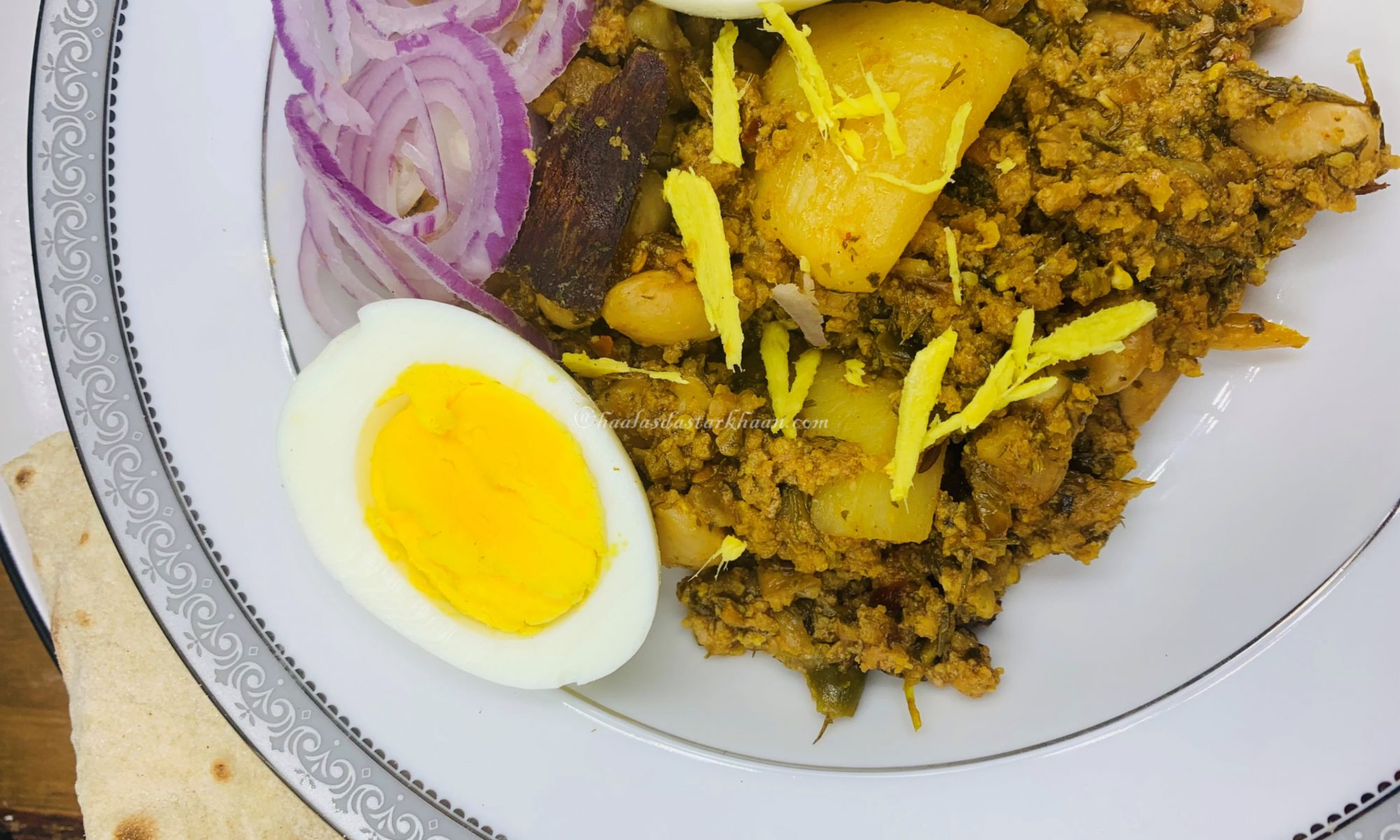
The preparation begins with finely chopped onions slowly sautéed in oil or ghee along with fragrant whole spices. Ginger-garlic paste follows, then the goat kheema, ground spices, and tomatoes. What truly sets this version apart, however, is the generous addition of vegetables — potatoes, beans, fresh fenugreek leaves, and dill leaves — all simmered together until the flavors meld beautifully. The herbs add a depth and freshness that makes this dish both hearty and uniquely aromatic.

Although it’s traditionally enjoyed as a breakfast dish, this kheema is wonderfully versatile. It tastes just as delicious for lunch or dinner, served with roti, bread, or even rice. Comforting, wholesome, and deeply rooted in family tradition, this “Ammi wala Kheema” is more than just a recipe — it’s a piece of home on a plate. 🍲✨

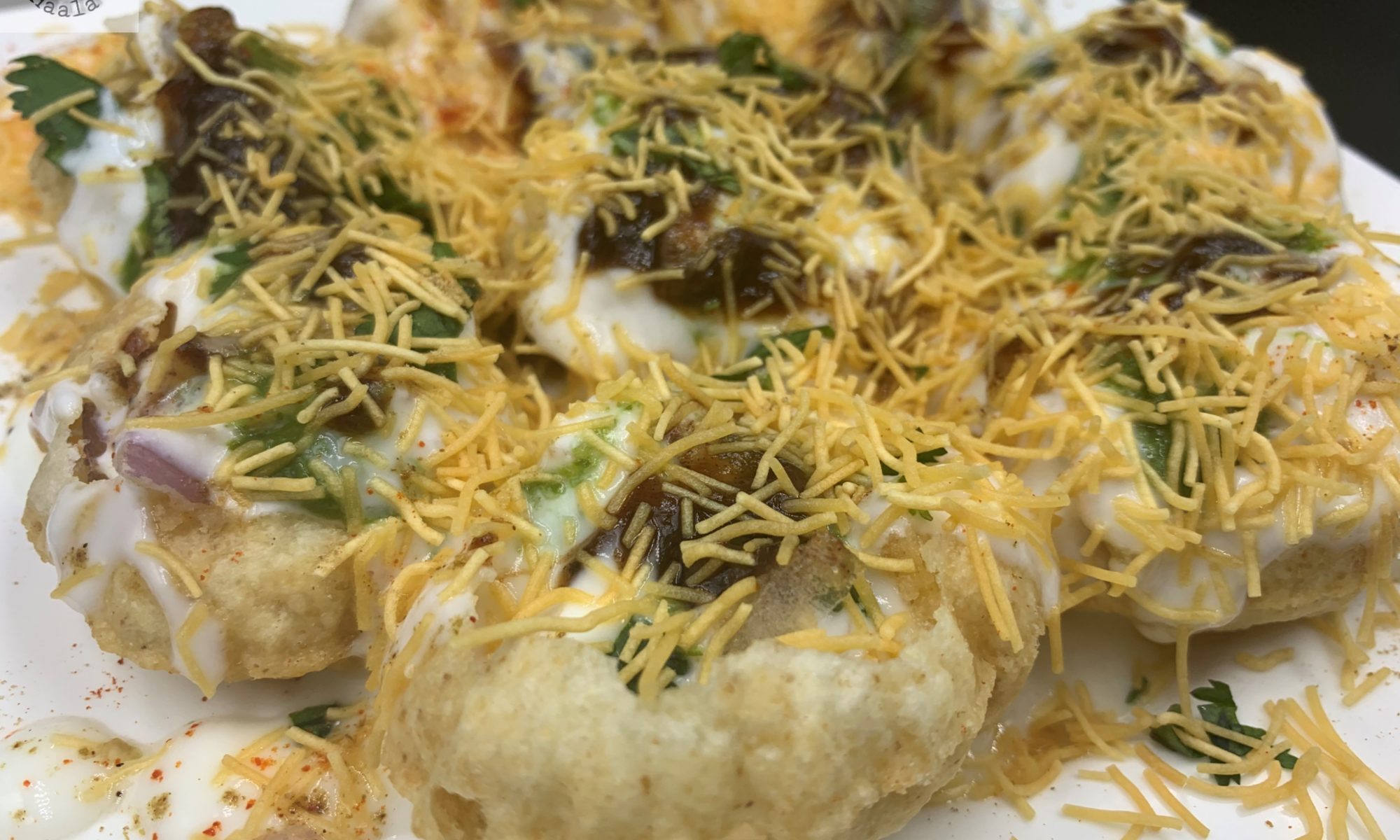
Dahi Puri Chaat

We are a family that loves chaats. Anything and all kinds of chaats are made in our kitchen and make it to our table. My chaat venture was restricted to Aaloo tikki chaat and occasional paani poori. Mr. Parveez always loved eating chaats, and he would even make Masala Poori at home when we got married. After we got married, he tasted Aaloo tikki chaat and he loved it. Since the, I would always try and experiment with different kinds of chaats, including chaats with sprouts, fruits and beans.

Chhole make an awesome addition to every chaat. Once you mix them up with onions, coriander leaves, boiled potatoes, green chilies, chutney and yogurt, it really absorbs the flavors and tastes delicious. This chaat is crunchy, crispy and full of sweet, sour and mouth tingling flavors. It tantalizes your taste buds opening up to so many different tastes.

This is a quick answer to chaat time craving. The whole process never takes too long, specially if you have boiled chickpeas. I usually soak and boil mine and make small packets in the freezer. Though using canned chickpeas is absolutely fine as well, but I just prefer mine to be homemade, since it isn’t too time consuming. Chaat cravings always need quick answers and this is soul satisfying to any chaat lover. Enjoy!!!

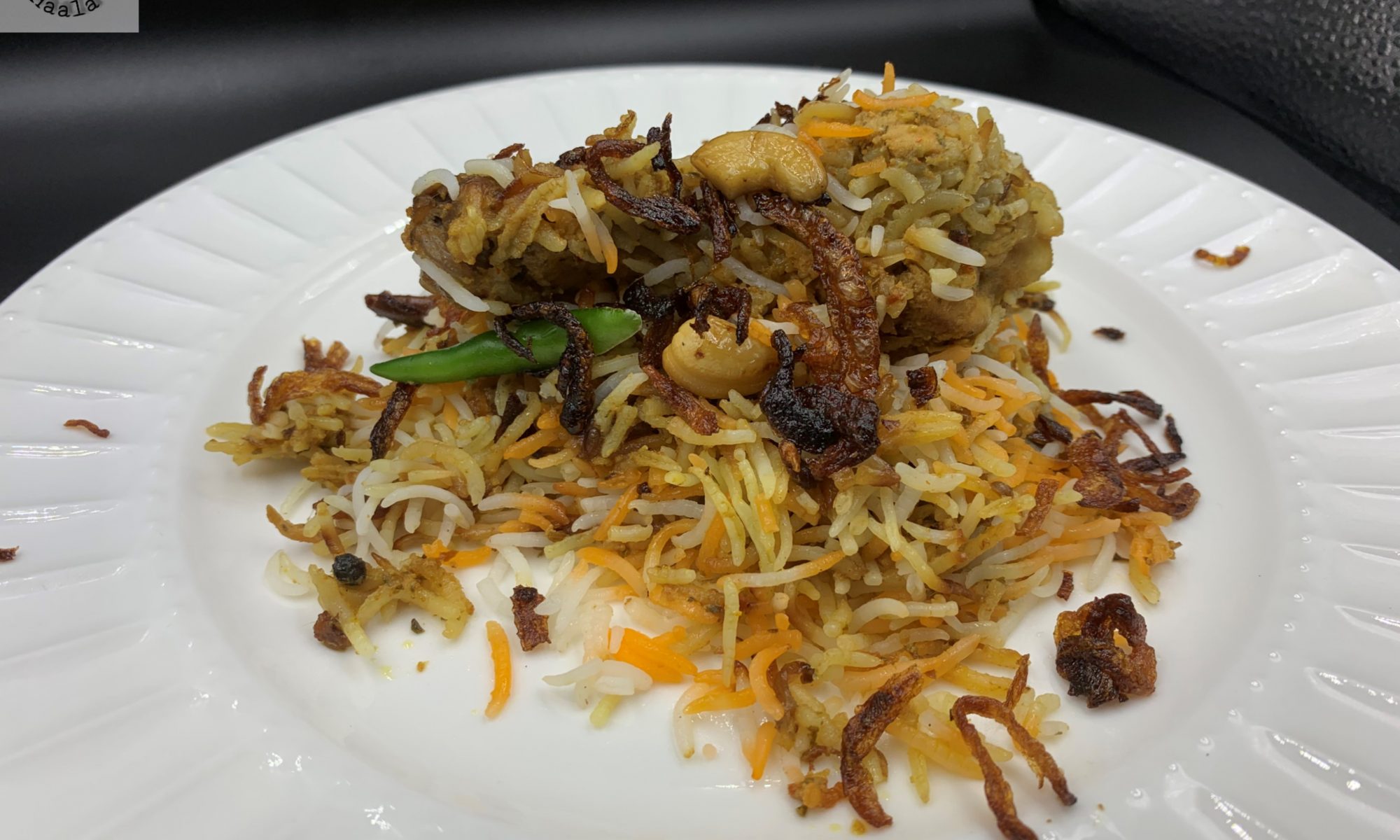
Kolhapuri Chicken Biryani

Biryani is an absolute classic that needs no introduction. India offers so much on its culinary platter but the one dish Non vegetarian Indians unanimously love indulging in is the mouth-watering biryani. With local and hyperlocal variations having evolved into distinctive styles of biryanis, one is spoilt for options when it comes to experiencing this melting pot of flavors. The delicious complex blend of spices are the reason behind the love this dish gets from people of all generations.So if you are a die-hard fan of this delicious dish, take things up a notch and tease your taste buds a little more with the story of what makes biryani so extraordinary.

Though it may appear to be a dish indigenous to  India, in reality the dish originated quite far away. Biryani is derived from the Persian word Birian, which means ‘fried before cooking’ and  Birinj, the Persian word for rice. While there are multiple theories about how biryani made its way to India, it is generally accepted that its a gift to the Indian cuisine from the Mughals. Along with extraordinary skills of architecture and artillery, they also came along with the beautiful flavors of orange blossom, screw pine water and Rose water mixed with saffron and the skill of using the beautiful spices India offered with other spices from the middle east and create so many non vegetarian dishes that would make Indian/Pakistani cuisines thank them till the end of the world.

One legend has it that the Turk-Mongol conqueror, Temur, brought the precursor to the biryani with him when he arrived at the frontiers of India in 1398. Believed to be the war campaign diet of Temur’s army, an earthen pot full of rice, spices and whatever meats were available would be buried in a hot pit, before being eventually dug up and served to the warriors.

The Nizams of Hyderabad and Nawabs of Lucknow were most famous for their appreciation of the subtle nuances of biryani. Their chefs are renowned the world over for their signature dishes. These rulers popularized their versions of the biryani, which by the way, just in Hyderabad is around 20-25 varieties along with mouth watering accompaniments like mirchi ka salan, Dahi ki chutney/ Raita, khatte baingan, Dalcha and baghare baingan. All different regions in India offer different accompaniments with the Biryani that they serve.

The perfect biryani calls for meticulously measured ingredients and a practiced technique. Other than the technique, spices also play a critical role in dishing out a good biryani – some recipes call for a very limited use of spices while others use more than 15 different spices. Meat or chicken is often the main ingredient, though in some coastal varieties, fish, prawns, and crabs are also used. Use of rose water, screw pine water / kewra water in biryani is also common, a practice prevalent since the medieval era. The pot, sealed around the edges with dough, or covered with a cloth with the lid or something heavy is placed on the lid that doesn’t allow the steam to escape and for the meat to tenderize in its own juices while flavoring the rice.

This recipe of Biryani as the name indicates is from the princely state in Southern Maharashtra, Kolhapur, also popular for its footwear. Though the original recipe also has Raisins, but I have not added them as I do not enjoy sweet with spicy in my Biryani. You can always add it if you prefer. This recipe is super spicy, since most Maharashtrian foods are spicy so this one is a little more for the daring ones. But for sure a recipe that’s a must try for any Biryani lover.


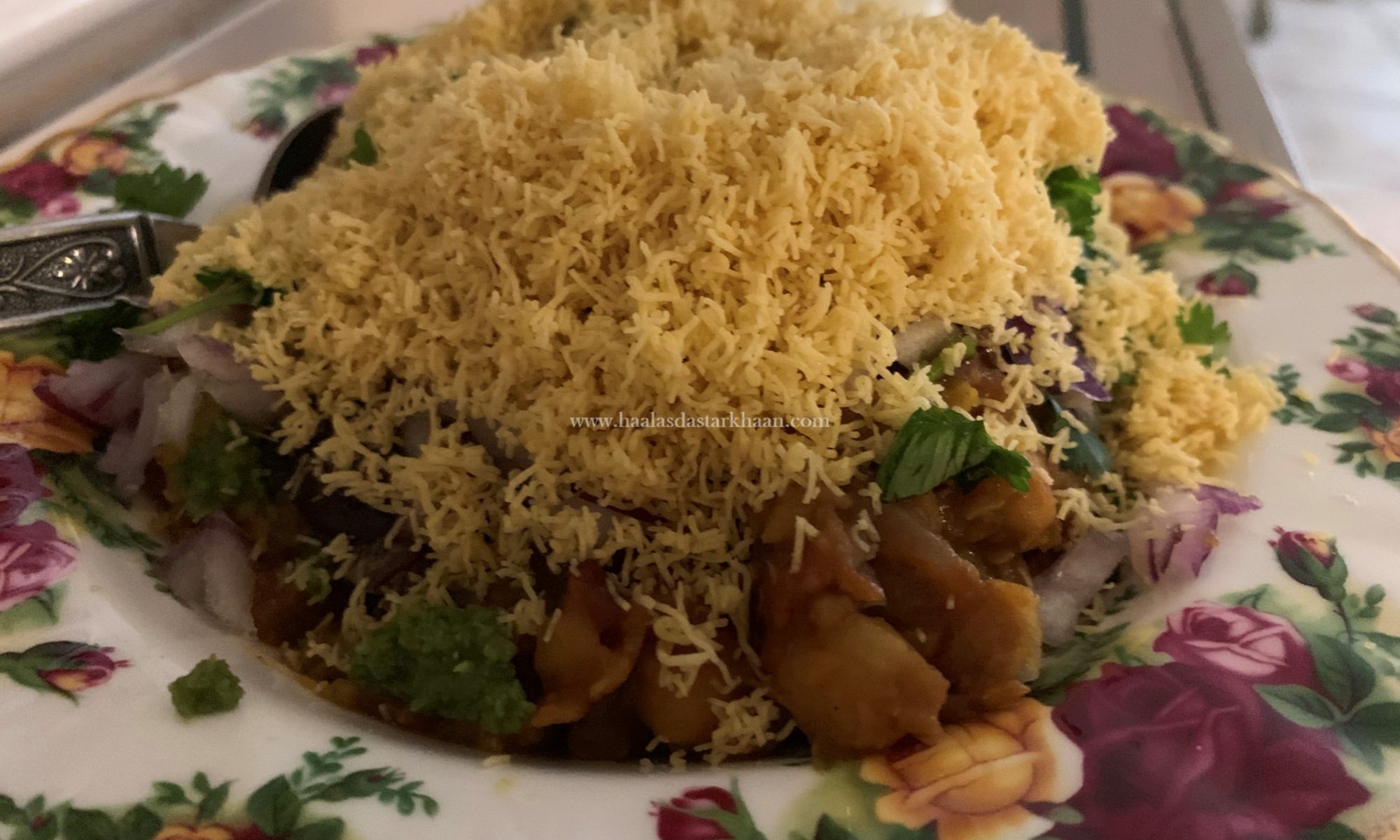
Chhole Tikki Chaat

I belong to Rajasthan, the land of flowing ghee, beautiful people and the most colorful state of India. Marwaris love chaats, specially the ones that are fried and warm and trust me, no one can make chaats and sweets better than Marwaris. That’s the reason we always see most sweet vendors and chatwalas as Marwaris.

I have been a big fan of chaats and this happens to be one of my favorites. It takes a little time to make it, but one bite into this awesomely delicious food and all the effort seems totally worth it. This chaat is also close to my heart because this was the first dish that portrayed my culinary skills and he felt proud that he is getting married to a promising cook.

Now, I learnt to make this chaat through a family friend, who would offer to cook food for us every Ramadan. Honestly, that was the first time I realized that such good street food can also be cooked at home as well. I was 11 then, and I would always be a little helper. With time, I learnt how to make it by myself and it always has pleased everyone who tried it.

The tikkis are made with boiled potatoes mixed with spices and rolled in mix of Maida and Corn Starch Powder, before pan frying. The corn starch makes the tikkis super crunchy and that is exactly how you want them to be. Specially once you add on hot chhole, the tikkis can get soggy very quickly. Corn starch helps it stay crunchier for longer.

The chhole have to be spicy and tangy, giving that perfect chaat taste to the tikki chhole. Adding Tamarind and dry pomegranate powder to chhole makes it taste just like the street foods in India. I usually soak my chickepeas, boil them and once cooled down, I pack them in separate ziploc bags and freeze them. I like to make loads of chaats that include chickpeas and this is one of my favorites. So, not having chickpeas, since they need to be soaked overnight, is the last thing I need to worry about if I feel like making chaat.

Assembling this chaat is what makes it taste more delicious. You can make the best Tikkis and chhole, but if you don’t assemble the chaat the right way, it wouldn’t give you flavors you are looking for. It has to be served warm on top of potato tikki and further garnished with chopped onions, coriander leaves, Tamarind date chutney, Green chutney and thin sev.

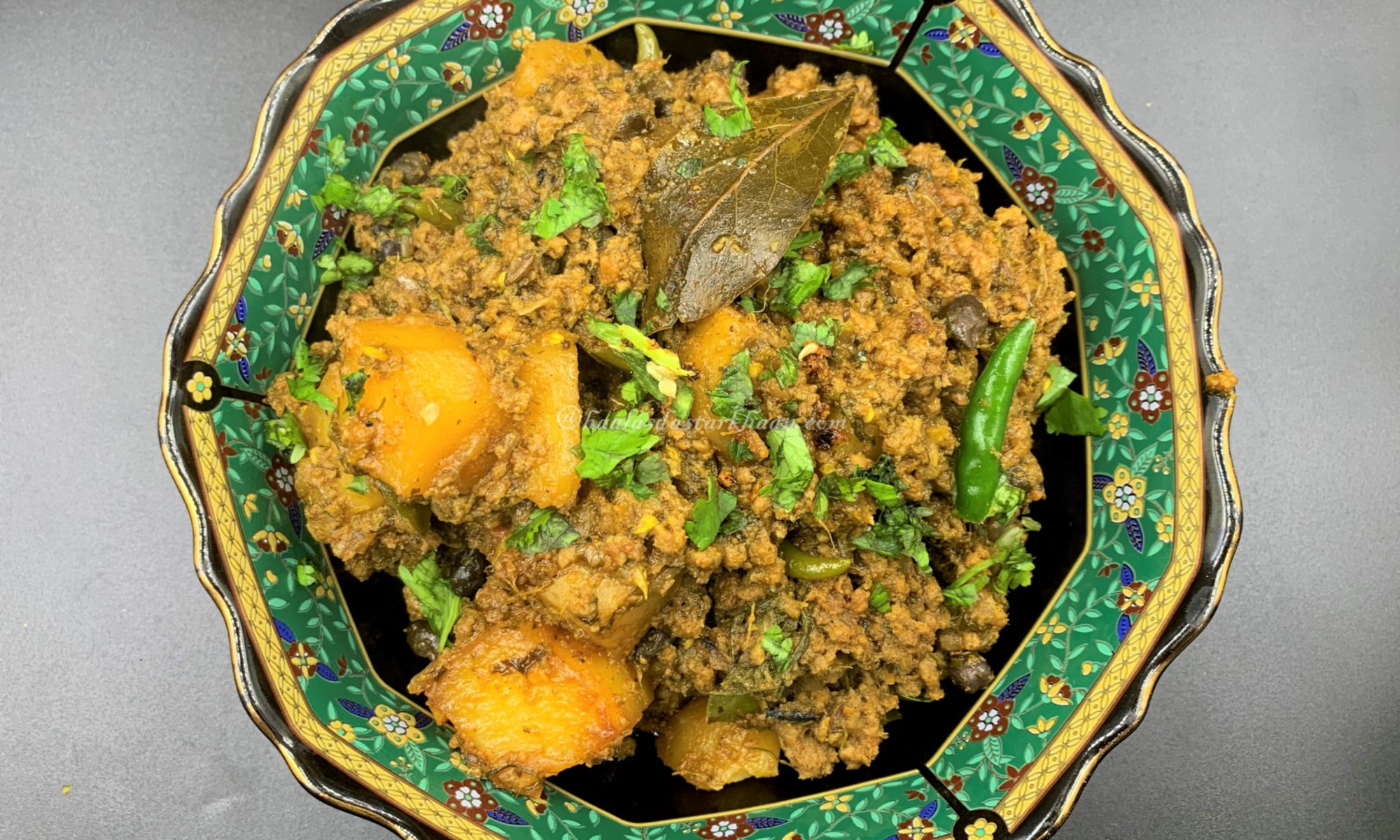
Hare Chane aur Kheema

Goat Kheema is a popular dish in Muslim families, often served for breakfast. When talking of Kheema, did you know that Kheema is not only made differently in India from Pakistan or Bangladesh but its made differently in different regions of India.

The north part of India makes Kheema with Cauliflower and serve it with Naan, East side makes theirs with Potato and serves them with Parantha, Delhi loves making it plain and also serves it with Tandoori Roti, West loves it Peas, Mumbai has it completely distinct and serves it with paav and down south they add methi [fenugreek leaves] and dill leaves to Kheema and serve it with Kerala Parantha. All the varieties are different and awesomely delicious and its hard to pick one over another.

The word ‘Kheema’ is inspired from the Persian language, in which minced meat is referred as, “Kiyma”. Kheema was a popular breakfast staple in the Mughal cuisine and the history says that it was introduced in the Indian cuisine by Mughal Emperor Akbar, who was so fond of new recipes and would love the merge of Persian and Indian recipes. It was an age when the royal families took their culinary affairs almost as seriously as their administration.

Being from the Rajasthan, I have always loved the Kheema curry in Mumbai and Delhi. Nahari and Kheema in Delhi used to be my favorite breakfast. My mom always made Goat Kheema with peas, and it used be one of the dishes that she would always make for picnics or day trips and the best part was that we enjoyed and relished them with Bread as well. My Mother in law also adds Lima Beans to Kheema and I loved that addition to kheema.

Then one day on my visit to our local Indian store I found fresh Green chana. They looked so fresh and I bought them thinking I would like to make something out of it. I asked Mr. Parveez and he then asked me to try adding them to Kheema and I did and the result was fabulous. I like making my Kheema with Boneless meat, but you can always get the minced meat from a meat store. Similarly, if you can’t find Fresh Hare Chane, you can always use frozen ones. Kheema curry in any which way, made with this recipe will always come out delicious.

The recipe is great and you can serve it with Naan, Parantha and even buns.

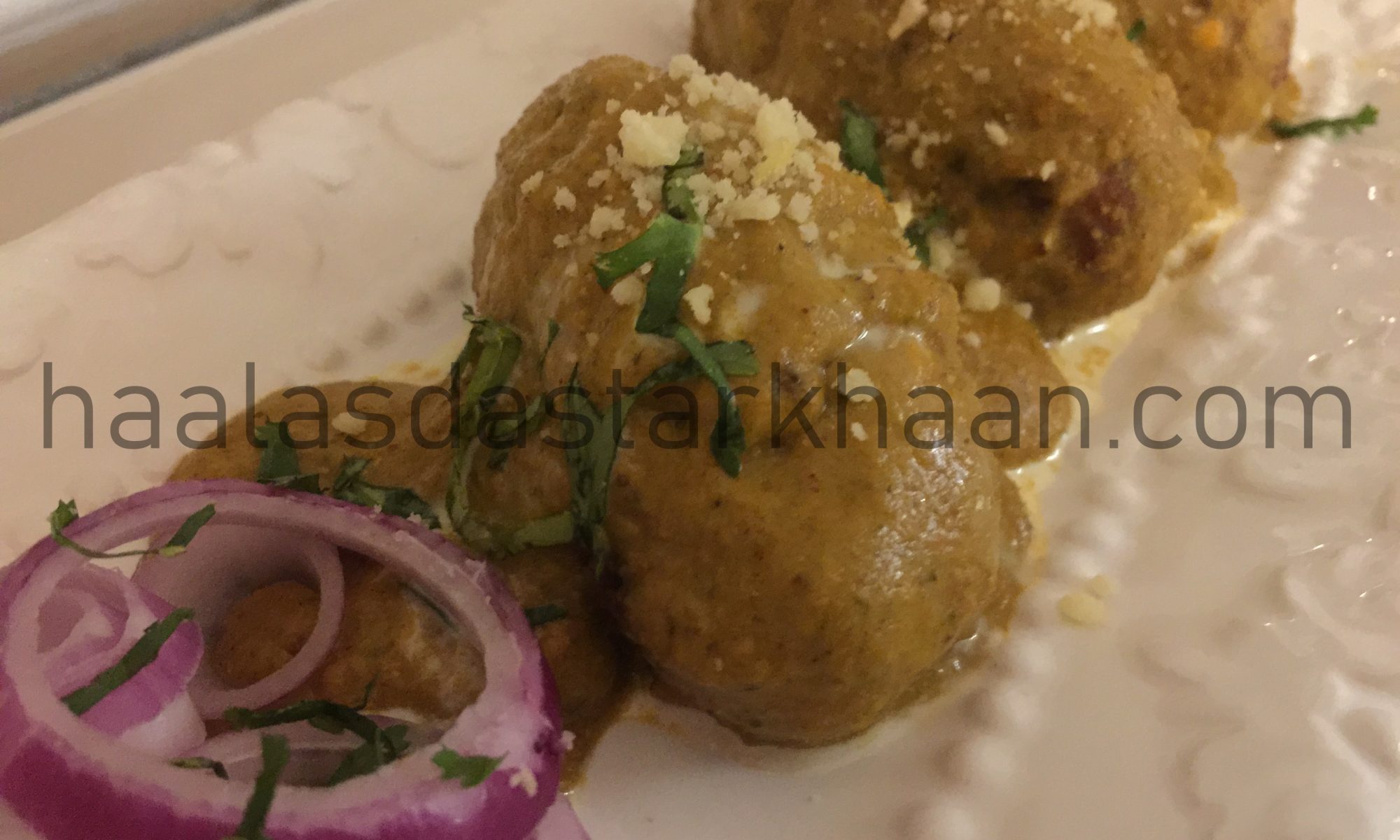
Malai Kofta Curry

I belong to Rajasthan and I love almost all dishes that are from Rajasthan. Though Jodhpur, my home town is very popular for its Laal Maas, but its also very well known for its “asli ghee mein bani dishes”. One of my all time favorite is Malai Kofta. My home town, Jodhpur has some super amazing small restaurants that serve super delicious Malai Kofta. These restaurants are so small that they will never show up on a google map, but a true Jodhpuri knows how to get around and satisfy their taste buds.

Growing up, I loved going to all those restaurants, it was just so much fun and now, every time I visit my hometown, I revisit all these restaurants for the love of my hometown food. this is the closest I could get to the Malai Kofta flavor of Marwar.

Aaloo Palak Methi Ki Sabzi

My Hometown had dishes like Aaloo palak and aaloo methi, but my mom never cooked all three together. I have never been much of a fan of “green leafy veggies”…A truth that I never share with my boys, though…LOLzzz.  Like most kids, it was a hard job for my mom to feed the greens to me. I believe as a kid it was the fear that made me eat and as a teenager and young adult, it was just to not make her feel bad.

Honestly, sometimes when I think of it, I feel that we as parents don’t like experimenting much. I don’t mean everyone, but most of us. We follow the standard recipes passed on from generations and fail to understand that if we didn’t like it and expected changes, its the same with our kids. Its less of empathizing with the situation and dealing with it differently.

So, after I was married, one fine morning my hubby, who happens to be an excellent cook himself decided to surprise me with this “lovely sabzi” ….At first i was a little apprehensive, but then I didn’t want to fuss and make a big deal, so, with the same mindset to what I had for my mom’s greens, I tried it out.

To my surprise, I actually liked it. It has palak, methi and potatoes and I loved the flavors of this dish. Years later when I compared it to my mom’s I realized that it was the absence of whole masalas and powdered masalas that my taste buds enjoyed. Something we all fail to understand. Each one of us are born with different taste buds and its your taste buds that like certain flavors. For example, in Rajasthan we love parantha with aamras during Mango season. Where as, down south they enjoy bananas with parantha. So, for my taste buds, I prefer my green cooked with lighter spices and give out more flavors of the green.

Though even I make this dish now, it still tastes better when Mr. Parveez makes it. And now it’s a family favorite. Even my boys never  fuss over  this. A must try for all.

Kolkata Biryani

Biryani ranks at the top of my favorite food list. Whenever there is a special occasion in my house, the very first dish comes to my mind is Biryani. Honestly, Friday dinners are kind of a big deal in my house and Biryani is the main part of the dinner.

Biryani in Kolkata was introduced by Nawab Wajid Ali Shah from Lucknow. With Biryani every region and state added there own flavors, according to the produce they had in their region/ state. Nawab Wajid Ali Shah was dethroned by Britishers and deported him to Kolkata. Luckily, he was accompanied by people who worked for him including his kitchen staff. Once in Kolkata, Nawab Wajid Ali Shah tried to make a little place provided for him to live. You could take a Nawab off the throne but you cannot take the elegance and Royal heart he has. he would ask his Kitchen staff to make Biryani, and would feel low about not having enough grocery specially meat/ chicken. To make th Nawab feel better and to be able to have him feel good about feeding everyone around him with the same love and respect he had in Lucknow, the chef added Potatoes and Eggs to the Biryani. This is how the famous Lucknow Biryani added its flavors and gave birth to Kolkata Biryani.

That’s why Biryanis from different places taste so different. The basic similarity is that every Biryani is cooked with meat and rice in dumm. It’s a dish adored not just all over the sub-continent, but all around the world. Its one of the most popular Indian/ Pakistani dish. However, Vegetable/ Paneer biryani is also well accepted among vegetarians.

Biryani should ideally be prepared in dumm, where the meat and rice are cooked together in an air tight container over low flame. I have posted the recipe of dum biryani and so many different varieties of Biryani from different regions and states of India. Most recipes also have some history/ story of how the recipes were originated, which is always a delight to read, know and share.

So this time I am sharing with you an easier version of dum biryani which is followed in most of the biryani houses in Kolkata. This Biryani is not too spicy. The Biryani has potatoes  and the use of Khoya and milk makes the Biryani rich.

Hyderabadi Korme ki Biryani

Hyderabad is popular for its food, especially for the Biryani. But did you know that Hyderabad itself offers at least 100 varieties of Biryanis. And trust me, each Biryani is completely different in taste from the other. The cooking style, the spices and different times of adding the spice changes the complete taste and to understand that better, you have to be a Biryani lover like me.

This recipe is among one of my favorites, honestly I think they all are and it gets really hard to choose between them. My younger one loves the idea of having potatoes in his Biryani. I have no idea which side he gets it from because me or Mr. Parveez are strictly “meat lovers only” when it comes to our Biryanis and as much as my younger son loves Potatoes, he wouldn’t ever eat vegetable Biryani to save his life. Yupp!!! Its quiet funny . So, this Biryani is one of his favorites.

Korma is essentially , a yogurt based curry to which musk melon seeds, poppy seeds and cashew nuts have been added. It is to this curry that rice is added making the flavor amazing.

Its always worth trying a new flavor. Just make sure you read all the instructions and follow the steps strictly to enjoy the same taste as we did. You can always contact me if you miss out something or need help.