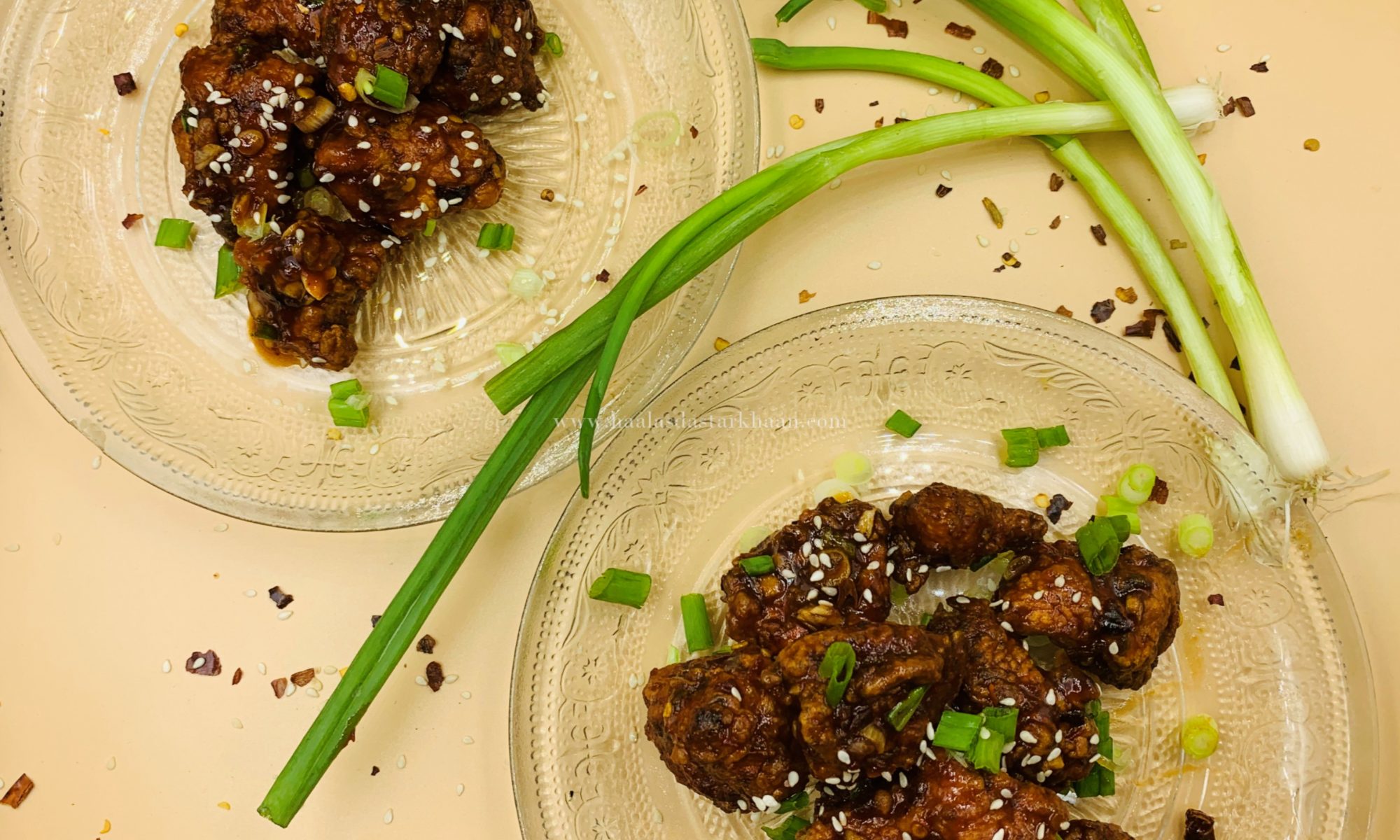
Korean Chicken Bites

Asian cuisine is wonderfully diverse—Chinese, Japanese, Indonesian, Thai, Malaysian, and Korean—each offering its own distinctive flavors while still sharing certain ingredients and cooking techniques. Over the years, we have enjoyed sampling dishes from many of these cuisines, though often limited to seafood. Being Muslim, staying within the boundaries of halal food can sometimes be challenging, particularly when so many tempting dishes traditionally include non-halal meats.

While I do have friends who are comfortable eating non-halal chicken or meat, for us that is simply not an option. I firmly believe that when there are ways and choices available to remain true to our beliefs, it is important to honor them. Fortunately, that has never stopped us from exploring the flavors we love. The beauty of having curious taste buds—and a genuine passion for cooking—is that you can always adapt a dish and make it your own.

This recipe was inspired by a dish I once tried with scallops and instantly fell in love with. Naturally, I made a few adjustments along the way. In its original form, the scallops were neither marinated nor batter-fried, which meant they relied almost entirely on the sauce for flavor. While the sauce itself was pleasant—mild with a gentle kick—I felt the dish could benefit from a little more depth and texture.

When I decided to recreate it using chicken, I introduced a few changes to build those extra layers of flavor. The chicken was first marinated and lightly battered to add both seasoning and a satisfying crunch. Unlike seafood, chicken tends to absorb whatever flavors you give it, so even a simple marinade with spices, seasoning, or just a touch of salt can make a remarkable difference. Whether you are adding chicken to noodles or tossing it in a sauce, that first layer of flavor is something you should never overlook.

For the chicken, begin by marinating it in a mixture of buttermilk, chili flakes, onion powder, garlic powder, black pepper, white pepper, oregano, and salt. Allow it to rest for at least an hour—longer if possible—so the flavors have time to fully penetrate the meat.

Once marinated, coat the chicken pieces in a mixture of flour, cornstarch, and a little salt, then fry them until they turn golden and crisp. This step creates a light, crunchy exterior that pairs beautifully with the sauce.

The sauce is what truly brings the dish together. It is prepared with crushed garlic and ginger, soy sauce, sesame oil, gochujang—a sweet and mildly spicy Korean chili paste readily available in most Asian markets—along with honey, brown sugar, vegetable oil, and red chili flakes. Allow the sauce to cook until it thickens slightly, then toss in the fried chicken pieces, coating them thoroughly so every bite is infused with flavor.

For garnish, scallions and sesame seeds work beautifully. While scallions can certainly be added directly to the sauce, I prefer sprinkling them on top just before serving, allowing them to remain crisp and provide a pleasant contrast in texture.

Substitute for Buttermilk?

To make buttermilk at home, take the same quantity of milk as the buttermilk required and add 1 tablespoon of lemon juice to it. Mix well and let it rest for a few minutes before adding the chicken.

The flavor of this chicken is a perfect balance of sweet and spicy, making it an excellent choice for all taste buds—kids and adults alike—unless someone prefers completely mild food. I find this dish a great hit for playdates, family gatherings, or small get-together parties.

Cooking in advance

You can fry the chicken bites and keep them in the oven. The oven needs to be preheated. Keep it on warm or at 200°F. Anything above it would overcook the chicken, making it chewy or burning it.
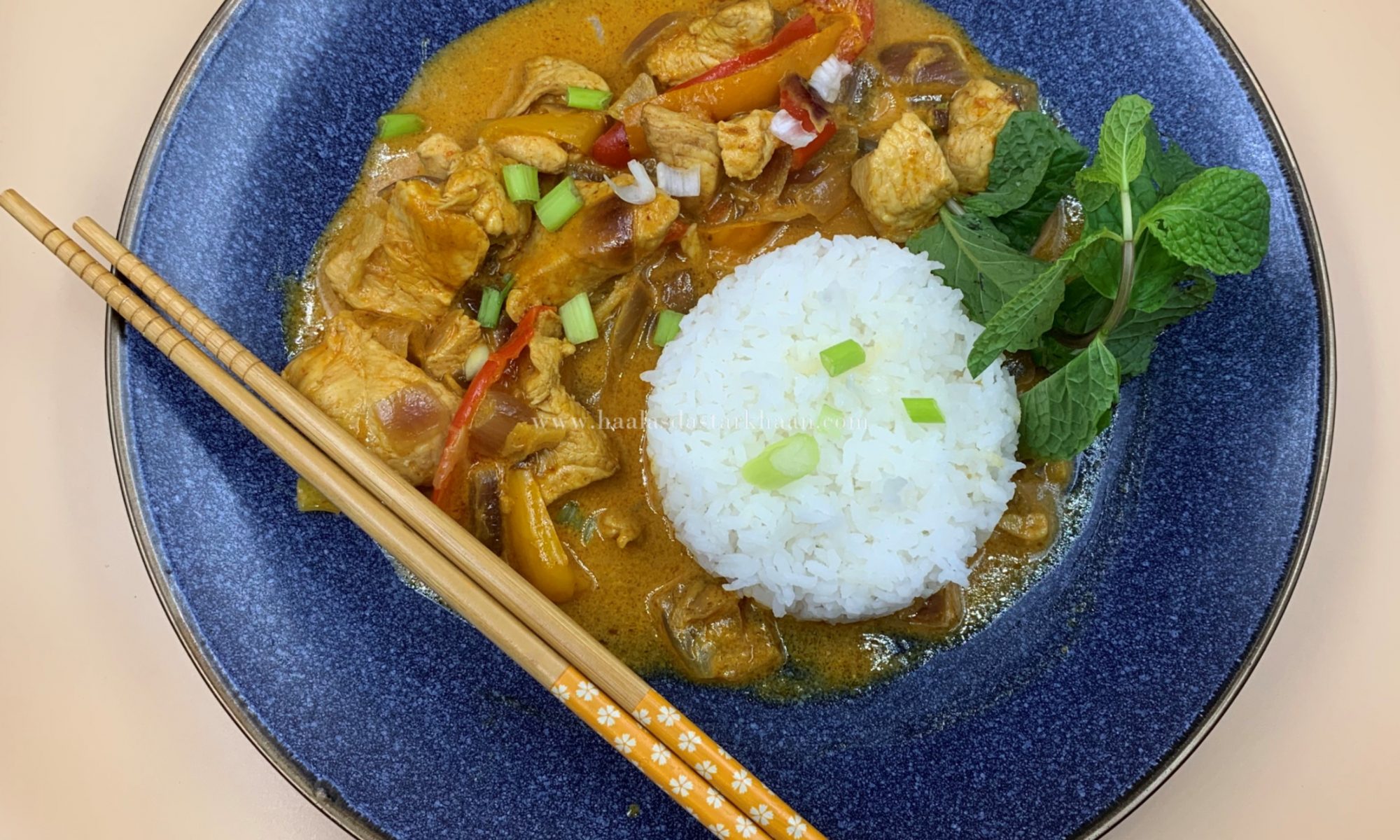
Thai Chicken Curry

Malaysian and Thai cuisines have always been favorites in our home, though finding halal options can sometimes be a challenge. It was actually Mr. Parveez who first introduced me to both. What I appreciate most about these cuisines is how familiar their flavors feel. There is a comforting connection between Indian food and many Southeast Asian dishes, where similar ingredients create layers of warmth and depth. Thai cuisine, for instance, often relies on ingredients such as peanuts, red chilies, and coconut milk or coconut cream, producing a beautiful balance of spice, sweetness, and richness—flavors that feel both comforting and intriguingly different at the same time.

Since we only consume seafood, we often miss out on experiencing certain dishes from various cuisines. Preparing them at home, therefore, becomes our way of exploring those flavors—and in many ways, it turns out to be a blessing in disguise. Not only does it allow us to experiment and learn new cooking styles, but it also offers a healthier approach to enjoying these dishes. Cooking at home means choosing fresh ingredients, controlling exactly what goes into the food, and serving it immediately. That freshness not only enhances the flavor but also adds genuine nutritional value, making every bite feel lighter, brighter, and more satisfying.

This particular curry is wonderfully simple to prepare. For convenience, I used a store-bought Thai red curry paste. Since it was my first time attempting this dish, I wanted to stay close to the authentic flavor profile rather than risk altering the balance of spices too much. For the vegetables, I included bell peppers, onions, scallions, and garlic, though the choice is quite flexible. Baby corn, snap peas, or other vegetables can easily be added. That is one of the joys of Thai curries—their versatility allows each cook to create a slightly different combination of flavors and textures with every preparation

Serve it with some boiled Rice and enjoy it warm.

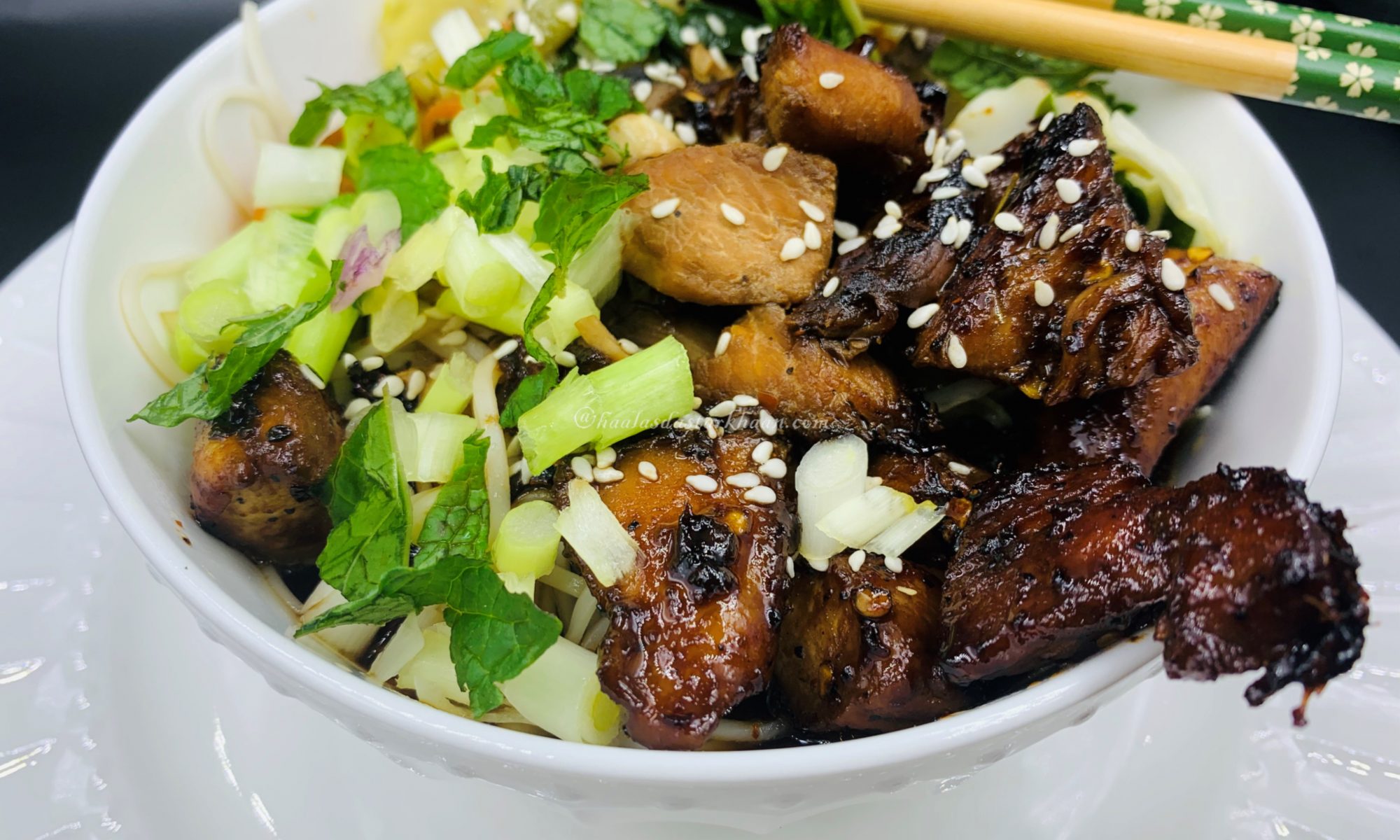
Chicken Ramen Noodles

This Japanese dish was made almost without any prep work. My boys watch some Japanese show which had the character in love with Ramen Noodles and the boys had been on about how delicious the dish looks. now, I have never tried Ramen Noodles only for a simple reason that we never find any Halal Japanese restaurants. And, honestly they never appealed me to try out the seafood version.

But is there any way I could have my boys think the same way. Oh! No, never. They are just out and about and want to try everything under the sky that’s religiously permissible. There are barely any restaurants that serve Halal Asian food around us and my boys are at an age where they really like trying different varieties and since, their mom can cook well and enjoys cooking different cuisines, they just trick me into trying everything they want.

So, I started looking into different recipes over the internet and with 3 hours for research. Yes, 3 hours is all I got because they just started behaving worse than me when I was pregnant with them. The more confusing part was that I didn’t even have basic ingredients. Most recipes I saw have Buk choy, Lemon grass, Broccoli but all I had was Spinach, carrots, Mushrooms, cabbage and zucchini. I could have added Onions, but I think onions have a pretty distinctively sharp taste and adding them to something that soupy. Also onions tend to get a bit too soft and the mushiness in the soup, so avoiding onions is better.

Though I am not a pro at cooking Japanese food, but I am becoming a big fan and try to make them as close to the actual food flavors as I can. A few changes here and there to make it more adaptive to our taste. This is one of the amazing ways of serving your kids more vegetables. Hope you like and enjoy it just the way we did.

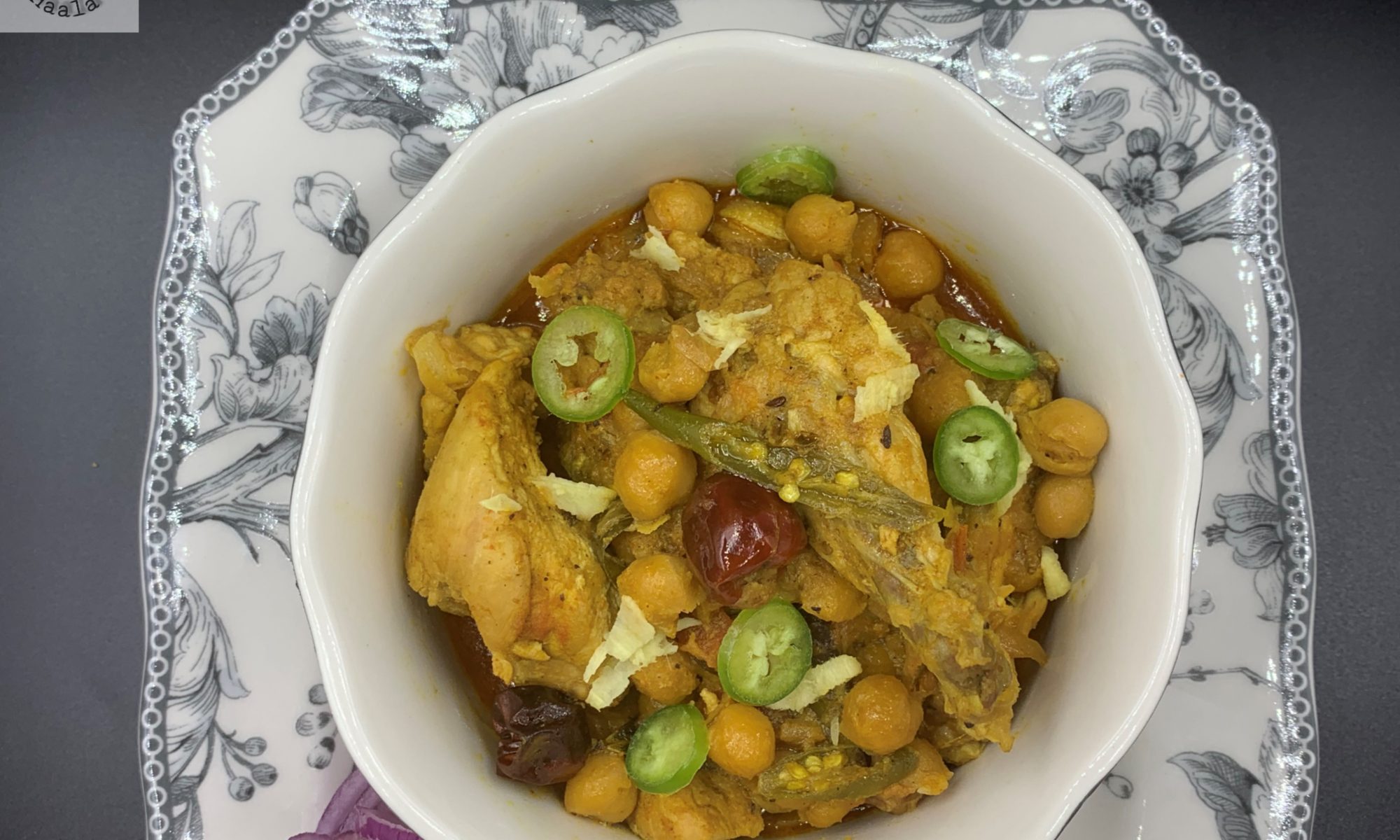
Lahori Murgh Chhole Curry

Lahori Murgh Chhole Curry is a classic and time-honored Pakistani dish, deeply rooted in the culinary traditions of Lahore and an integral part of Punjabi cuisine. Long associated with the city’s vibrant food culture, this dish reflects the warmth and simplicity of everyday Lahori cooking. Interestingly, despite its cultural significance, many natives of Lahore regard Murgh Chhole as a routine household preparation, often overlooking how distinctive and celebratory it may appear to those outside the region.

Traditionally enjoyed as a breakfast dish, Lahori Murgh Chhole is most commonly served with tandoori roti or kulche, much like the beloved nihari. However, its versatility sets it apart—it pairs equally well with steamed rice or soft phulkas, making it suitable for any time of day. Rich in flavor yet comforting in nature, this dish beautifully represents the understated elegance of Punjabi home-style cuisine.

One might wonder what inspired me to cook Murgh Chhole Curry. The motivation, in fact, comes from an Indian chef whose work has inspired countless home cooks, myself included. In one of his shows, he shared a memorable story from his college days in Boston, when he traveled to New York City and dined at a small restaurant owned by a Pakistani chef. After his very first bite, he was so taken by the flavors that he asked for the recipe. The owner, in a generous gesture, wrote it down roughly on a napkin—in Urdu—which the chef still treasures to this day.

That story deeply resonated with me. I firmly believe that every dish carries a story within its flavors, and Murgh Chhole Curry is no exception. While this may not be my own lived experience, it is a narrative that I return to each time I cook, eat, or even read about this dish—and one that, I hope, will stay with you as well.

While this recipe is not directly sourced from that beloved chef, it is very much shaped by the inspiration I have drawn from watching culinary shows that celebrate diverse cultures and regional cuisines. These programs often focus on the spirit and technique behind iconic dishes rather than precise measurements or detailed ingredient lists. As a result, much of the interpretation is left to the cook.

I followed the methods and visual cues shared in these shows as closely as possible, adapting where necessary. That process—adjusting quantities, balancing spices, and refining flavors—has been one of the most enjoyable aspects of recreating this dish. The freedom to experiment is where the true joy of cooking lies, allowing each version to carry a personal imprint while still honoring its cultural roots.

This curry was prepared using ghee, though a neutral cooking oil may be substituted based on personal preference. The process begins by tempering the ghee with small dried red chilies, fennel seeds, cumin seeds, cloves, a cinnamon stick, green cardamom, and a bay leaf, allowing the aromatics to release their essential oils. Finely chopped onions and curry leaves are then added and sautéed until the onions turn a light pinkish-brown, followed by ginger-garlic paste.

Next, red chili powder, turmeric powder, black pepper powder, coriander powder, and salt are added and gently cooked before incorporating the chicken and pre-boiled chhole (chickpeas). Chopped tomatoes, green chilies, and yogurt are then mixed in, creating a rich and well-balanced gravy. The dish is finished with a garnish of sliced ginger and jalapeños, adding both freshness and heat.

This preparation results in a truly satisfying and flavorful dish. If you have not yet experienced Murgh Chhole Curry, I encourage you to try it—it is well worth the effort. It pairs beautifully with roti, paratha, tandoori roti, or simple boiled rice, making it a versatile addition to any meal.

Enjoy.

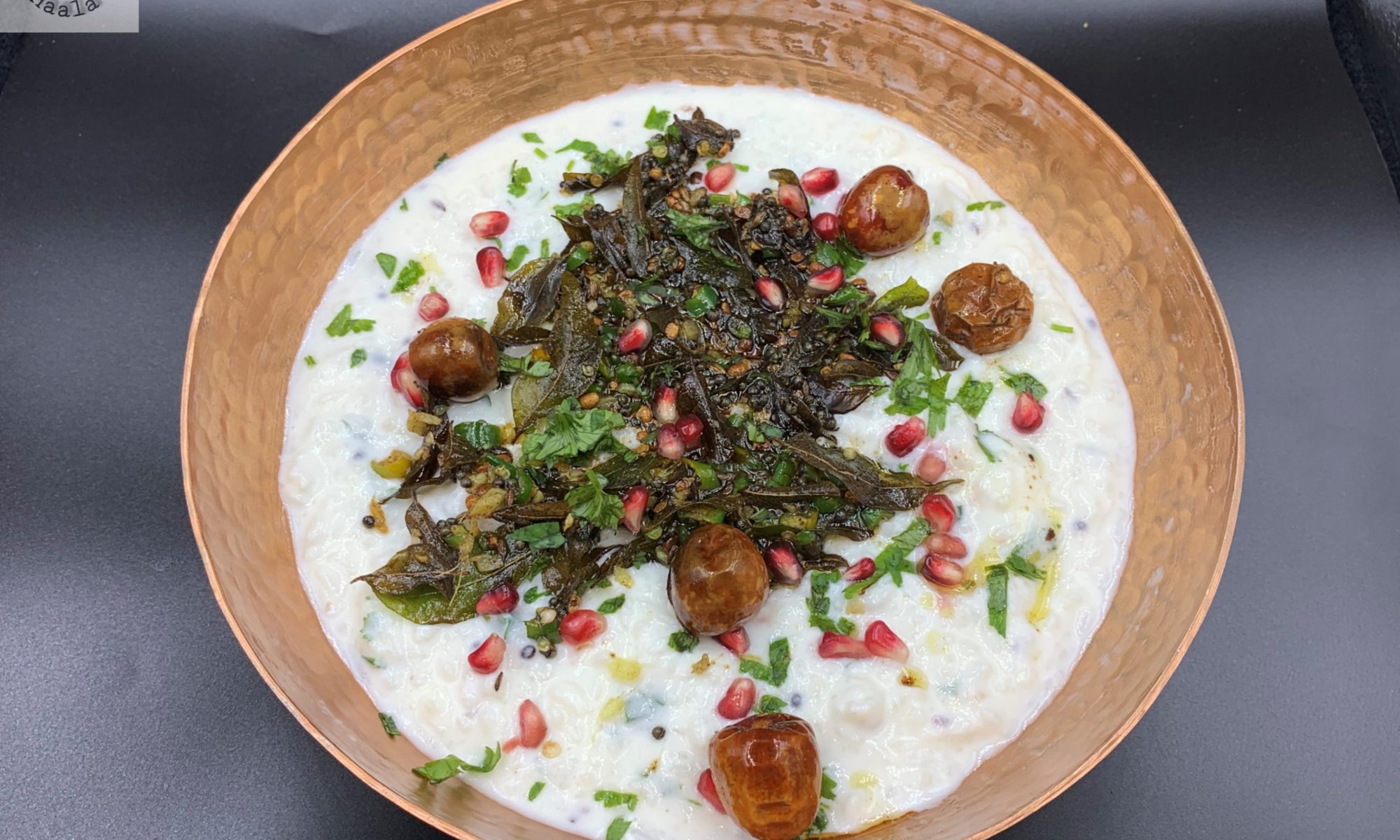
Curd Rice

Curd Rice is a meal from Southern part of India. It’s full of probiotic goodness and cooling properties , just the kind of meal you need when you want something simple, easy to digest, fast track food and a nutritious meal. Curd Rice is a creamy and traditional preparation of soft pre-cooked rice and thick yogurt all combined together and crowned with a South Indian style tempering.

Curd Rice is a gluten-free, savory Indian dish prepared with yogurt and pre-cooked rice. For the flavor, it is often tempered with ghee, mustard seeds, urad daal, ginger, asafoetida, cumin seeds, curry leaves, green chilies and dry red chilies.

Curd Rice is great for digestion, since the good bacteria in the yoghurt/ curd may help the body digest food easier and smoother. For generations, in South India, this has been the cure for an upset stomach or gastric issues including constipation and bloating. This dish also happens to have a milder version made with thinner curd or even buttermilk and is excellent for fighting acid reflux. Curd rice balances out the internal temperature of your body and is an excellent coolant during the hot summer months. Since it is served cold, one can almost immediately feel the respite from blazing temperatures even externally, before the nutrients begin to break down in one’s system. This is relatively low in calories and can still be eaten by itself as a meal and is quite filling, you can include this in your low-calorie diet as a menu choice.

All you need for this simple preparation is boiled rice, I usually throw away the water, but you are free to add less water in boiling the Rice and let the Ric soak it all up. Just make sure you use small grained Rice, as its a better option when it comes to over cooked and mushed up Rice. Basmati Rice is better with Biryani and Pulao. The Rice needs to be at Room Temperature, so make sure you give it at least an hour on a wide dish so it cools down completely. You can also use leftover steamed rice for making the dish. If using leftover cooked rice, add a tiny amount of water and mash it to a soft consistency (like broken wheat consistency). Soft rice that is overcooked or slightly mushy is perfect for making creamy curd rice.

 Full-fat Yoghurt is great if you want super soft and creamy curd rice, but you can use low-fat Yoghurt as well. Although the traditional Curd Rice is cooked with slightly sour Yoghurt, but I prefer the regular one.

 The tempering for the Curd Rice is a typical South Indian style packed with cumin seeds, mustard seeds, urad dal/ chana dal, curry leaves, ginger, green chilies, whole dry red chilies, and a pinch of asafoetida (aids in digestion). You can mix grated carrot or pomegranate as well in your yogurt rice for that extra crunch and freshness.

It is always ideal to combine chilled yogurt and room temperature rice to make creamy and delicious yogurt rice. If hot rice is combined with curd, it affects the nutritional properties of yogurt, and the digestion problems are bound to happen. Also, the curd might turn sour after mixing the hot rice. Hence, it is best to enjoy yogurt rice cold or at least room temperature.

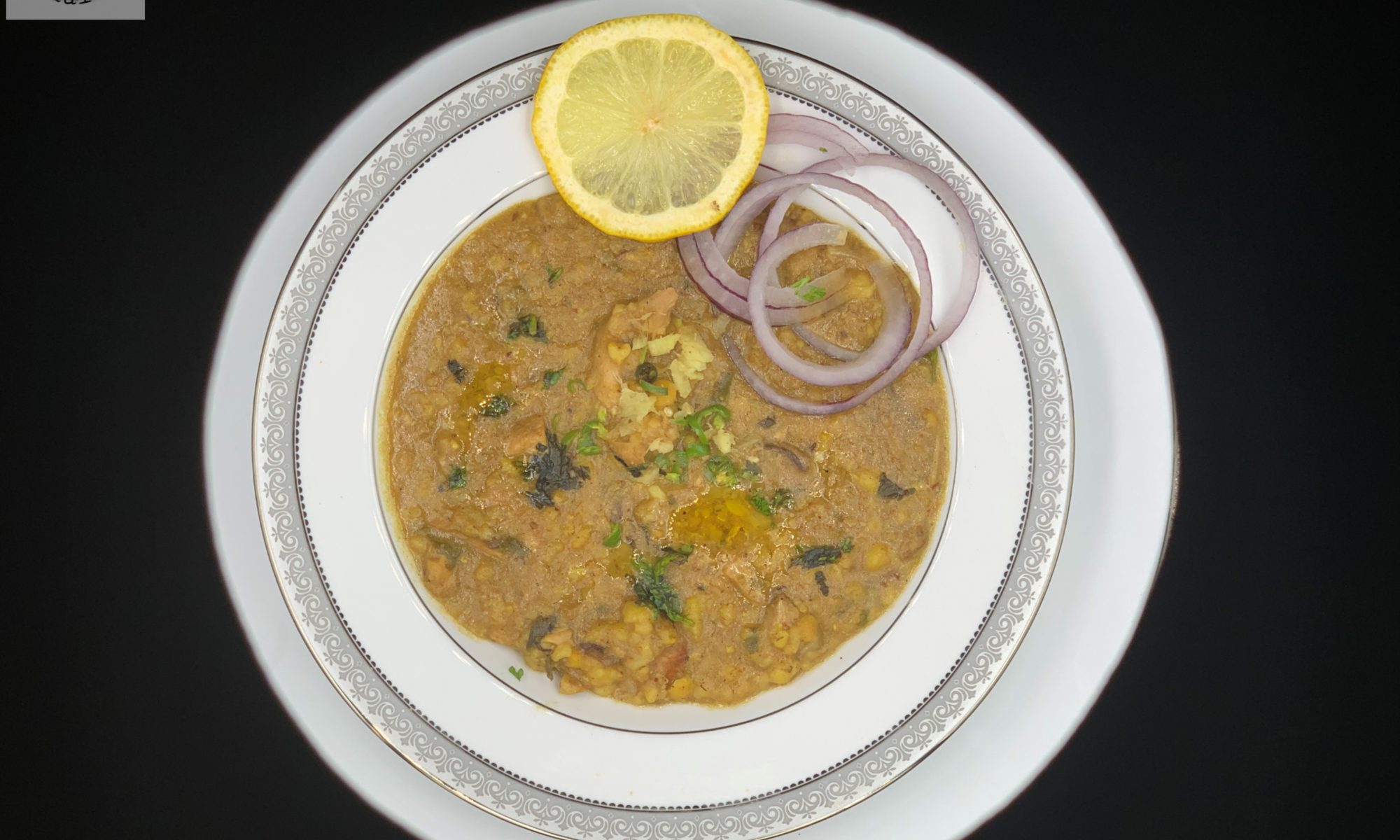
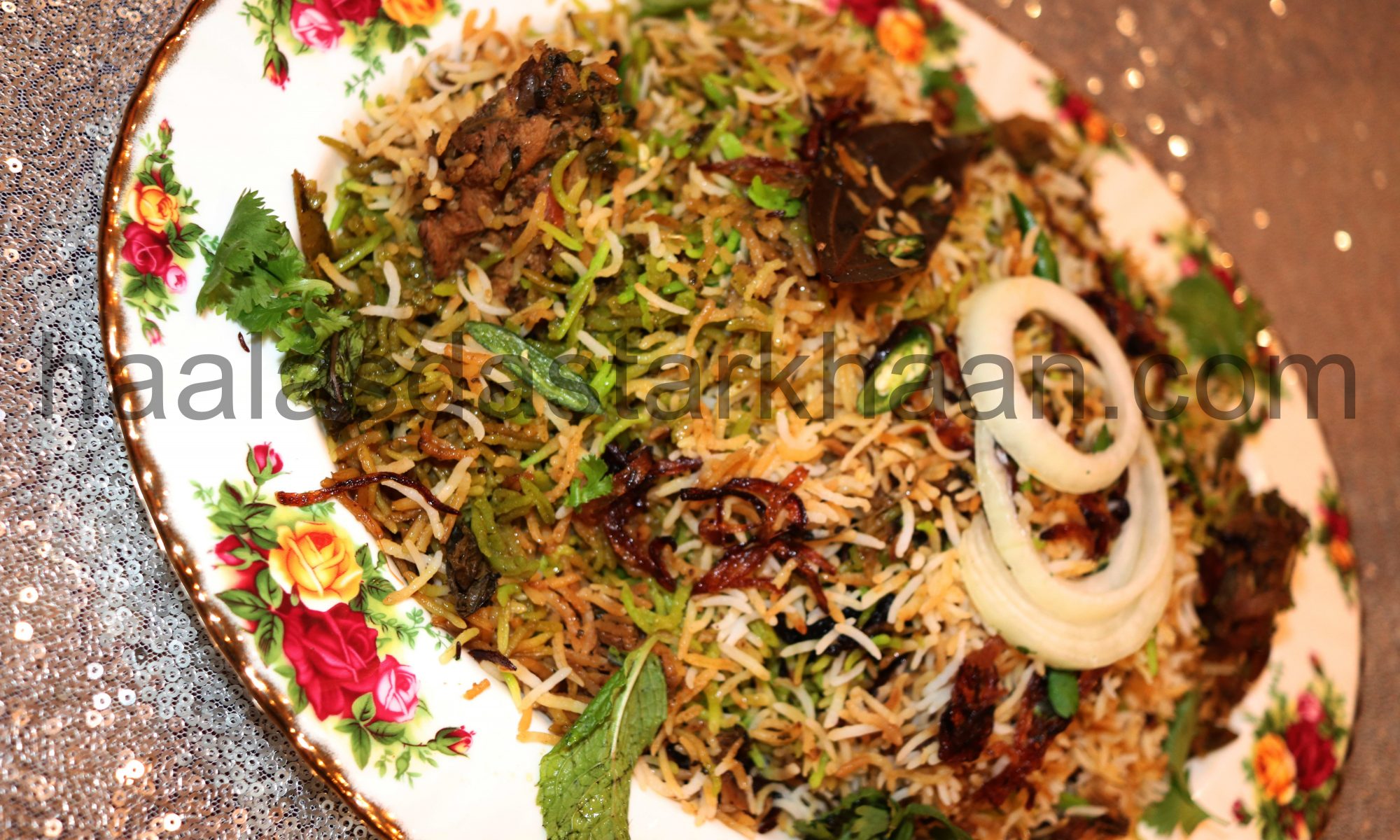
Murgh Haleem

Haleem has originated or is inspired by an Arabic dish, “Harees” which is made with meat, ghee, wheat, rice and whole pulses. The Persian name for the meat – wheat dish is “Hareesah”, which unlike Haleem is bland and uses lesser amount of pulses as well. An author once also suggessted that the version of Haleem made in India should have its name revised as “Daleem” since it uses a variety of Daals / Pulses.

Like so many other dishes that proudly make a mark in Indian/Pakistani/ Bangladeshi cuisines, Haleem was also introduced to Hyderabad recipes during the Mughal Era. The research shows that it came to Hyderabad during the Mughal period via Iran and Afghanistan. Adding the local spices and ingredients to it was definitely an upgrade from the original Arabian dish.

It says that it was during the rule of the sixth Nizam, Mahbub Ali Khan when Haleem was being revised to suit the Indian taste buds. The addition of spices made a huge difference to the dish and it did take effort and time to make it what it is today. By the the time, the seventh Nizam Mir Osman Ali Khan made his way to the throne, Haleem had become an integral part of the Hyderabadi cuisine.

With time, it became popular amongst all Muslim rulers and royal chefs made few changes here and there to make it more appetizing. The basic Haleem recipe comprises of a variety of lentils, meat/ chicken , and spices which are pounded together and cooked on a low flame for about 12 hours, which in todays time and age sounds time consuming and insane. Even today, if you wish to taste autjentic Haleem, you will have to take a trip to the Muslim areas of popular cities and visit those restaurants that are popular for their food and do not care much about the ambience. Honestly, I call them food lovers Paradise. As soon as you are close to those places, you can follow the fragrance of delicious food with your eyes shut. If you are like me, and can ignore the tables put close together and with people staring at you while you eat, you should visit these places at least once when you are in these popular cities. Delhi’s Jama Masjid, Mumbai’s Mohammed Ali Road, Hyderabad’s Char Minar and Bangalore’s Frazer town is where you will always find authentic Muslim cuisines which are pocket friendly and wonderfully delicious. These days you will also find places where they offer great seating arrangements for families as well.

However, the local spices give the Hyderabadi version a peculiar taste and flavor. I once saw a TV show based on Hyderabadi cuisine and watching Haleem being cooked was a delight. Haleem is prepared using Daals, mutton/Chicken, Broken wheat, Rice and a blend of spices. Everything is cooked together and then mashed together to bring in the perfect taste. Haleem has to be prepared in Ghee. It definitely is high in calories but its nutritious as well, and that’s what makes it the perfect dish to open your fast with. Even today, traditional Haleem is prepared in Brick – mud ovens or Bhattis on firewood and takes anywhere between 8-12 hours to be prepared. Basic Haleem recipe only used Mutton, but with time, chefs added more variety and Chicken Haleem or Murgh haleem came out as a lighter version of the traditional Haleem. I love both, but Chicken Haleem seems to be liked more in my house and therefore is cooked more often. I am sure you will love the recipe as much as we do. Enjoy!!!

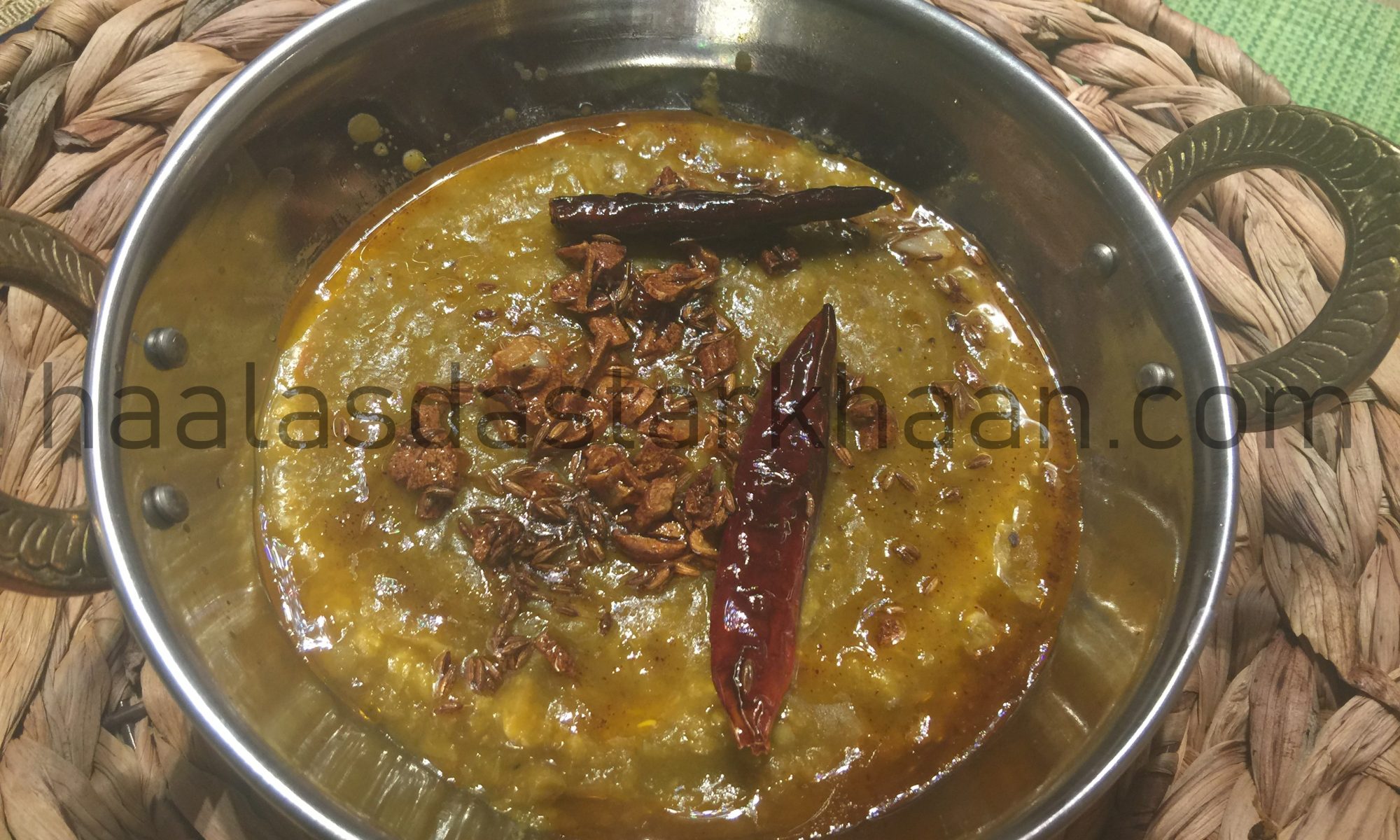
Hariyali Daal

Belonging to Northern west part of India, I grew up eating more of Moong, Masoor and chana daal. Toovar daal was either used to accasionally make sambhar or my mom’s Saturday Night khichdi. Believe it or not, my mom made khichdi every Saturday night and I always tried hard to get an answer to this question. The standard reply to my question was that my Dad enjoyed “Bhuni khichdi” or “pan fried khichdi” for breakfast every Sunday morning, therefore Khichdi had to made for Saturday dinner. Though I loved Sunday pan fried Khichdi, I still could never fall in love with the original Khichdi.

Coming back to Toovar daal. So, after I got married, I found so many different ways of cooking Toovar daal since down south, they cook a lot of Toovar daal. Isn’t it a blessing getting married to someone from a completely different state or region because you both are accustomed to eating similar flavors yet so many varieties add to your table in zoom. Its just amazing. All you need if you get married to someone different from you is keep an open heart, open mind and a pallet that is open to new foods and experiments. At least, thats what Mr. Parveez and I did.

Once when I revisited my hometown, I went to a restaurant and tried “Hari daal”… Now, with the flavor I did realize that its Toovar daal but what amazed me the most was to see my younger son, who was 4 that time, loved the daal and didn’t fuss. Of course, the restaurant owner didn’t share the recipe except confirming that it was Toovar daal. After I returned home, to USA, I still had the daal in mind and decided to trying to make it.

This daal is pretty easy to make and the best part is that because everything is blended, its easier for your kids to eat and enjoy the flavors. I always notice my boys taking coriander leaves, onions or tomatoes out of their daal but with this they enjoy the flavor and eat everything too.

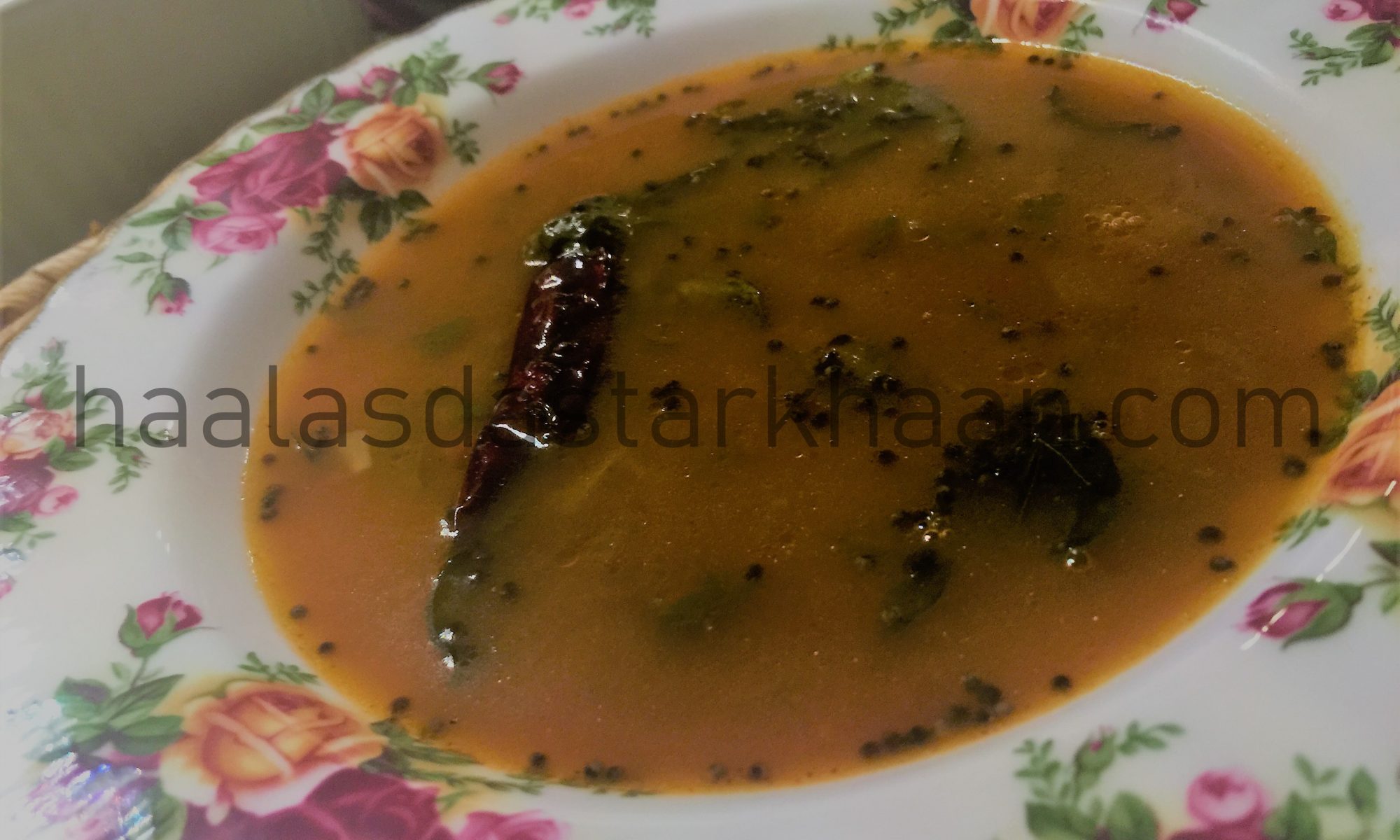
Tomato Rasam

The first time I tried Rasam was in Dallas, Texas. Funny, right??? We were newly married and after 2 weeks of coming to USA, Mr. Parveez was offered a 2 week project in Dallas and he took me along. There happened to be an Indian restaurant very close to the hotel where we stayed and we would visit that place for lunch almost every other day. The non vegetarian food in that restaurant was not halal, leaving us with the only option of consuming vegetarian food.

After a day or two of being there, I came down with bad cold.  I was in a pretty bad state and all I needed was a some nice warm soup. We were back for lunch to the same restaurant and decided to order some Tomato soup and while going through different soup options, Mr. Parveez came acrossTomato Rasam on the menu and he ordered it for us. I still remember looking at the soup bowls that looked like they contained colored water with tadka. My expectations were really low and honestly, somewhere in my mind I wasn’t too happy with Mr. Parveez performing experiments with my taste buds while I suffered from bad cold.

Anyways, the first spoon of the Rasam in my mouth and I had a party of flavors in my mouth. The spice was so mild, yet so prominent to make its mark and leave that tingling sensation on your tongue. The taste was so delicious that while you have a spoonful in your mouth, your soul craves for another one. And, the best part was the reaction of my sinus. My nose block just opened up and I started feeling so much better since now, I could smell the lovely flavors as well. From that day, till the day we stayed in Dallas and were in that restaurant for lunch, we would order the Tomato Rasam everytime.

And, after I returned home, I started my research on Rasam and discovered that Rasam is made in different flavors, Tomato Rasam is just one among the many and from there started my journey on making different rasam at home. We enjoy it more during winter and fall. My kids love it with boiled rice and every sinus congestion, cold and flu season…Rasam is always a part of our meal.

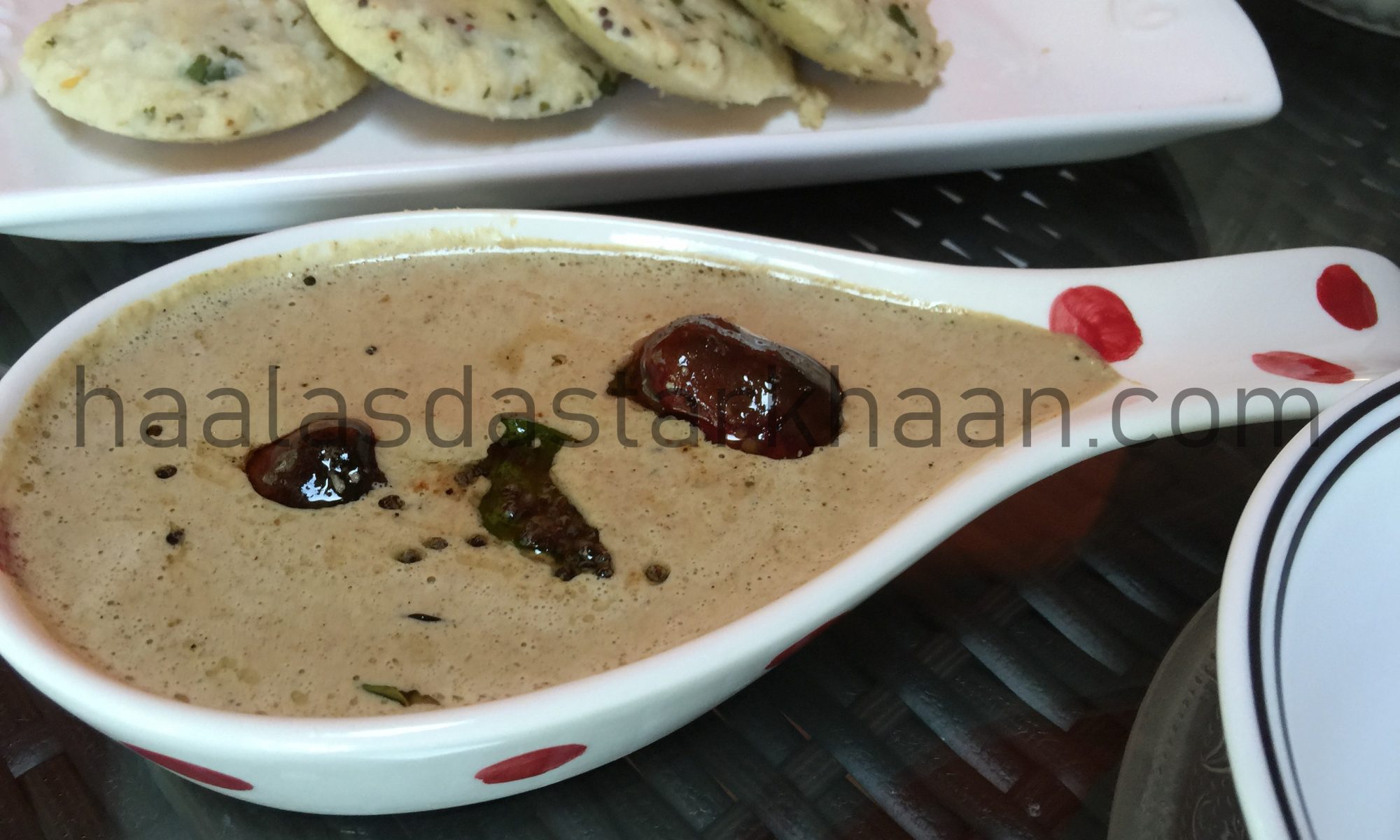
Coconut Chutney

South Indian food has so many varieties with their chutneys. Coconut chutney, Peanut chutney, Roasted chana chutney, not forgetting the common chutneys with North India like the coriander chutney, green chili chutney and Mint chutney.

Coconut Chutney tastes awesome with Rice idlis and Sambhar. The spice of the sambhar is mellowed down by the coconut chutney and brings out wonderful flavors.

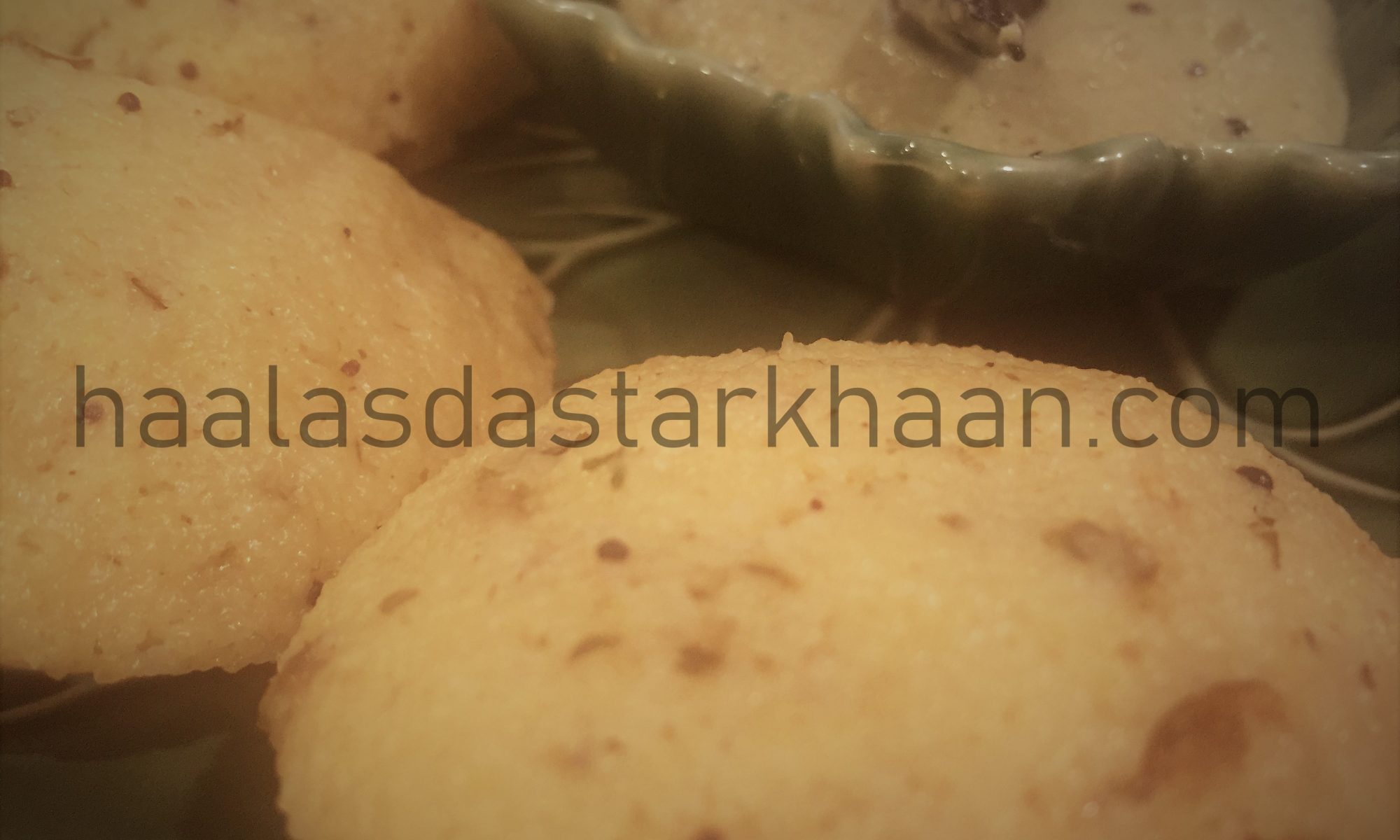
Rava Masala Idli

Rava Idlis is one of my favorite breakfast. You’d be amazed to know but I had never tried Rava Idlis until I got married. And, once I did, Rava Idlis found themselves a new fan. Once married, after coming to USA, Rice Idlis were one of the first demonstration of cooking skills presented by Mr. Parveez and not just were the idlis soft and fluffy, the sambhar was finger licking delicious with the perfect peanut chutney.

For years, weekends used to start with a special breakfast cooked by Mr. Parveez, which reduced to few special occasions a year, thanks to children and busy lifestyle that comes along with the joy of parenthood. Now, I can make 4 different varieties of sambhar, but my first sambhar recipe was from Mr. Parveez.

So, getting back to the Rava idlis. For the first few years, I only enjoyed them in India during my visits, since idli making was my “man’s job” and my man didn’t make rava idlis. Finally, the craving was hard to wait for my trip to India and I managed my own recipe for Rava idlis. This recipe is another version of Rava Idlis where I added a little sambhar masala to enhance the taste. I believe this to be one of my best experiments. Please do try. This is a perfect dish if you are going low on carbs or calories, great for diet. Its clean and healthy as well.