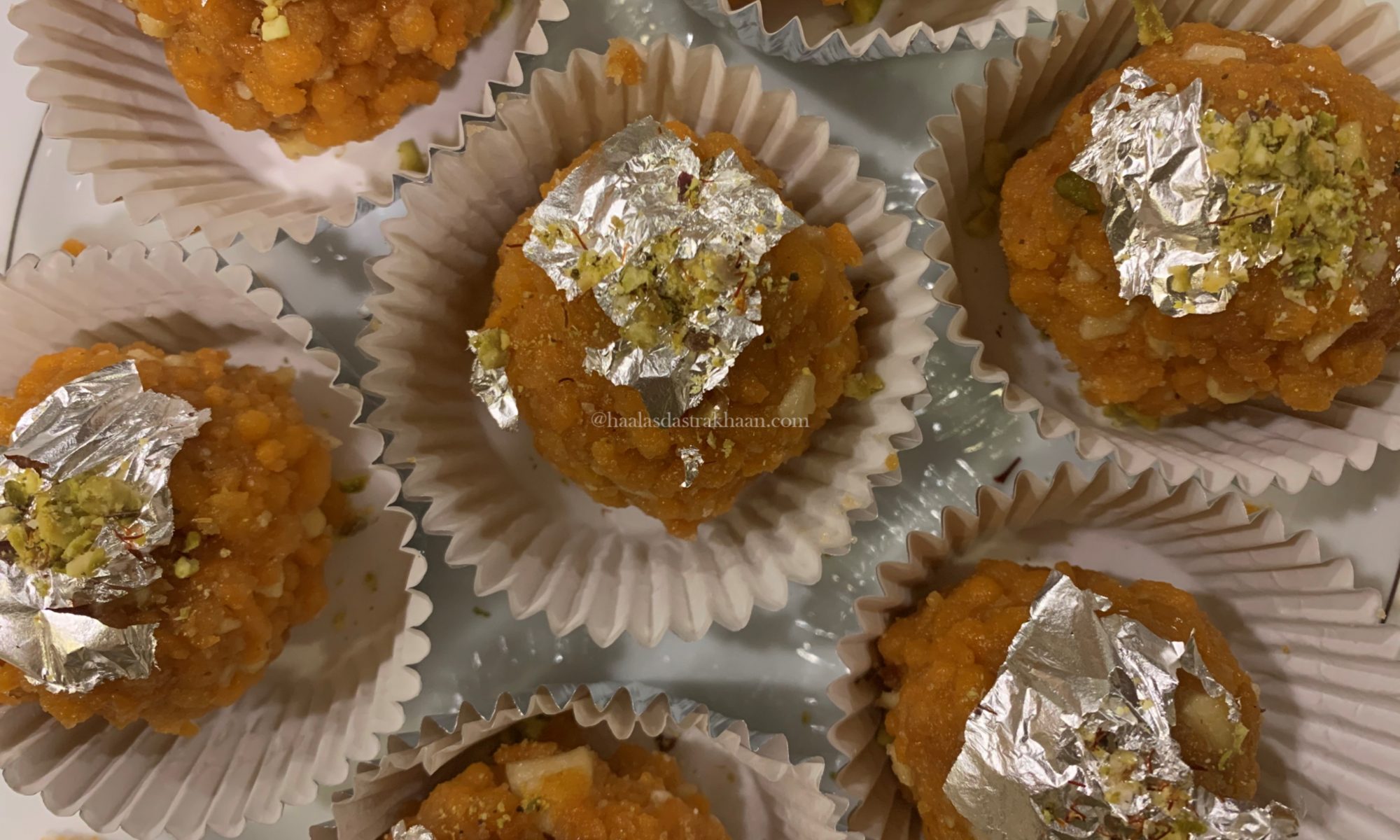
Boondi ke Laddu

Boondi Laddu is one of those classic Indian sweets that is instantly recognizable and widely beloved. It is commonly prepared in homes and readily available in almost every sweet shop—though no two versions are ever quite the same.

Unlike Motichoor Laddu, which is made using much finer, delicate boondi and a slightly different technique, Boondi ke Laddu possess a texture and character that are distinctly their own. Their larger pearls and gentle bite give them a rustic charm that continues to make them a timeless favorite.

I have always shared a special connection with this sweet—one that I believe many who grew up in India will instantly recognize. Every Independence Day and Republic Day, schools across the country would make attendance at the flag-hoisting ceremony mandatory. Those mornings were filled with patriotic songs, earnest speeches about freedom, and moving stories of how our freedom fighters came together to secure an independent nation.

And at the end of it all came the moment every child quietly waited for—a small but unforgettable token of joy: a Boondi Laddu placed into each student’s hands.

Boondi ke Laddu was the staple sweet distributed to every child at the close of Independence Day and Republic Day ceremonies. Yet its presence in my memories extends well beyond the schoolyard. Each Ramadan, on the blessed night of Shab-e-Qadr, and again upon the completion of Qur’an recitation at our local mosque, my father would lovingly distribute Boondi ke Laddu to the community.

Over time, this humble sweet became woven into moments of both national pride and spiritual reflection—making it far more than just a festive treat in my eyes.

Somehow, this humble sweet found its way into every celebration—whether religious or national. It was simple, joyful, and universally loved. To this day, I have yet to meet anyone who can easily resist a Boondi Laddu.

Growing up in India, I rarely remember seeing Boondi ke Laddu being made at home—they were simply always available, ready to be picked up from the neighborhood sweet shop whenever the occasion called for them. However, after moving to the United States, recreating that exact familiar taste has not been quite as easy. The versions available in many Indian sweet stores here often differ from the ones I grew up with.

And so, I finally decided it was time to roll up my sleeves and make them myself.

I browsed through numerous blogs and food websites, only to find that most featured recipes and images for Motichoor Laddu instead. The truth is, sometimes you are not searching for something elaborate—you are simply trying to recreate a small, meaningful piece of your childhood.

You long for that familiar taste, the one that instantly transports you back home.

I first attempted to make Boondi ke Laddu quite some time ago, but the results were less than ideal—the boondis turned out elongated, and the mixture simply refused to bind properly. The experience, though disappointing, stayed with me.

Later, during a visit to India, my rakhi brother took me to a specialty shop that sold ladles designed specifically for making boondi. I brought one back with me, quietly determined to try again once I returned to the United States.

Even so, I believe nothing we recreate here can fully capture the quiet joy of enjoying it in our motherland. No matter how precise the recipe, it is the people and the shared moments that we miss the most. Yet, as life teaches us, we cannot resist the course of destiny—we can only make the most of where we are.

And so, I continue to cook, create, and hold on to these small pieces of home, one dish at a time. These laddus, I am certain, will stir memories of childhood for many of you. They do require a bit of extra effort—and yes, the process can get a little messy—but in the end, every bit of it is truly worth it.
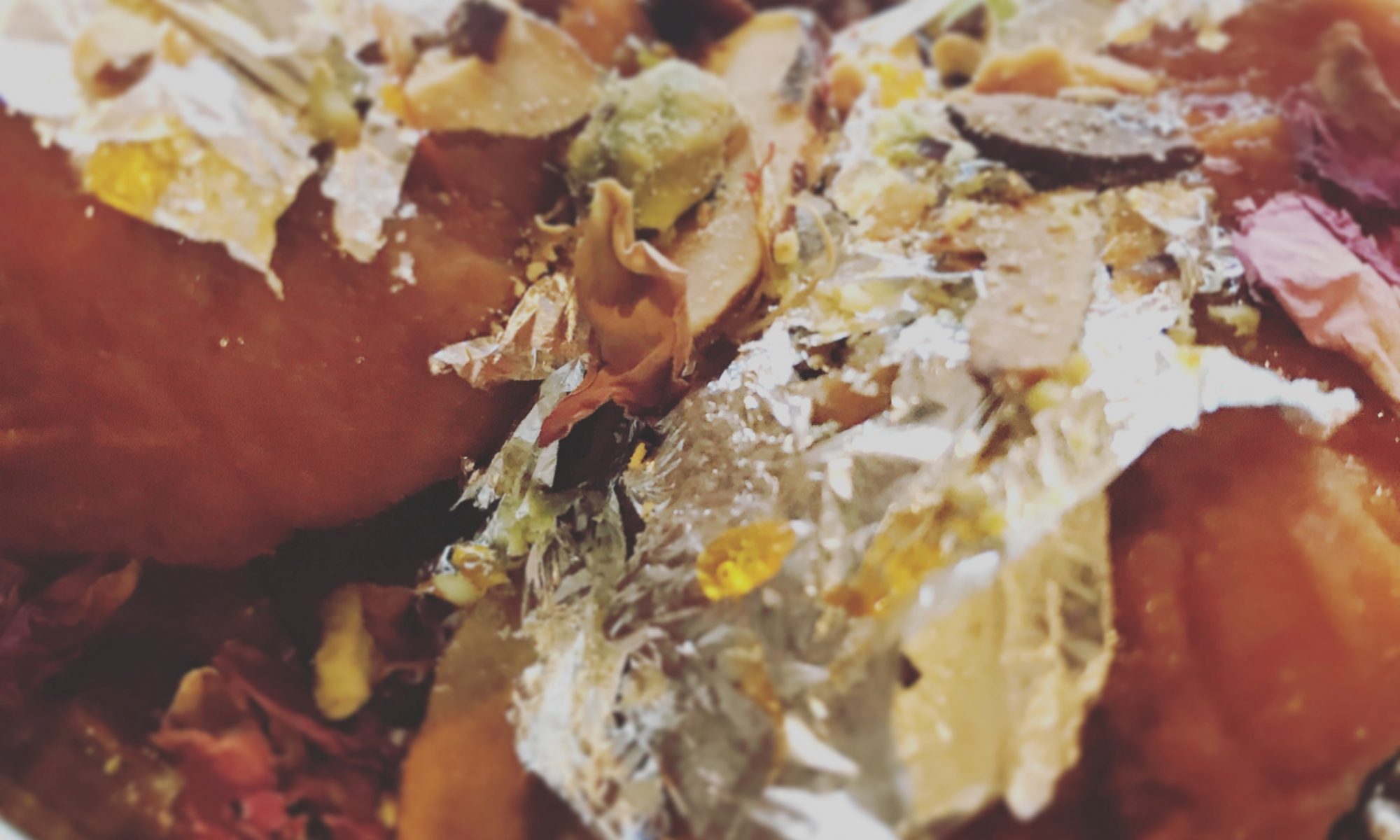
Badusha

Some sweets are connected to beautiful festivals. They always remind us of occasions and celebrations. I always connect Badusha or Balushahi with Diwali. I had friends who would serve homemade and sometimes store bought Badushas and they would be loved by everyone. I know this post should have actually been a Diwali special but sweets don’t need an occasion, they just need a sweet craving and zest and time to make a sweet dish.

Diwali is over but still posting this delicious balushahi recipe as I can’t resist my cravings and eternal love for Indian desserts or mithai. Since we don’t get Badusha in USA as it ain’t that popular here, mainly I feel its because the people have not tried it. So, I decided on making my own, multiple unsuccessful trials but I just had to make it perfect and I am glad I did. The temptation was too strong to let it go.

My mom is a big fan of this sweet dish. In fact I have heard stories that this was one of the sweet dishes made on my parent’s wedding. There is an old sweet market in my home city Jodhpur called “Pongal pada” and the street has variety of Badushas in different colors and textures and are called Maakhan Bada [meaning sweets made using butter]. Though Badusha is soaked in sugar syrup, the Maakhan Bada is covered with thick coated sugar, something close to fondant but slightly hard.

Once I cracked the recipe of the Badusha, there was no looking back. Its easy, flaky and your desire to eat just one, Did I say eat just? No one eats just one Badusha. Never!!! Its Balushahi in North India and called Badusha in South India. So, no matter what you call it, do try the recipe and make your own. These come out awesome, flaky and light. Once you try them, you will never bother getting them from the market sweet store anymore. Hope you like and enjoy them as much as I did.

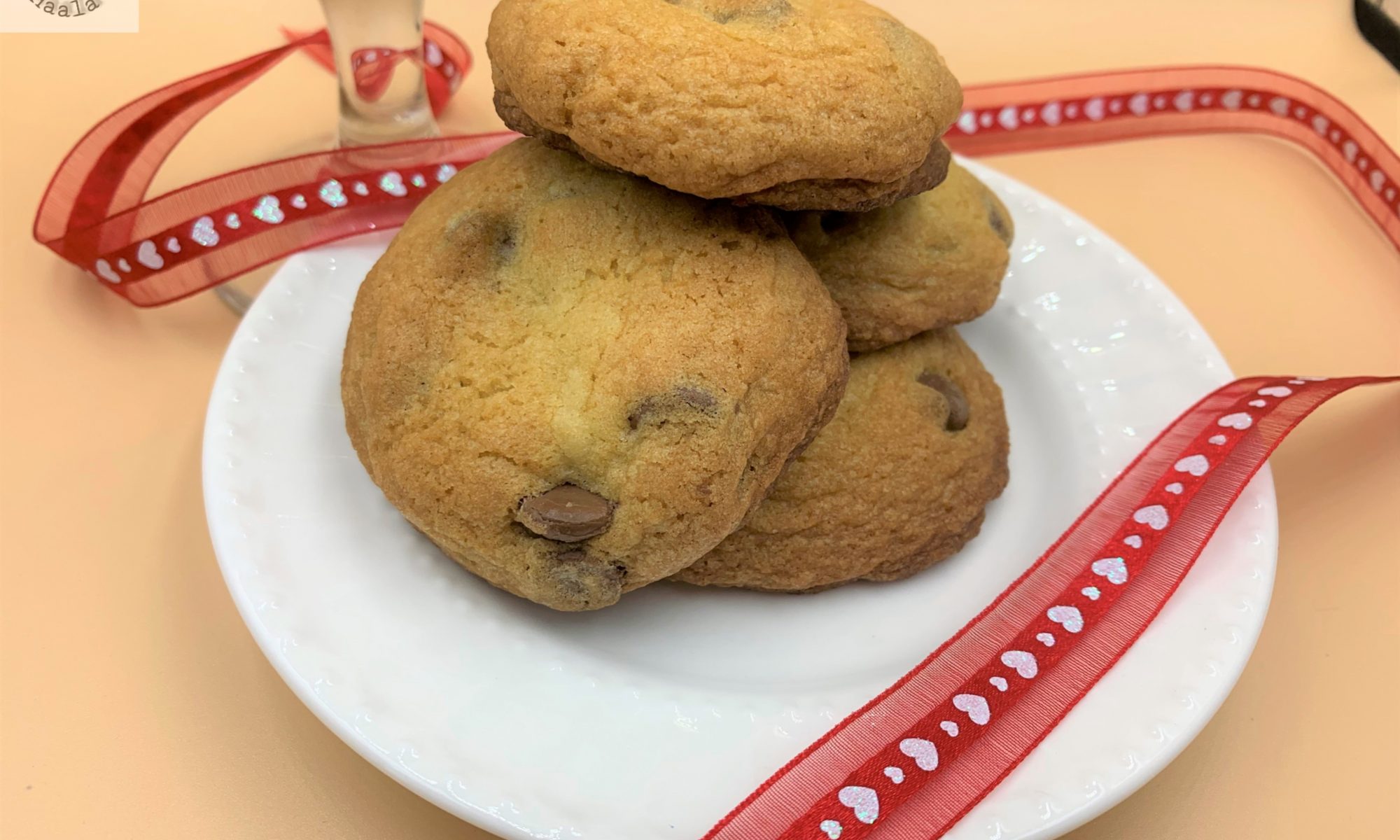
Chocolate Chip Cookies

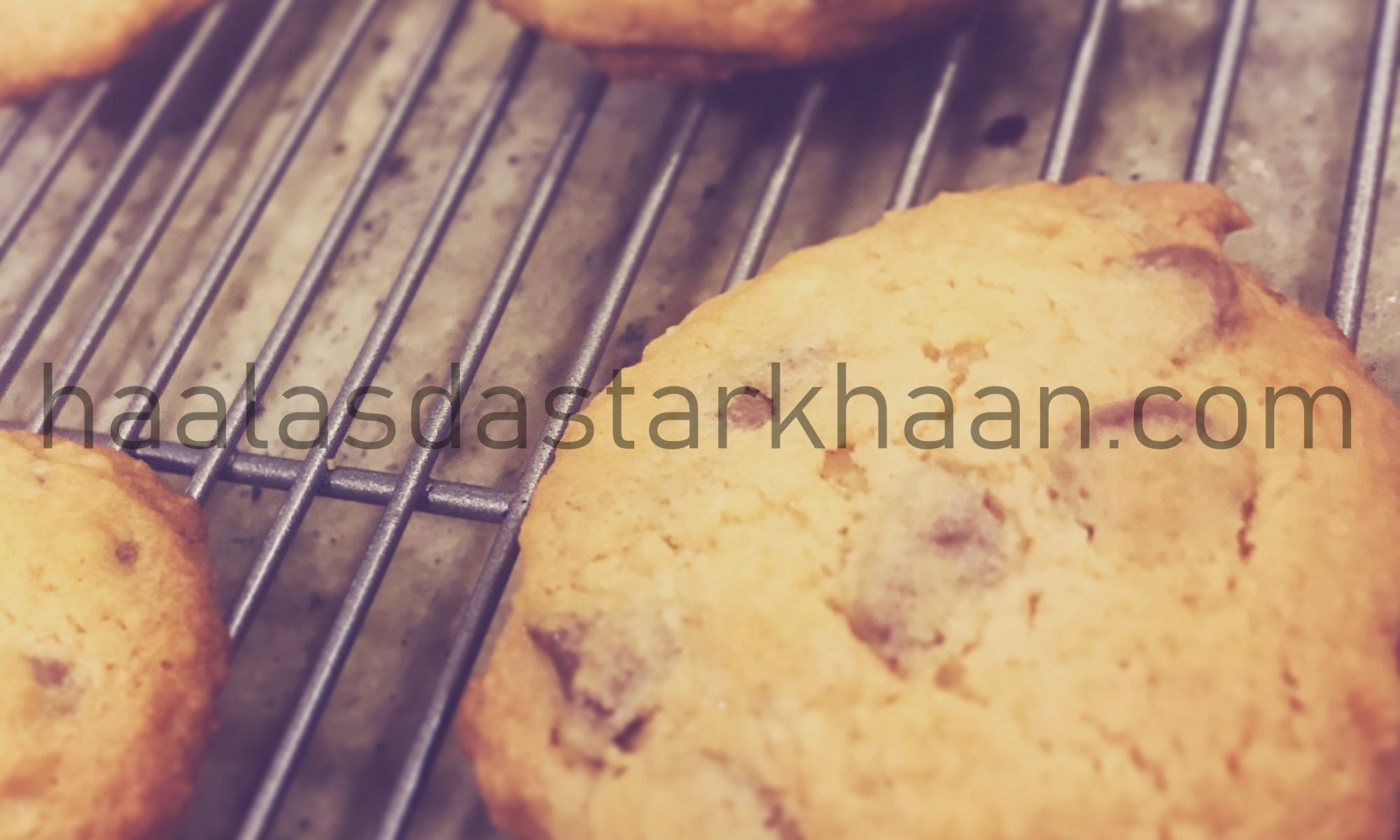
Chocolate Chip Cookies, the name makes my mouth water. My undying love for chocolate chip cookies never goes away and there is no time when I don’t crave them. Warm cookies straight out of the oven and a hot cup of coffee is enough to rejuvenate anyone from their super tired day. Have you ever noticed all the cookies in the cookie aisle at your favorite supermarket. Its a huge variety. Sometimes, when you think of trying something new, a picture on a pack or the beautiful explanation of the scrumptious cookies or a popular brand name or company introducing something new, by modifying a little something in their older version is enough to lure you into trying something. I never paid attention to the details of the ingredients until my older one started developing a taste for them. That’s when I realized that I was feeding my son things that I not only did not know, but found them had to pronounce. Ingredients that sounded better in a chemistry lab than on food. This is when I decided that I should try and bake my own cookies, I mean how hard can it be…LOLzzz. But, let me tell you, its tough. Baking, not so much, but baking in the right temperature, making sure the heat is just right, is difficult. Plus, the proportion of ingredients has to be proper. A little more butter than required won’t make the cookies softer, but break them apart. A little more sugar won’t make them sweeter, but too sweet for your taste buds. Therefore, the first rule, measure everything. This recipe is plain chocolate chip cookies, craved by all, loved by all and eaten by all.  The website has a recipe for Chocolate chip cinnamon cookies too, but please do try these ones as well. Once you try these you will never buy your cookies from the store or any bakery ever, that’s a promise. Each bite is chunky and heavenly. Enjoy!!!

Basbousa Cake

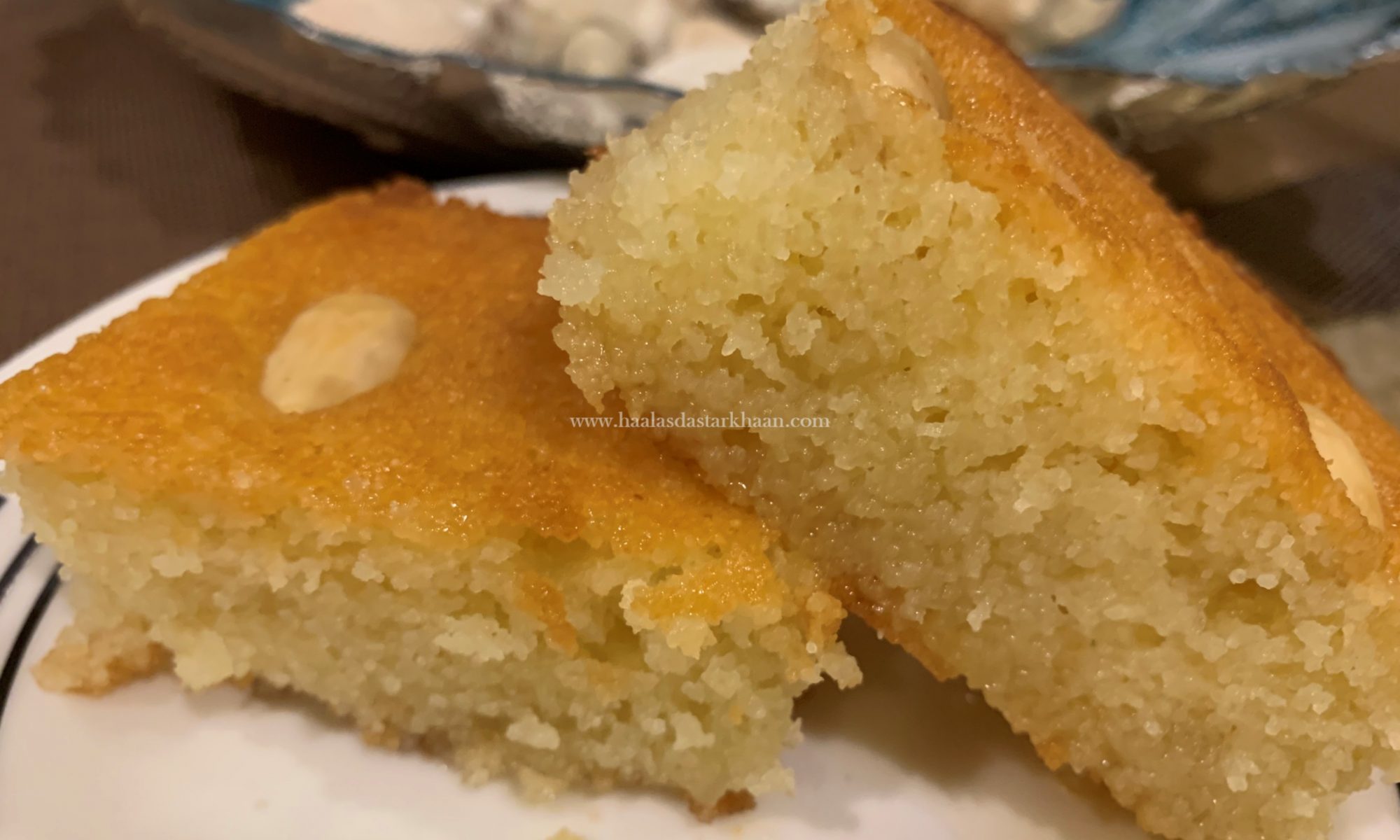
This is a sweet dish made from Semolina, a dish from Egypt. Honestly, its made all around middle east and known by different names. In Egypt, its Basbousa and in Palestine, its known as Harissa or Hareeseh. In Egypt, its called Al-Basbousa. The dish even goes by the name of Nammoura. They all are the same with probably a little variation of picking the kind of essence they use while cooking. This is basically a traditional Middle Eastern sweet cake that is made using Semolina which is blended in with margarine/butter and further with yogurt. In the end the semolina batter is sweetened with orange flower water or rose water simple syrup. It was originally made by Ottomans in the middle east.

Now the funny thing is that in USA, we usually find this sweet in stores that sell a variety of Middle eastern grocery and sweets, but for some it comes under the section where we buy the Greek food. I remember from the time I came to USA that Mr. Parveez loved buying this cake and we always believed it was Greek. Until, a few days back I discovered that the actual name of this sweet dish is Basbousa and its middle eastern.

I have made cakes with all-purpose flour all the time, so this time I decided to try something new. While looking for something new, I came across Basbousa. The dish has Semolina as the main ingredient and unlike the traditional ways of making cake, this takes in its sweetness from sugar syrup after its baked. The addition of sugar syrup with Rose essence induces softness and sweetness to the cake. This recipe also includes almonds which add a little nutty crunch to the cake besides making it look nice. I was excited with the idea of making a cake with semolina, or sooji as it is known in India, as it sounded healthy and different. I have to say this was one of my favorite and satisfying baking escapades.

The concept of using sugar syrup is just like its used in Kanafeh, another middle eastern sweet or Baklava, so I was aware of how to go about it, except I wasn’t too certain if the cake will be able to soak it in or be watery. Well, not only the sugar syrup was soaked in, the addition of rose essence in the syrup gives out a beautiful aroma and definitely enhances the flavor of the cake. The result, a perfectly moist cake with a distinct taste, flavor and texture.

Basbousa or Harissa or Nammoura or Semolina Cake as I’d call it, is a perfect traditional dessert and we really enjoyed its light and spongy texture. I’ll surely be making this again. Enjoy!!!

Kala Jamun

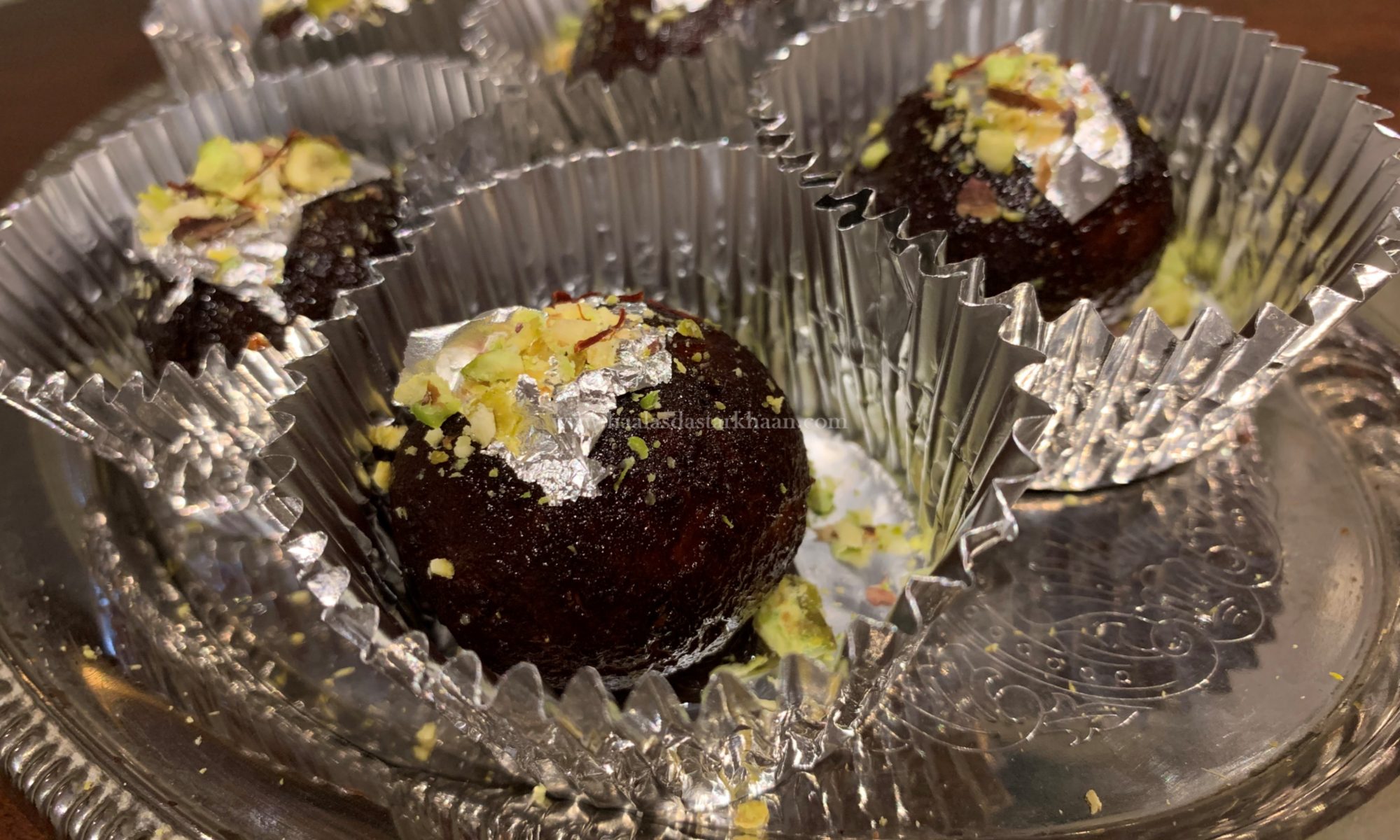
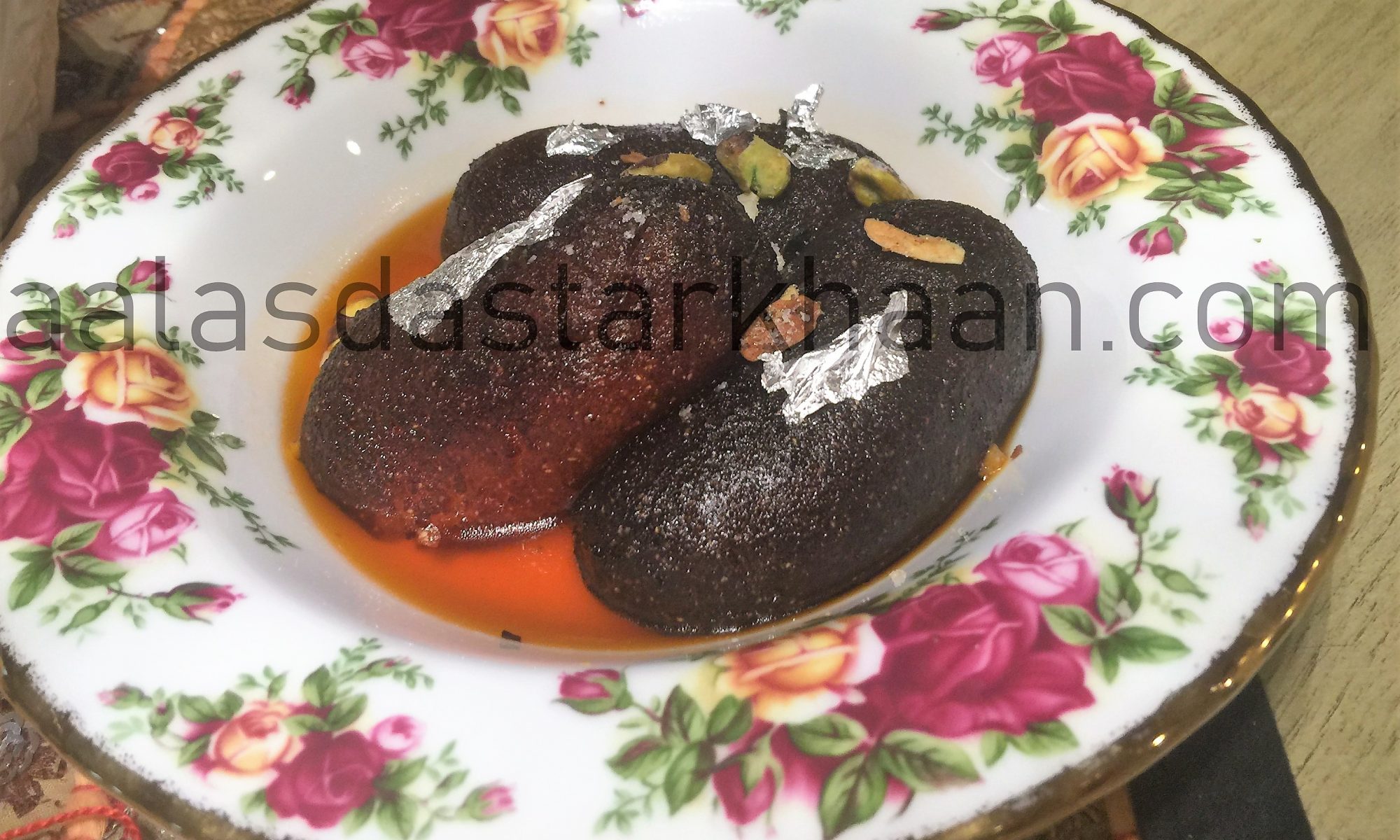
Kala Jamun is a distant cousin of Gulab jamun. It was first prepared in Mughal Era in India, introduced by Mughal Emperor Shah Jahan by his personal chef. The difference between Gulab jamun and Kala Jamun is the color and texture. While Gulab Jamuns are golden, Kala Jamun have a dark color with a shade slightly away from Black.

Its always advisable to use good quality Khoya and Paneer. Always use best quality khoya available at dairy. Mr. Parveez and my boys love home-made desserts. In fact the most awesome part that I don’t even eat any sweets that are dipped in sugar syrup, but Mr. Parveez stopped eating the sweets from sweet stores which is a huge compliment for me. Our guests always wonder if the mithai we serve, is from a store. Actually, I never thougth that making certain sweet dishes at home could be so easy, enjoyable and emotionally rewarding. And now, I just love making Indian Mithai, Cakes, Pastries and Pies, and making them is always my “happy time”. In fact, I can always hop into the kitchen happily to make mithai if asked.

Though I have never been a fan of either but, When I was a kid, I often used to get confused of what exactly is the difference between Kala Jmaun and Gulab Jamun and for the longest time, I believed that Kala Jamun was Gulab Jamun with black color. i only found the difference when I got down to making them.

Like I said above, dry kala jamun is a distant cousin of gulab jamun  and it uses paneer, suji, sugar and sometimes also uses a  dash of dry fruit stuffed inside balls. Though I never stuffed any in mine, because that would make them close to mewa baati and probably a little heavy too. Gulab Jamun dough does not have any paneer or sugar, where as the dough of Kala Jamun requires a little sugar. Gulab Jamuns are usually served with a little syrup, but these tend to be dry, so they require a little sugar boost from within. Kla Jamun also needs to be fried for longer on low to medium flame, without burning them to give the beautiful dark color.

Gulab jamun dough does not need much kneading but this dough has to be kneaded really well. The texture can be obtained only with a good dough, that has been kneaded well. You can also use a mixer if you find it difficult to do it by hand.

Keep the kala jamun soaked in a sugar syrup for at least 3-4 hours before serving, refrigerating them id preferred too.

If you want to make it as dry kala jamun, then once the jamuns are soaked well in syrup, you can take them out of the syrup and store it in a container or serve. They keep good easily for a week the refrigerator. I feel they are one of the best recipes to take to a friend’s house or as a goody bag after a party.

Gulab Jamun Sandwich

Gulab Jamun are the “go to” sweet dish for every home in India. Popular, Likeable, or should I say lovable by every soul. And, if you love Gulab Jamuns, then a Gulab Jamun Sandwich just comes in as something fancier and nicer.

Though Gulab Jamuns aren’t referred to as Bengali sweets, but I think the variation has nothing to do with Bengal. Gulab Jamun sandwich is a milk solid based rich sweet from the Indian subcontinent, very popular in India, Nepal, Pakistan. In Maldives they call it Gulab Jaanu Sandwich, and in Bangladesh, its called Gulaab Jaam Sandwich.

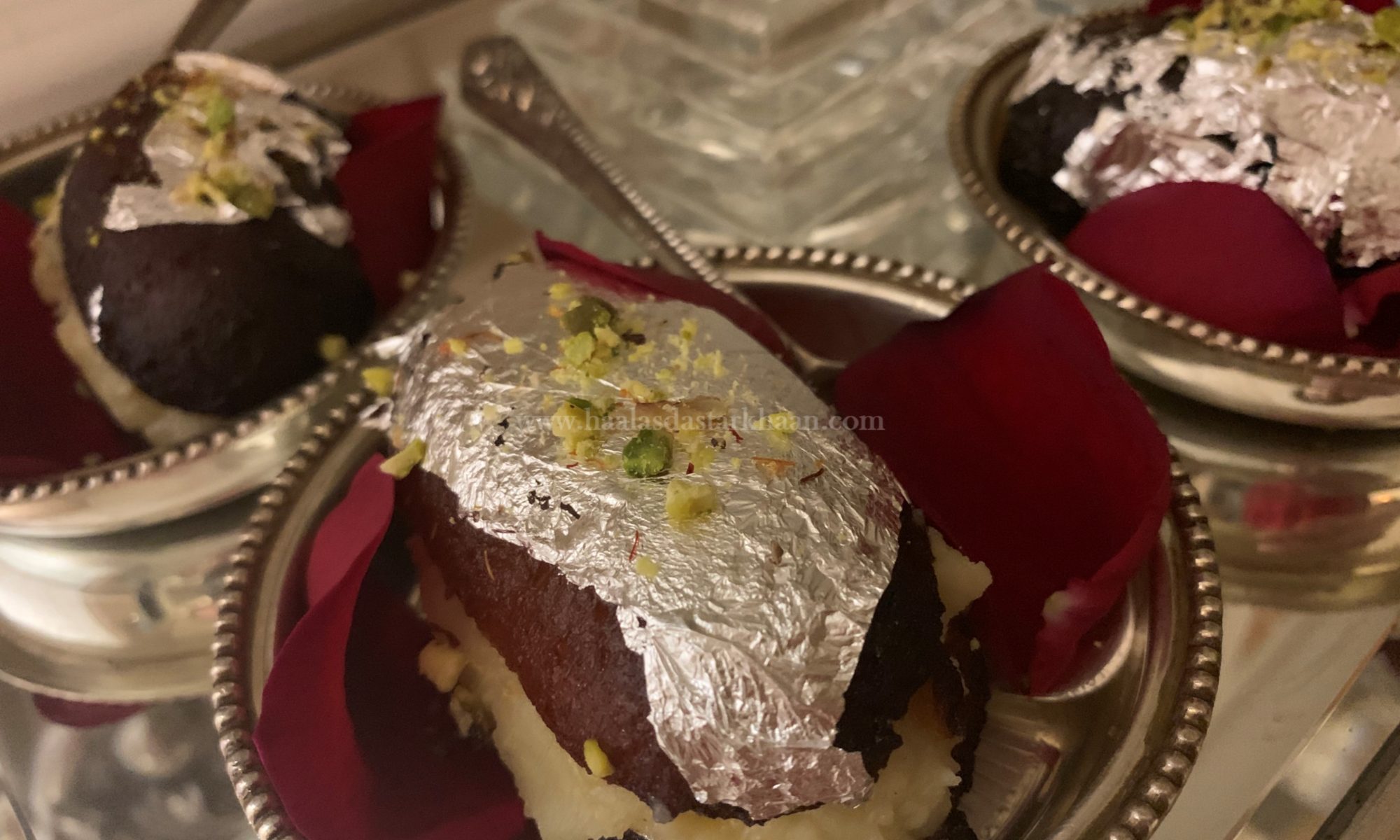
It is made mainly from milk solids, traditionally from Khoya, which is milk reduced to the consistency of a soft dough. Mixing in butter, flour, and milk/yogurt with the soft Khoya and form cylindrical balls, deep fry and add them to the sugar syrup. The sugar syrup is made of sugar, water, saffron, cardamom powder and rose water. Modern recipes call for dried/powdered milk instead of Khoya, which is fine as well. The middle part is made of Khoya and granulated sugar. You can always add a few saffron stands and screw pine water for enhancing flavors. It is often garnished with dried nuts such as crushed pistachios and almonds to enhance flavor.

For preparing this it is necessary to give cylindrical shape to  the classic or traditional Gulab Jamun and fill it with extra khoya in between. You don’t really need that little mix pack or run to the store to have these perfect, rich delights at home. Making Gulab Jamun Sandwich at home, with ingredients you will find at home, is pretty easy and not at all time consuming. The only thing you need is a perfect recipe.

Now, if you ever thought Gulab Jamun Sandwich is a gift of India to the world, you are wrong. Gulab Jamuns are actually a gift from the Mughals. All these sweet dishes that used Orange Blossom water or Rose water or screw pine water with saffron are all delicacies that came in from the Middle East and were introduced to Indian cuisine during the Mughal Era.

As the history says, the Gulab Jamuns were first prepared in the era of medieval times in India, derived from a sweet fritter recipe that a Central Asian Turkish invader brought to India. One theory also claims that it was accidentally prepared by the Mughal emperor Shah Jahan’s personal chef. All in all, it is a sweet dish inspired by the Middle east.

The word “Gulab” is derived from the Persian words gul, which means flower and āb, means water, referring to the rose water-scented syrup. Jamun is also defined as a fried delicacy in dipped in sugar syrup. A middle eastern dessert Luqmat al-qadi is very similar to gulab jamun, though it uses a different batter. Gulaab jamun Sandwich must be a variation tried by the Mughal Emperors as well, since the era has its own tales of rich food, made from Milk, saffron and dry fruits. And, I believe if a community can make use of milk solids to cook their non vegetarian dishes, they can definitely do a lot with their vegetarian sweet dish.

These outstanding Gulab Jamun Sandwich have a remarkable depth of taste and texture, achieved very carefully combining few ingredients to form cylindrical balls. Fry them slowly in ghee or oil, further soak them in syrup, Cut them from the middle and fill the middle part with Khoya filling. Decorate with a silver leaf and crushed nuts. Serve and amaze. With such detailed recipe, its hard to go wrong.

Chocolate Chip Cinnamon Cookies

Chocolate Chip Cookies, the name makes my mouth water. My undying love for chocolate chip cookies never goes away and there is no time when I don’t crave them. Warm cookies straight out of the oven and a hot cup of coffee is enough to rejuvenate anyone from their super tired day.

Have you ever noticed all the cookies in the cookie aisle at your favorite supermarket. Its a huge variety. Sometimes, when you think of trying something new, a picture on a pack or the beautiful explanation of the scrumptious cookies or a popular brand name or company introducing something new, by modifying a little something in their older version is enough to lure you into trying something. I never paid attention to the details of the ingredients until my older one started developing a taste for them. That’s when I realized that I was feeding my son things that I not only did not know, but found them had to pronounce. Ingredients that sounded better in a chemistry lab than on food.

This is when I decided that I should try and bake my own cookies, I mean how hard can it be…LOLzzz. But, let me tell you, its tough. Baking, not so much, but baking in the right temperature, making sure the heat is just right, is difficult. Plus, the proportion of ingredients has to be proper. A little more butter than required won’t make the cookies softer, but break them apart. A little more sugar won’t make them sweeter, but too sweet for your taste buds. Therefore, the first rule, measure everything.

This recipe is chocolate chip cookies with a hint of cinnamon, which taste a little spiced up and slightly different from your regular cookies. The website has a recipe for regular cookies too, but please do try these ones as well. The slight taste of cinnamon balances the flavor of sweetness and chocolate chips, enhancing the taste, making them taste a little more rich.

Carrot Walnut Cake

There was a popular supermarket near our apartment. Mr. Parveez and I would buy our regular grocery from that supermarket. During the winter season, a baker in their bakery made carrot cake, with walnuts/ without walnuts, sometimes with raisins. Every winter, also known as “holiday season” in USA, we would look forward to the carrot cake. We even served it to our guests, took it for friends.

And one day the baker left the store. We only found during winter when the carrot cake was being sold but something changed. On trying to figure out, we questioned the Manager and found that the baker was from another country and has left for good. Even the manager agreed that the though he left the cake recipe, it just didn’t come out the same. Eventually, the store stopped keeping carrot cake.

But, we looked everywhere with our taste buds craving the same flavor. 10 years of search and over 100 stores and supermarkets, different towns, different bakeries but it was just not the same. One day I came across a recipe for Thanksgiving carrot pudding and reading that I felt, it wouldn’t be that tough trying it out. I also realized with times that there was some spice that was missing in the normal carrot cake. That spice was nutmeg. Isn’t it funny, that a pinch of a spice can change the complete taste.

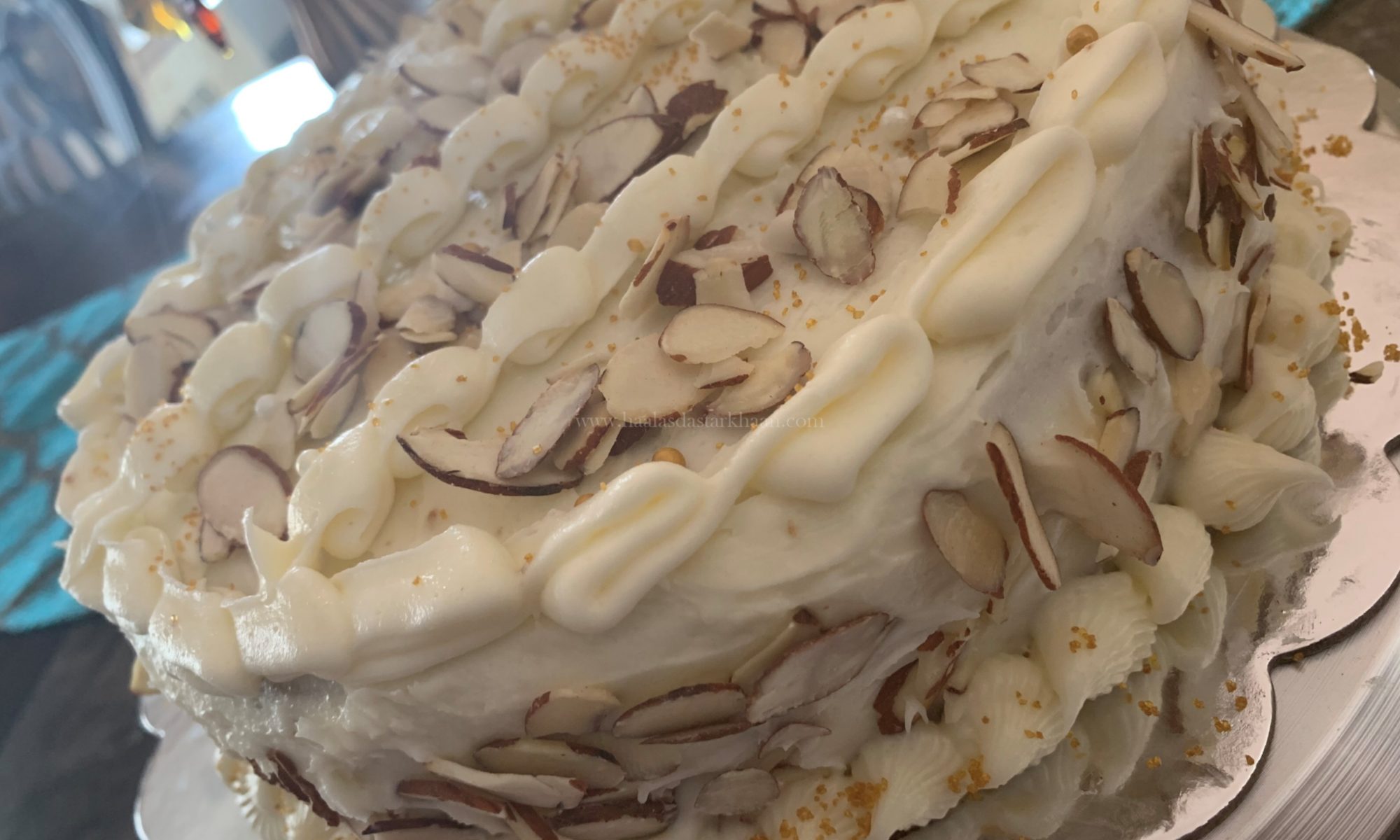
I first tried the basic cake without frosting and once I perfected the basic cake, I tried the frosting and both together make a super excellent Carrot Walnut Cake. Its exactly like the cake we liked, probably a little better. This will bring you loads of praises on your parties and get together.

Gulab Jamun

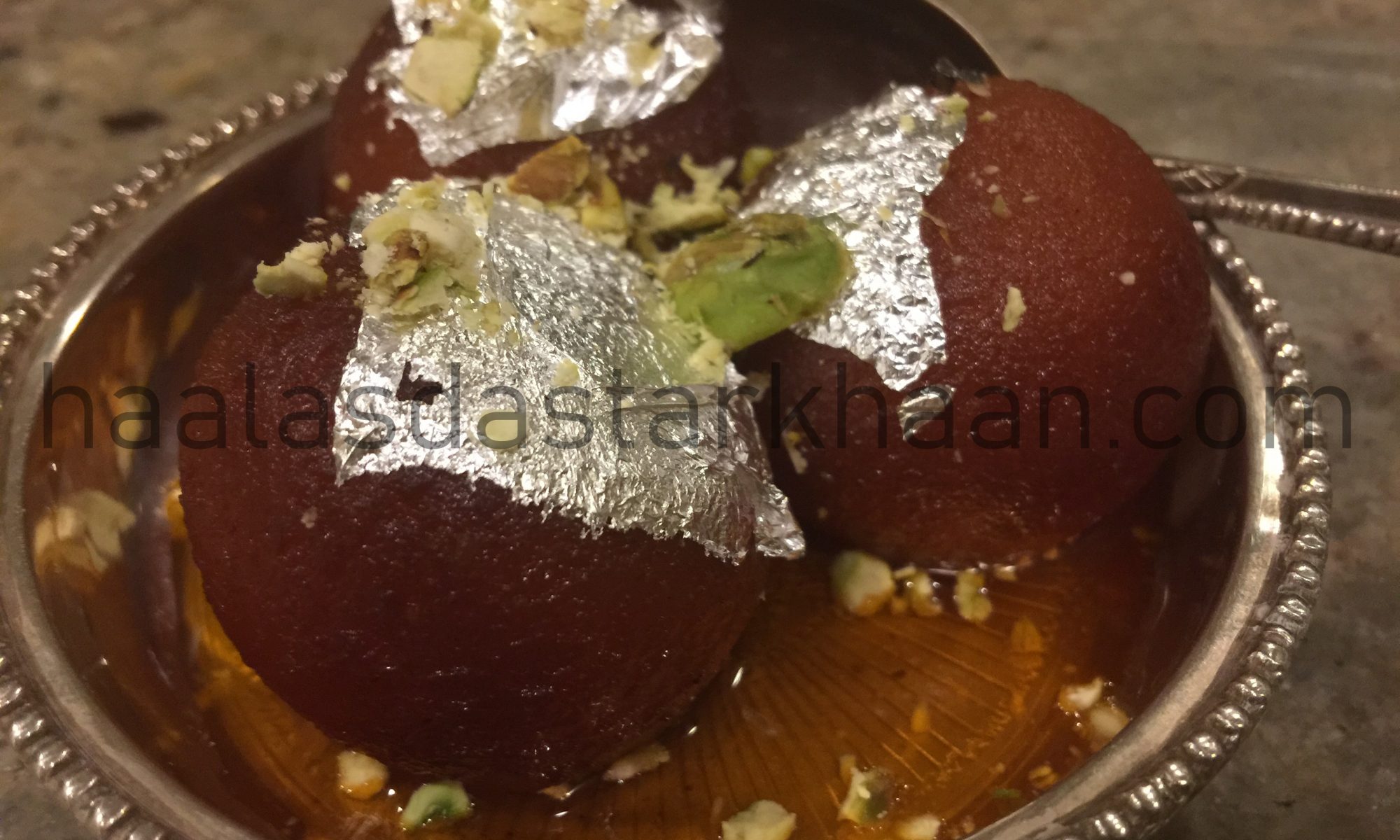
Every time someone mentions these awesome, sweet, sugary balls, people either tend to get them from a sweet store or if they are home made, most times they are made from the popular mix pack that has you add a few easy ingredients from home, like sugar and milk and fry them and you all set to serve them. But, little do you know that you don’t really need that little pack or run to the store. Making Gulab Jamuns at home, with ingredients you will find at home, is pretty easy and not at all time consuming. The only thing you need is a perfect recipe.

Now, if you ever thought Gulab Jamuns is a gift of India to the world, you are wrong. Gulab Jamuns are actually a gift from the Mughals. All these sweet dishes that used Orange Blossom water or Rose water or screw pine water with saffron are all delicacies that came in from the Middle East and were introduced to Indian cuisine during the Mughal Era.

As the history says, the Gulab Jamuns were first prepared in the era of medieval times in India, derived from a sweet fritter recipe that a Central Asian Turkish invader brought to India. One theory also claims that it was accidentally prepared by the Mughal emperor Shah Jahan’s personal chef. All in all, it is a sweet dish inspired by the Middle east.

The word “Gulab” is derived from the Persian words gul, which means flower and āb, means water, referring to the rose water-scented syrup. Jamun is also defined as a fried delicacy in dipped in sugar syrup. A middle eastern dessert Luqmat al-qadi is very similar to gulab jamun, though it uses a different batter.

These outstanding Gulab Jamuns have a remarkable depth of taste and texture achieved very carefully combining few ingredients to form balls. Fry them slowly in ghee or oil, further soak them in syrup. With such detailed recipe, its hard to go wrong.

Mewa Baati

If you like Gulab Jamuns, you will definitely like these. These are almost the same recipe as Khoya Gulab Jamun with a filling of dry fruits inside. Change the shape to make it look different from regular Gulab Jamuns. I made them oblong, you can always make them bigger and round if that appeals you more.