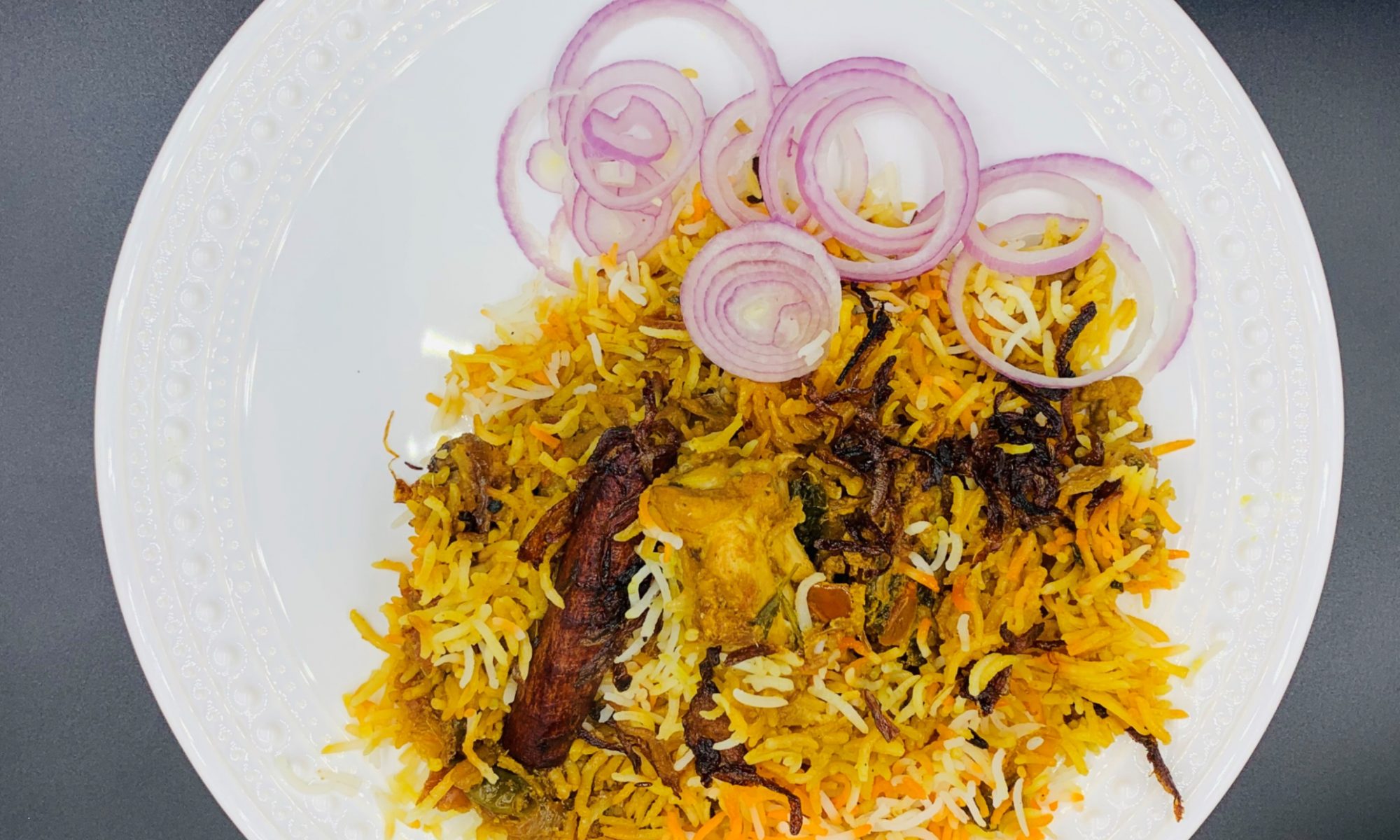
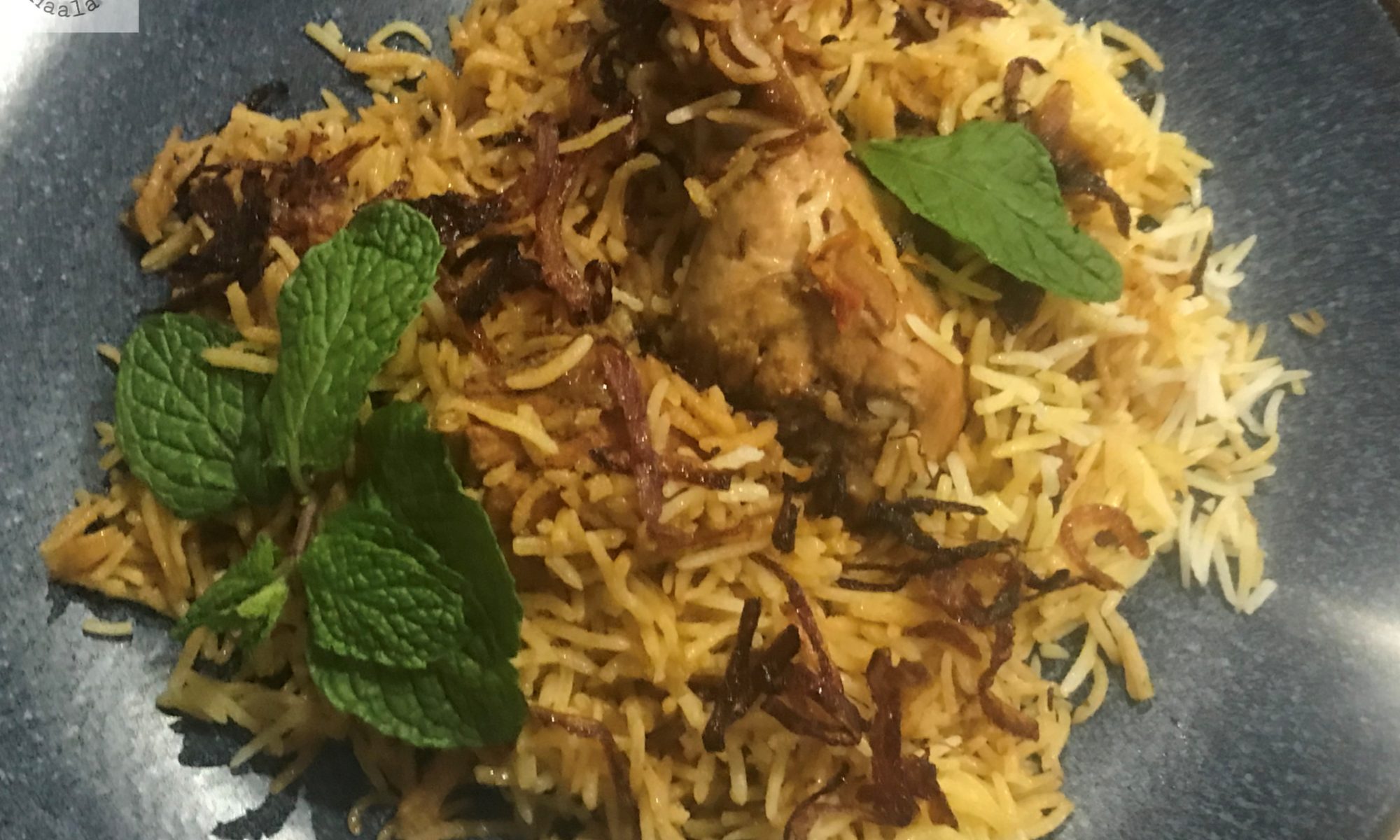
Moradabadi Chicken Biryani

Though synonymous with Indian cuisine and a part of specialty, the biryani is regarded as an import from West Asia, more specifically, Persia. The word biryani is thought to originate from the Persian word “birian” which means ‘fried before cooking’ or “birinj” meaning ‘rice’. The rice is washed and soaked and is cooked in ghee with whole spices and then cooked in boiling water. This imparts a mild nutty flavor to the rice and also helps rice retain their shape after being boiled.

The recipe of a good biryani has been simple, rice and meat that is cooked in spices and other ingredients set in layers. Traditionally, long grain white rice is preferred option with biryani. In south India, local varieties like kaima or jeeraka shala  provide their own distinct flavor and texture to the dish. The meats vary from goat, sheep, poultry, beef, eggs to seafood as well. Fragrance heightens its appeal, you can add Kewra water, saffron or Rose water . The cooking technique can be Kacchi Biryani, where the meat is layered with raw rice or Pakki Biryani, where cooked rice and meat are layered together.

Legend has it that Timur the Lame, the Turkic conqueror and founder of the Timurid Empire, was responsible for the entry of biryani to India. His armies would consume a hearty diet of pots of rice, spices and meats that were slow cooked in hot buried pits which were dug out at meal time. While biryani may very well have been part of a war diet, there was always a certain romance associated with it.

Stories also claim that Mumtaz Mahal, the inspiration behind India’s most celebrated monument and symbol of love, the Taj Mahal, had something to do with it. It is believed that Mumtaz Mahal once visited the Mughal army’s barracks in Moradabad and was dismayed by the dire conditions and poor nutrition endured by the soldiers. She ordered the cook to prepare a wholesome meal that blended meat and rice. And thus, they say, the biryani was born. As the history speaks, Moradabad, was founded in 1625 and named after Murad Baksh, son of Mughal Emperor Shah Jahan. Therefore, we can kind of believe that this recipe is close to the original recipe of Queen Mumtaz Mahal. The Moradabadi is typically low on spices and high on flavor.

Whether it was the Nawabs of Oudh (Awadh) in Lucknow or the Nizams of Hyderabad, the biryani blossomed into regional variations wherever it went. This Biryani comes with its own unique flavor. Enjoy!!!
Besan ke Laddu

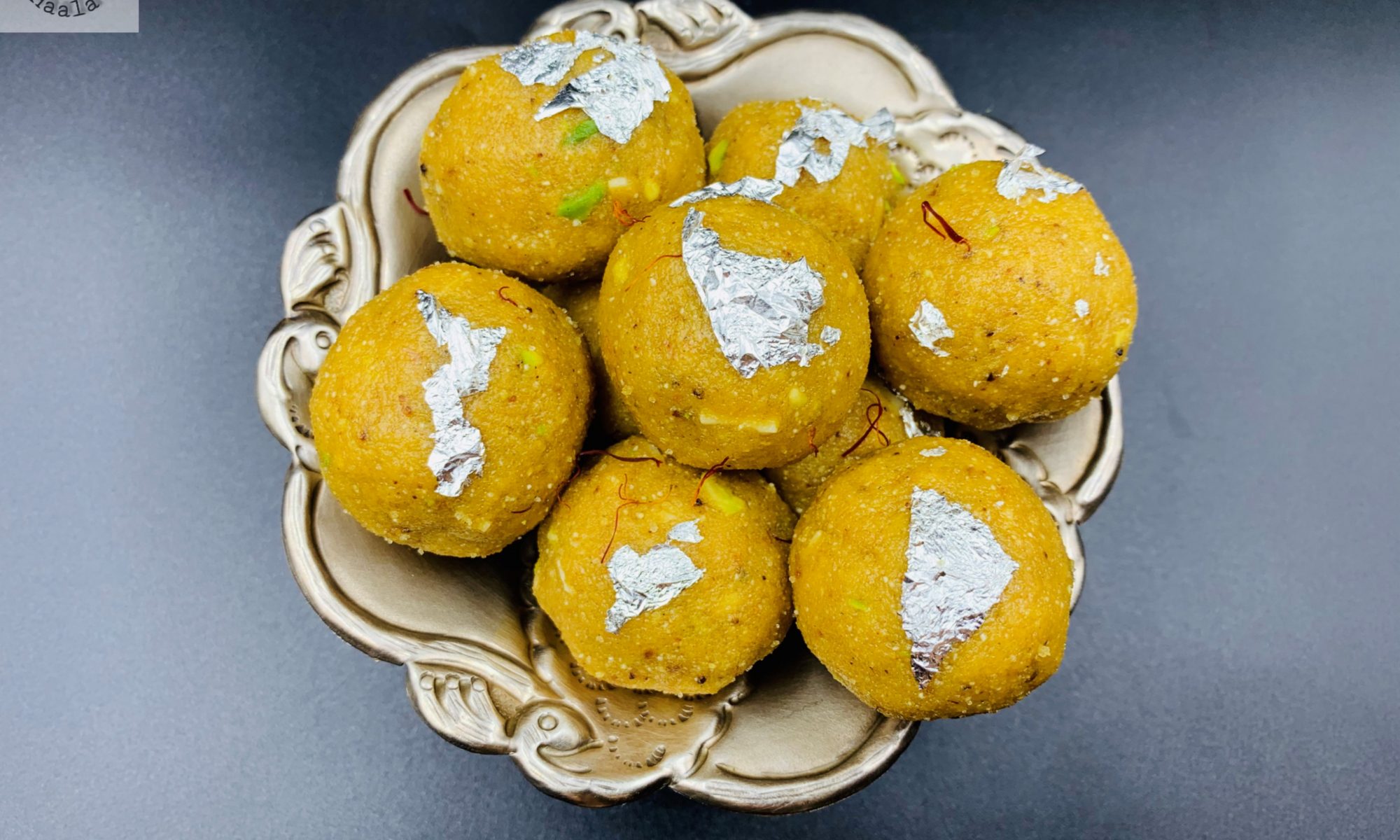
Besan ke Laddu is just pure love. I mean you have hundreds of varieties of Indian sweets, there can be different Kheers, Halwas and other numerous kinds of burfis, also Laddus, but there is something about Besan Laddu which is just pure love at first sight.

I know I sound like those Moms from some Bollywood movies from the 80’s and 90’s who always made Laddus for their kids and handed them in a large steel container while they would be leaving for work/studies to another city and it always came in with instructions of how the son should just be eating one each day and not share much, which of course the son forgot with convenience as soon as he reached his destination and his room mates and friends could smell the fragrance of home made Laddus from a mile away… OMG! can’t believe I just had the time and energy to mention all this. Well, hope it reminded you of your childhood movies if you have watched the “Masala Bollywood” and if you have not, I am sure the story still brought a smile to your face.

So, one day like a Bollywood mother I also got in the groove of making some Besan Laddus and I think its not just one of the easiest but one of the best sweet dishes ever. Its easy to make, few ingredients and takes very little time. If you are new at making Indian sweets, this is your go to dish. The instructions are pretty easy which makes it easy to follow and wonderfully impressive. Enjoy!!!

Asian Chicken Noodles

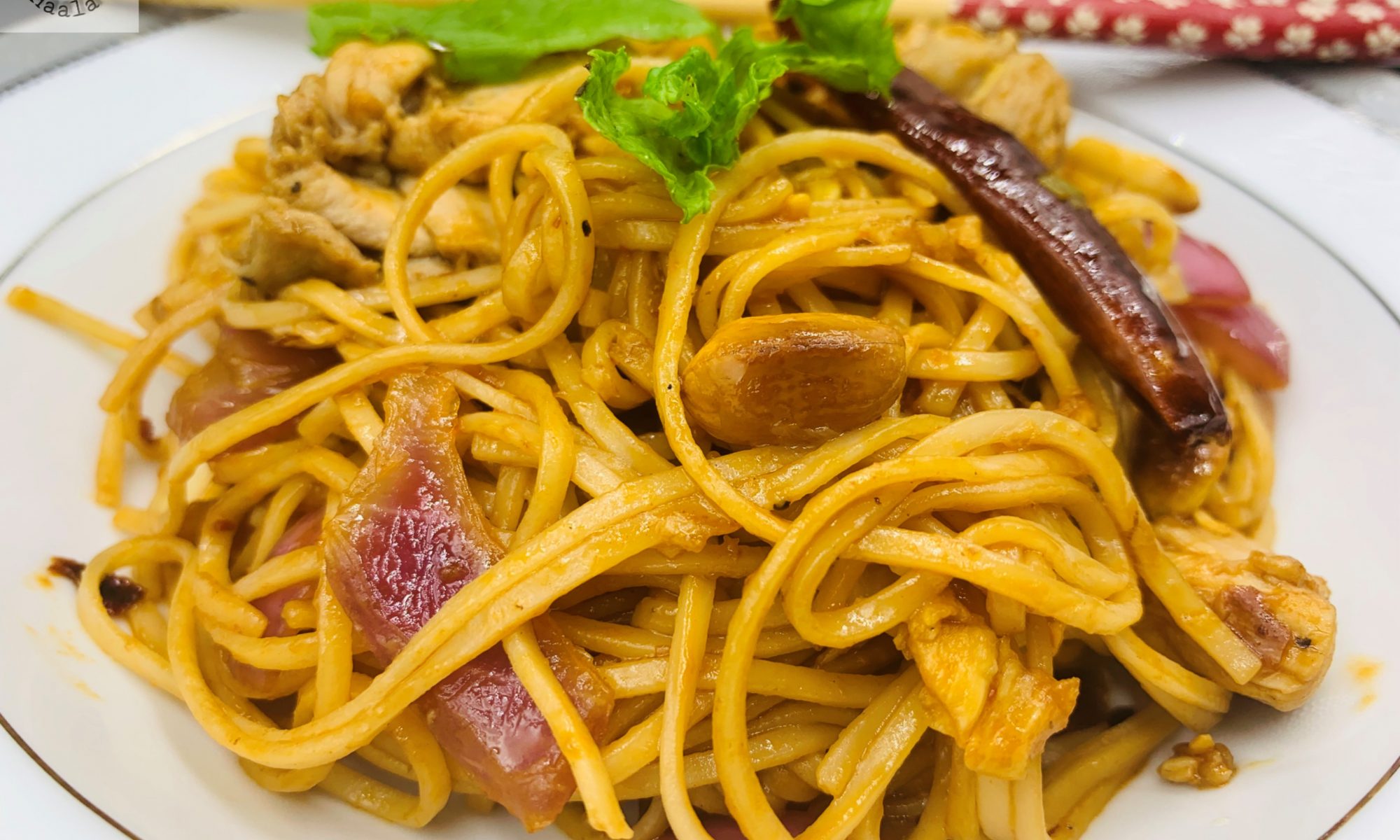
Chinese Chicken noodles are a delicious and a quick lunch/dinner that requires few ingredients that are easily available in your pantry. Also it gets from kitchen to dining table in a matter of few minutes. And its just a perfect meal for weekends. Egg noodles cooked with chicken and few veggies with a few sauces mixed in together with Garlic fried in a smokey flavor makes a perfect Asian style Noodles and they come out so amazingly delicious that you will never feel the need to order take out from a Chinese restaurant again. This dish is so mouthwatering that you will making it very often.

My kids can actually eat these Chicken noodles for every other meal. These Chicken noodles are pretty easy to make, I usually add Onions, scallions and green chilies. You can add broccoli and bell peppers as well if you feel like. Usually I also add in corn kernels at times and something that I feel adds a lot of flavor to this dish are Peanuts. The key to preparing perfect noodles is to cook everything separately and mix things together and then add in the mixed sauce. Also, one thing that I feel makes these noodles perfect are cooking them with tongs specially when you mix things together.

One of the reasons why Chinese food does not taste the same at home as in restaurants is that ingredients that are put in Chinese noodles, including the sauce, all are cooked on high heat. The food cooked on high heat and that kind of gives a smoke flavor to the ingredients and the smoked or charred flavor is absorbed pretty fast. A lot of people suggest using a Wok but honestly, I don’t use one and feel my Asian Takeaways tastes better than homemade ones is the smokey charred flavor in the dish. Ingredients are tossed on high heat, really quickly to give the flavor. It sometimes feels impossible to recreate the same flavor at home, of course without the flavor enhancers and God knows all what goes into your food to make it taste so good, but honestly, the food made at home tastes much more fresh and if made using the right recipe with all ingredients in proportion will make a mouthwatering dish.

Now its not possible for everyone to have a Chinese Wok at home. But its always better to cook in a pan that is shaped like a dome. It gives you more surface area to work. For making noodles stir fry or Rice stir fry, a large pan is always good. Tossing in high heat with sesame Oil adds the smokey flavor to the noodles. Enjoy!!!

Dindigul Biryani

The word Biryani is derived from the Persian word Birian, which means ‘fried before cooking’ and Birinj, the Persian word for rice. There are various theories related to the origin of this scrumptious dish. Biryani originated from Persia and was brought to India by the Mughals. I love reading about the Mughal Era and its food in the history. Its amazing to read about so much variety of food flavors that they added to the Indian cuisine…. Gulab Jamuns, Jalebis, Imartis, and so many other rich desserts and numerous curries and the most amazing out of all are Biryanis…so many varieties, so fragrant, so delicious and so different from one another. The best part was that they always incorporated local spices with their Biryani recipes coming up with distinguishably different flavors each time. Each region has a completely different way of making Biryani from another. The state of Tamil Nadu has some really celebrated Biryanis, most of which have evolved in the state’s smaller towns. A beautiful example is Ambur Biryani and Salem Biryani. As the folklore says, Dindigul Biryani actually developed in a particular small restaurant, which is till date super popular for its “Dindigul Biriyani” , they spell it differently. The best thing I like about these South Indian Biryani is that the ingredients are always pretty simple, nothing fancy, nothing that requires you to urgently run to a store and despite the simplicity, the outcome is always so deliciously fancy. Enjoy!!!

Hot Chicken Sandwich

We all love sandwiches, specially hot/warm sandwiches if well made just make your taste buds dance and enjoy every bite. There are so many varieties that I make and my boys still never seem to have enough. I sometimes feel that they look at me and see a food invention machine because I work according to their wants and cravings and sometimes, invent something by mixing up 2-3 of their favorite flavors which makes up a new dish and is loved by all.

This Sandwich seems to be one of those. My boys are big fans of hot and saucy Chicken wings. Once when our nearest Halal grocery store was out of Chicken wings and my boys were craving them, I made Boneless chicken and mixed them up with Hot and spicy chicken wing sauce and they loved it. It was like an added variety which was created in a fluke. Not just the chicken wings and the boneless hot chicken stripes became popular in my house, even their friends started making requests to make them for play dates and I did.

After few weeks, and making multiple different sandwiches, I came up with the idea of hot chicken sandwich. Not sure how my critics [my husband and kids] would react, I made it without a discussion of what they would think of the combination. Trust me, this will just blow your mind and the people you make it for will not stop praising for serving them with something so wonderfully delicious.

The recipe is pretty simple to what it turns out to be. I am pretty sure if you ask someone to guess the recipe after the first bite, they will assume it to be something difficult, but honestly it’s pretty simple and easy to make and if you just follow the recipe steps as elaborated you will not just be able to serve a great sandwich, but also your chicken will have a super crunchy and crispy exterior and the inside will be juicy and flavorful.

So, basically to start with I cut the boneless chicken to thin long strips. I then marinate the chicken in egg, milk, lemon juice and spices for around an hour. You can definitely do it longer if you wish. Usually 30 minutes is fine too. Make sure the chicken is completely soaked in. After that the chicken has to be rolled in a mixture of flour, spice and crushed cornflakes. We then deep fry the chicken pieces. The sauce is made using hot sauce and butter. I also used extra red hot chili powder, which you can always omit if you do not prefer your hot chicken less spicy. Add the chicken pieces to the sauce and then add them to the long Italian bread along with sliced onions, garlic mayo sauce and shredded cheese. Let them bake in the oven at 350F for 8-10 minutes. Serve hot/warm. Enjoy!!!

Sooji Ka Halwa

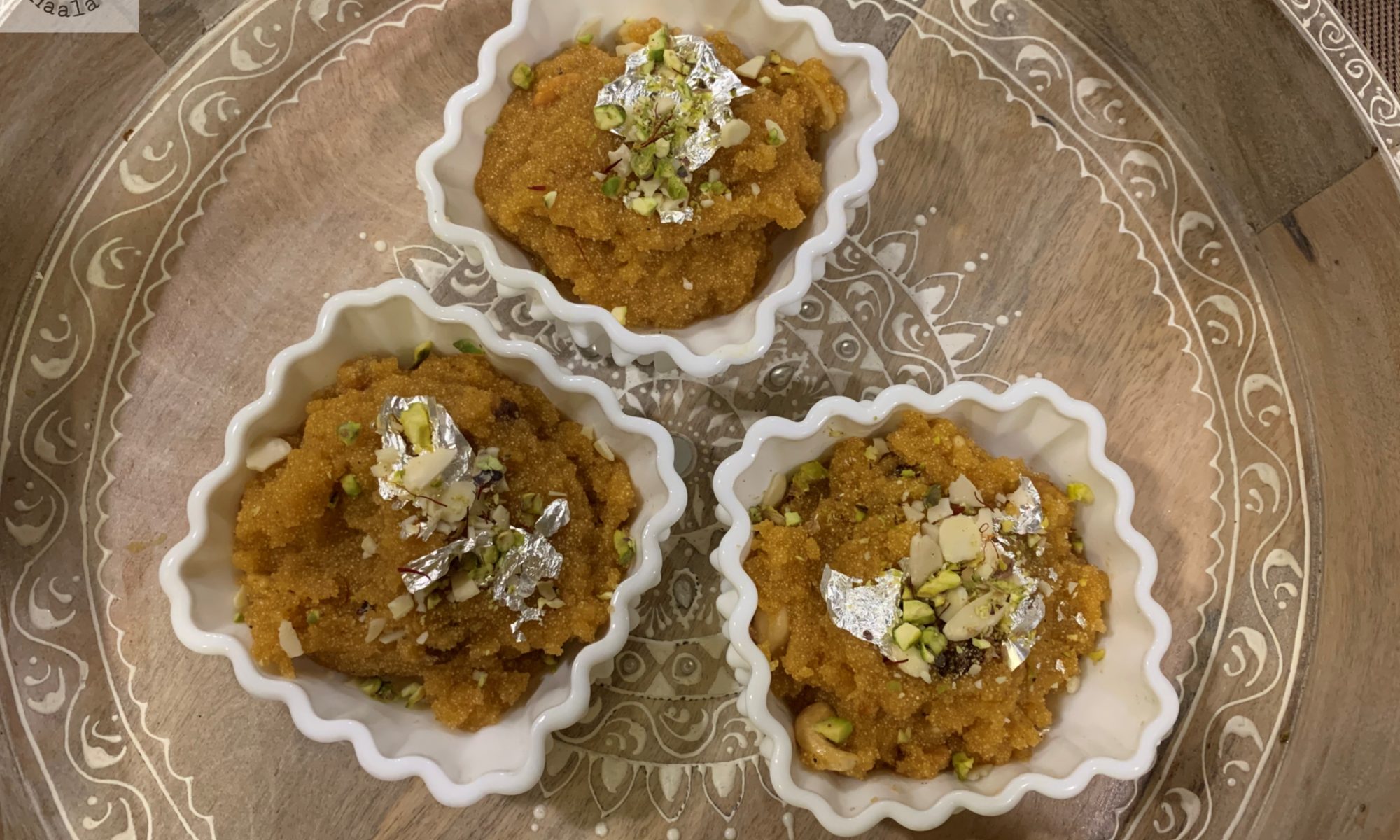
Sooji when made sweet, is called Sooji ka Sheera. Several variants of this dish are available under other names in various parts of India. People also call it Sooji ka Halwa or Mohan Bhog. This dish history shows its connection with the Middle east where this cuisine, semolina is roasted and then further cooked with water, honey, camphor, saffron, and sesame oil. In 14th-century Spain, semolina was cooked with almond milk, oil and optionally saffron for coloring, therefore the actual origin of our “Indianised” Sooji ka halwa is actually unknown. But, it still is one of the fastest and yummiest sweet dishes ever.

So, a friend called me asking me for the recipe of Sooji Ka Halwa. I just casually said, “you could have just checked my blog” to which she replied that she couldn’t find it there and decided to call. That’s when I realized that I have not shared the recipe here. Sometimes, the simplest of things are things we forget to do. Honestly, this Halwa is so easy that it can be made by my 9 year old…Okay! little exaggeration, but definitely by a Bachelor who’s missing his mom’s food and can do basic cooking like making an egg. Its easier than making an omelet, since no knives and chopping is involved, Sooji ka Halwa is an easy impressive dish.

My mother never made Sooji ka halwa at home, but weddings in Rajasthan tend to have at least one gathering where this is served as a sweet dish. Don’t ask me why. While halwa is a broad term used for pudding like desserts in India, the most common halwa that my mom made was Gajar ka Halwa during winters, Ande ka halwa on some occasions halwa and Aate ka halwa on most weekends.

Sooji ka halwa was not that common and now when I think of it, I feel it might be something my mom never enjoyed cooking because if she did, she would have made it since it can be easily made it 15-20 minutes. So, Sooji Ka Halwa is made with sooji (semolina), ghee (clarified butter) , sugar and water. Everything else is optional. I only like using cashews, almonds and pistachios, whereas, Mr. Parveez likes Raisins as well in his Halwa. Some like adding milk in place of water, but I think that makes it a little heavy and creamy. Milk also tends to overpower the flavor of Sooji, so I prefer making it with water. I like flavoring mine with cardamom and saffron, making it more rich in fragrance, but you can always skip them both. Though, I would suggest that you use Cardamom powder, even if you omit the saffron.

I usually use half the amount of ghee as to Sooji. Some people prefer more ghee, but I feel this amount is good enough and it does really make a great halwa. For this recipe, I do use same amount of sugar and sooji. I use granulated sugar therefore this might sound too much sugar, though if you are using sugar with bigger granules, you should boil the sugar in the water till the sugar melts and add the water to the roasted sooji. If you are using granulated sugar like me, you can add the sugar straight to the roasted sooji and add warm water to it.

I use 3 times the water since I like my halwa more on the softer side. The most important step! If you don’t roast the sooji properly, the halwa will have raw taste. I don’t like to brown my sooji for the halwa. So I roast it on low heat, stirring continuously until it’s nice and fragrant. It takes around 7 to 8 minutes for it to roast on low heat. When you add hot water to the hot pan of roasted sooji, it bubbles up like crazy. So be very careful. Add it slowly and be careful. Make sure your halwa is smooth, so stir continuously as you add the water. If you don’t do that, it will form lumps and won’t have the creamy texture.

Aate ka Halwa

This sweet dish takes me back to my childhood days. Though this sweet dish is the most easiest and simple sweet dish you could ever make, but you know how somethings are simple yet delicious.

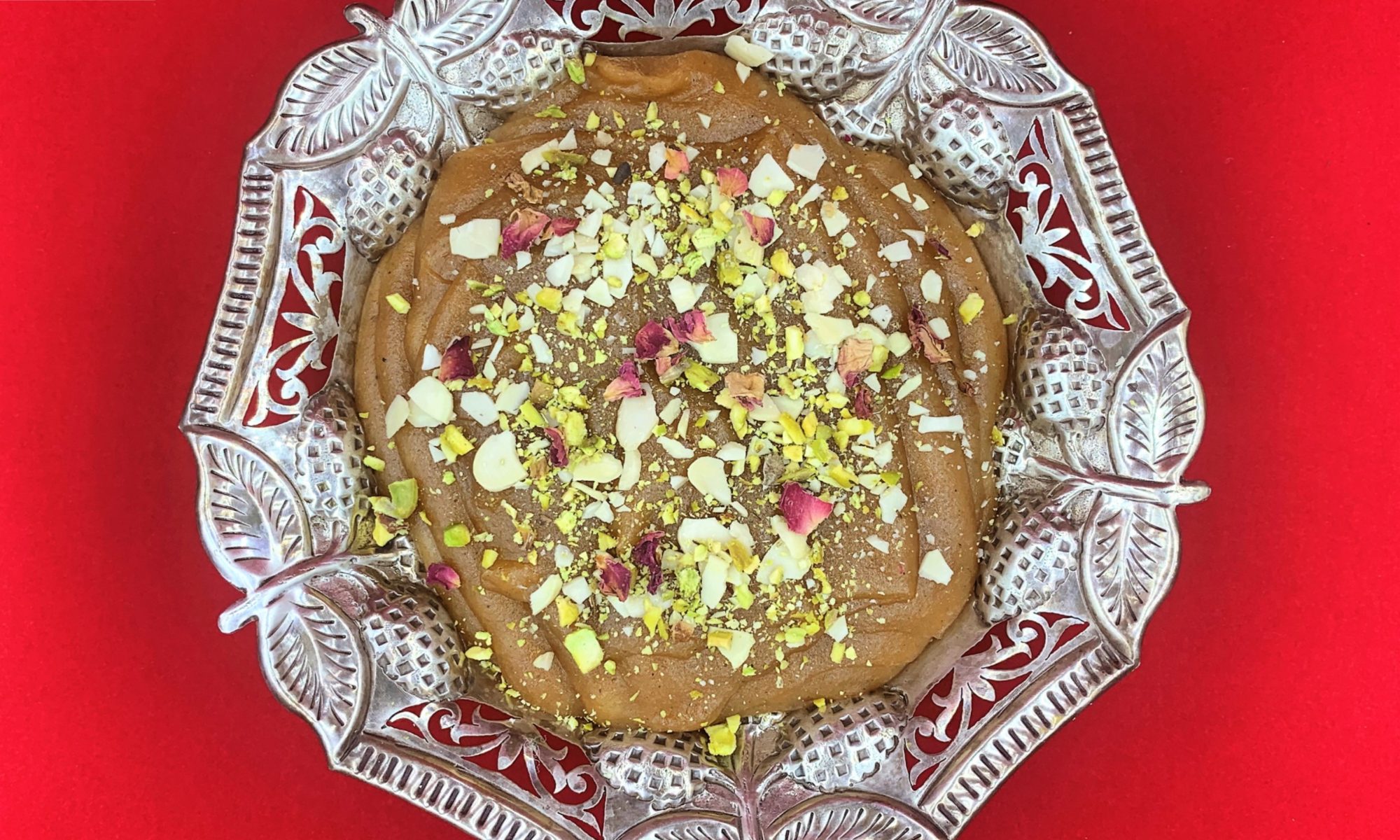
A delicious 4 ingredients Indian Dessert, Aate Ka Halwa is very easy to make and is quite scrumptious. Loaded with ghee and dry fruits, Atta Halwa or Wheat Halwa is definitely indulgent. This is easy to make at home with some simple tricks. It is usually served for breakfast or before bedtime to keep the body warm. You can also serve it as dessert after meals.

Although you can use any whole wheat flour available to make this halwa, making it using coarsely ground flour will give you the best result. If you have access to freshly milled flour, then the results will be best. This halwa should be made in ghee or clarified butter for the best result. If ghee is not available, then you can use unsalted butter, but not oil. If you are conscious and prefer your halwas in Oil, then I would say that you are depriving yourself with real taste of Halwa. Secondly, I see a lot of people use White sugar and Brown sugar, but the actual Aate ka halwa is made with Gudd/Jaggery.

My mother has often made this Halwa during weekends, specially in winters for breakfast. I loved the fact that it would be ready on demand and everyone at home enjoyed and loved it. Its always made our weekend more special and sweet. As much as I did try, I do not think I can make it as delicious as how my mother made it, but its still pretty close.

You can easily store the halwa in an airtight container in the refrigerator for 3-4 days. When you want to consume, just take it out and heat for a few minutes before serving. You can also freeze it in freezer-safe container for up to 3 months. My steps are simple and I keep it as basic as I can so it’s easy to follow and the taste connect us to the authentic flavor too. Enjoy!!!

Lahori Murgh Chhole Curry

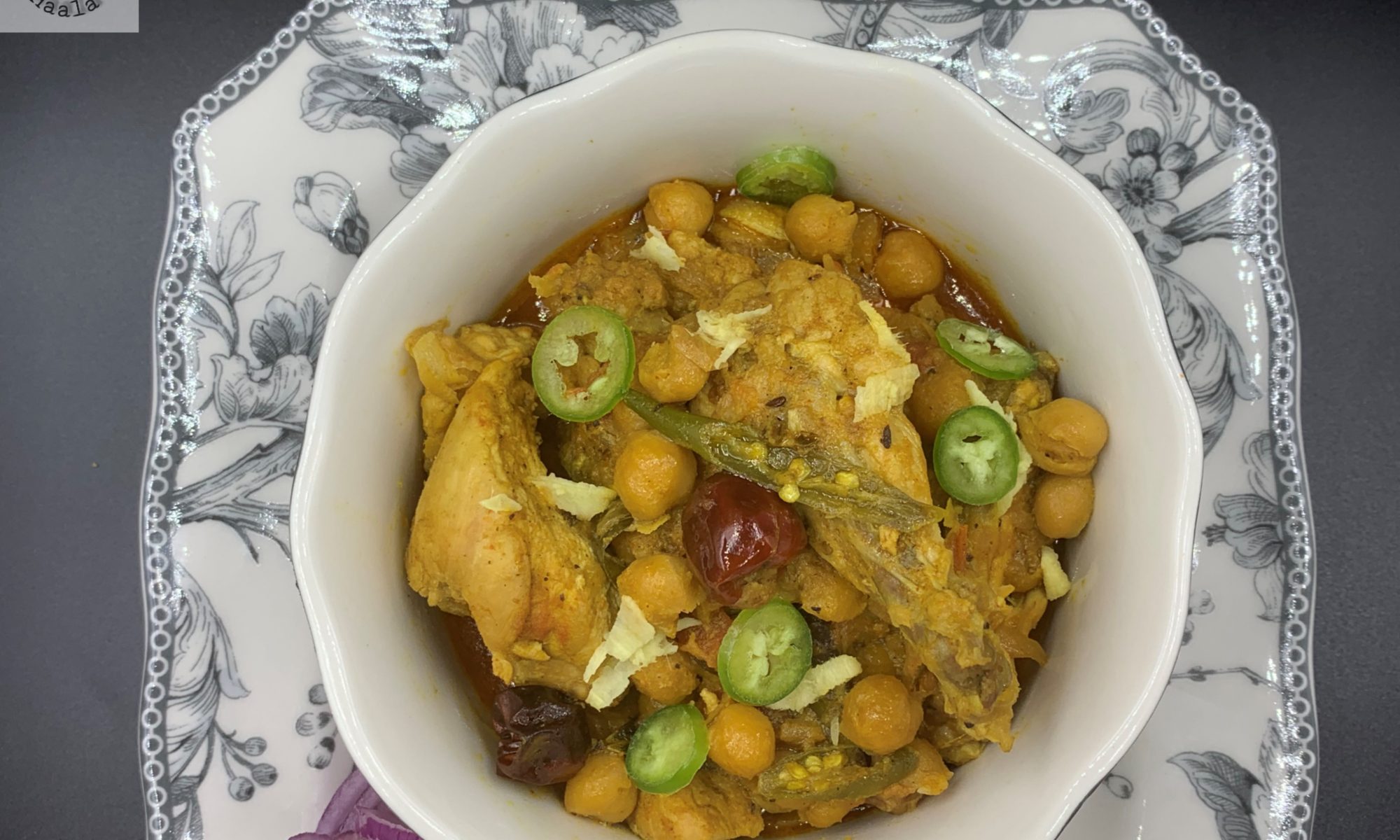
Lahori Murgh Chhole Curry is a classic and time-honored Pakistani dish, deeply rooted in the culinary traditions of Lahore and an integral part of Punjabi cuisine. Long associated with the city’s vibrant food culture, this dish reflects the warmth and simplicity of everyday Lahori cooking. Interestingly, despite its cultural significance, many natives of Lahore regard Murgh Chhole as a routine household preparation, often overlooking how distinctive and celebratory it may appear to those outside the region.

Traditionally enjoyed as a breakfast dish, Lahori Murgh Chhole is most commonly served with tandoori roti or kulche, much like the beloved nihari. However, its versatility sets it apart—it pairs equally well with steamed rice or soft phulkas, making it suitable for any time of day. Rich in flavor yet comforting in nature, this dish beautifully represents the understated elegance of Punjabi home-style cuisine.

One might wonder what inspired me to cook Murgh Chhole Curry. The motivation, in fact, comes from an Indian chef whose work has inspired countless home cooks, myself included. In one of his shows, he shared a memorable story from his college days in Boston, when he traveled to New York City and dined at a small restaurant owned by a Pakistani chef. After his very first bite, he was so taken by the flavors that he asked for the recipe. The owner, in a generous gesture, wrote it down roughly on a napkin—in Urdu—which the chef still treasures to this day.

That story deeply resonated with me. I firmly believe that every dish carries a story within its flavors, and Murgh Chhole Curry is no exception. While this may not be my own lived experience, it is a narrative that I return to each time I cook, eat, or even read about this dish—and one that, I hope, will stay with you as well.

While this recipe is not directly sourced from that beloved chef, it is very much shaped by the inspiration I have drawn from watching culinary shows that celebrate diverse cultures and regional cuisines. These programs often focus on the spirit and technique behind iconic dishes rather than precise measurements or detailed ingredient lists. As a result, much of the interpretation is left to the cook.

I followed the methods and visual cues shared in these shows as closely as possible, adapting where necessary. That process—adjusting quantities, balancing spices, and refining flavors—has been one of the most enjoyable aspects of recreating this dish. The freedom to experiment is where the true joy of cooking lies, allowing each version to carry a personal imprint while still honoring its cultural roots.

This curry was prepared using ghee, though a neutral cooking oil may be substituted based on personal preference. The process begins by tempering the ghee with small dried red chilies, fennel seeds, cumin seeds, cloves, a cinnamon stick, green cardamom, and a bay leaf, allowing the aromatics to release their essential oils. Finely chopped onions and curry leaves are then added and sautéed until the onions turn a light pinkish-brown, followed by ginger-garlic paste.

Next, red chili powder, turmeric powder, black pepper powder, coriander powder, and salt are added and gently cooked before incorporating the chicken and pre-boiled chhole (chickpeas). Chopped tomatoes, green chilies, and yogurt are then mixed in, creating a rich and well-balanced gravy. The dish is finished with a garnish of sliced ginger and jalapeños, adding both freshness and heat.

This preparation results in a truly satisfying and flavorful dish. If you have not yet experienced Murgh Chhole Curry, I encourage you to try it—it is well worth the effort. It pairs beautifully with roti, paratha, tandoori roti, or simple boiled rice, making it a versatile addition to any meal.

Enjoy.

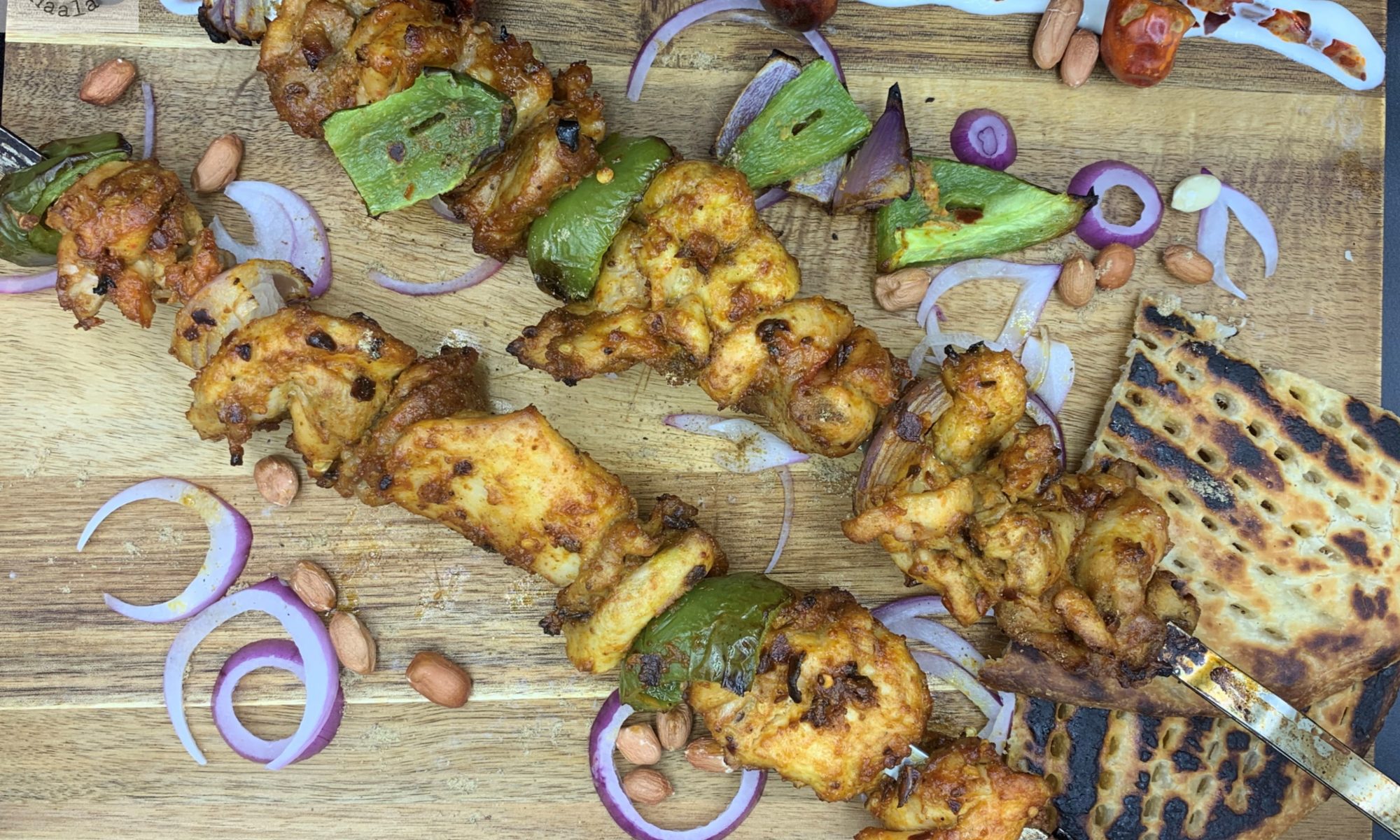
Indonesian Chicken Satay

Most South East Asian countries offer their version of Chicken Satay. Though I have never visited any of the countries [despite they are so close to India], from what I have watched and read, its a popular street food. This one is the Indonesian version and to me, is the easiest, you can get everything you need from the supermarket, simple to put together and simply delicious. The kebabs have a peanut sauce mixed in the marination and I find peanut butter to be an awesome substitute.

Satay Chicken is more known as Malaysian and Thai, though Indonesia is actually the country that came up with the dish. All these countries have their own recipes and versions of these wonderful dish. I will be sharing Malaysian Chicken satay as well. I am a big fan of Malaysian food but for some reason always find it easier to make the Indonesian version of Chicken Satay, since its easy and scrumptious and my kids love it.

When I was looking into the various chicken Satay recipes, I realized that even though they all had very close similarities, they all taste entirely different and are easily distinguishable. The Indonesian version is easier and kind of a little faster than the other.

The Peanut Sauce in the recipe has been substituted with Peanut butter and if you happen be someone who prefers going more authentic, you can always try getting some peanut sauce from the Asian market. The traditional Peanut sauce is made by grinding Peanuts, soy sauce, Hot peppers, baby onions and lemon together. The paste is usually thick and water is only used little at a time. if you plan to make yours at home, I suggest you to use peanuts without skin, and use dry Red chilies as an option for hot peppers. Lemon juice and little water as needed. Just using a blender to combine everything together.

Since I use Peanut butter, I add Red chili flakes, sugar, soy sauce and lemon juice separately. I feel marinating the chicken pieces together with all the spices and Peanut butter does an amazing job and makes the dish deliciously flavorful. I have made thise for school lunches, home lunches, small gathering and for pot luck. It has always been loved and appreciated and its a super amazing recipe to bookmark and pass on. Enjoy!!!

Haala’s Zingers

My boys prefer home lunches and also love varieties for their lunch. When I use the word variety, I mean that they would not want a dish to be repeated in 2-3 weeks and believe it or not, its a lot of pressure to make something that tastes great and that they would love it as well.

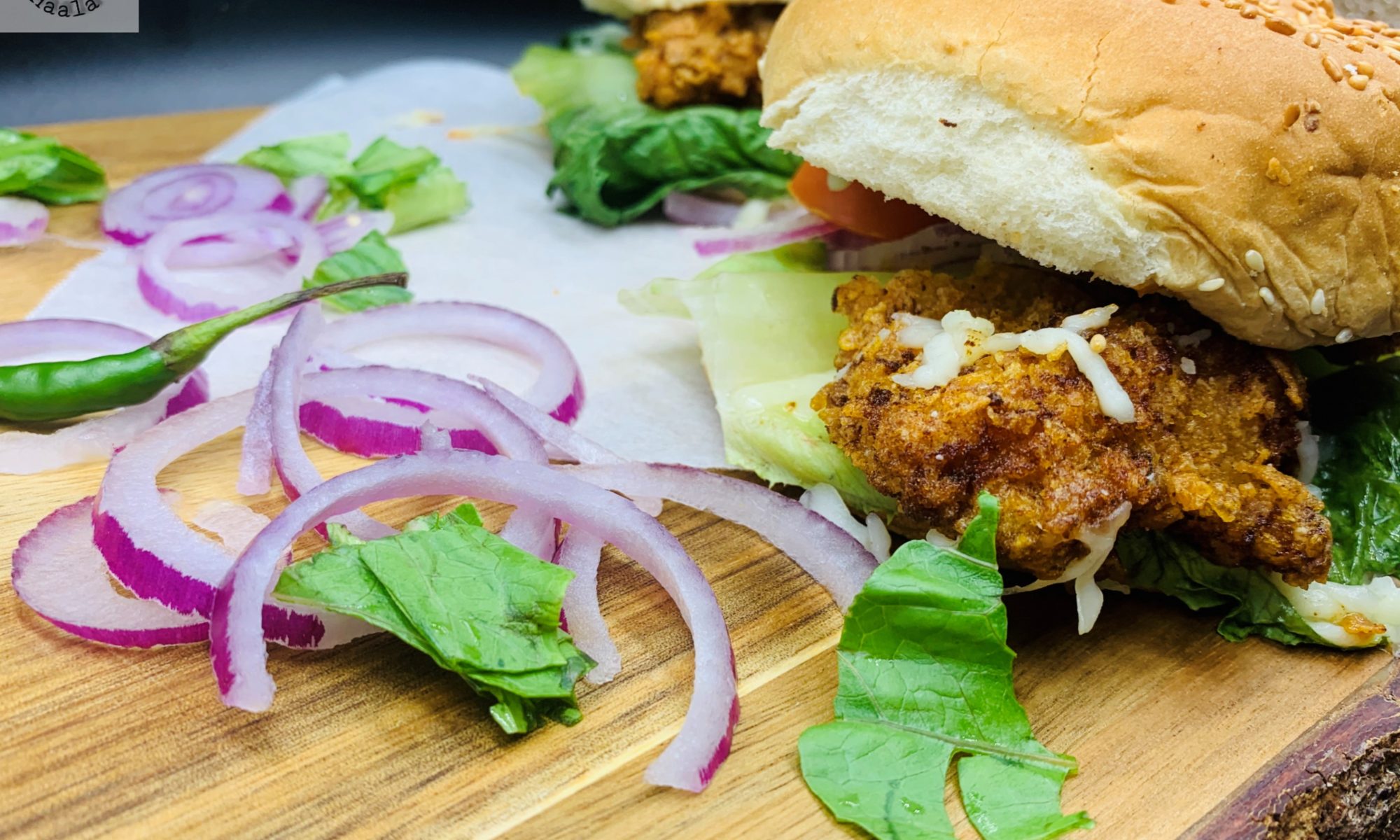
These chicken burgers are a very close copy to a famous food chain. These are easy to make and can be easily made by beginners as well. The chicken does not have to marinated for too long and even the process of marination is with pretty simple ingredients. This is great dish if you have boneless chicken available and haven’t thought of anything in mind, and need to get things ready in a rush.

My boys love these zingers and believe these are one of my best creations. Since its not possible for us consume Chicken outside in USA, trying to come up with our own is the only option. But, since India has a halal option for almost all food joints, we have tried the burger and my kids actually told me that this tasted way better [I know, I am raising them well to please their mother]. But, I like the fact, that its fresh, homemade and you know what you are putting in your child’s plate. You might be able to air fry the burger. Though I have an air fryer, I always feel that it makes food extremely chewy. And then again, when you are cooking at home, ingredients are more fresh, no preservatives are added so, cooking things the way they should be cooked makes kids happy too. I am against messing up food giving it the label of being healthy. You don’t want your kids to go off basic food. You just teach them to make healthier choices and eat well.

I usually make this and serve it with a different spicy sauce . The recipe for the spicy sauce is in the sauce section. A blend of mayo, ketchup, hot sauce and mustard sauce goes perfectly with this spicy zinger chicken burger to give that kick to this sandwich.