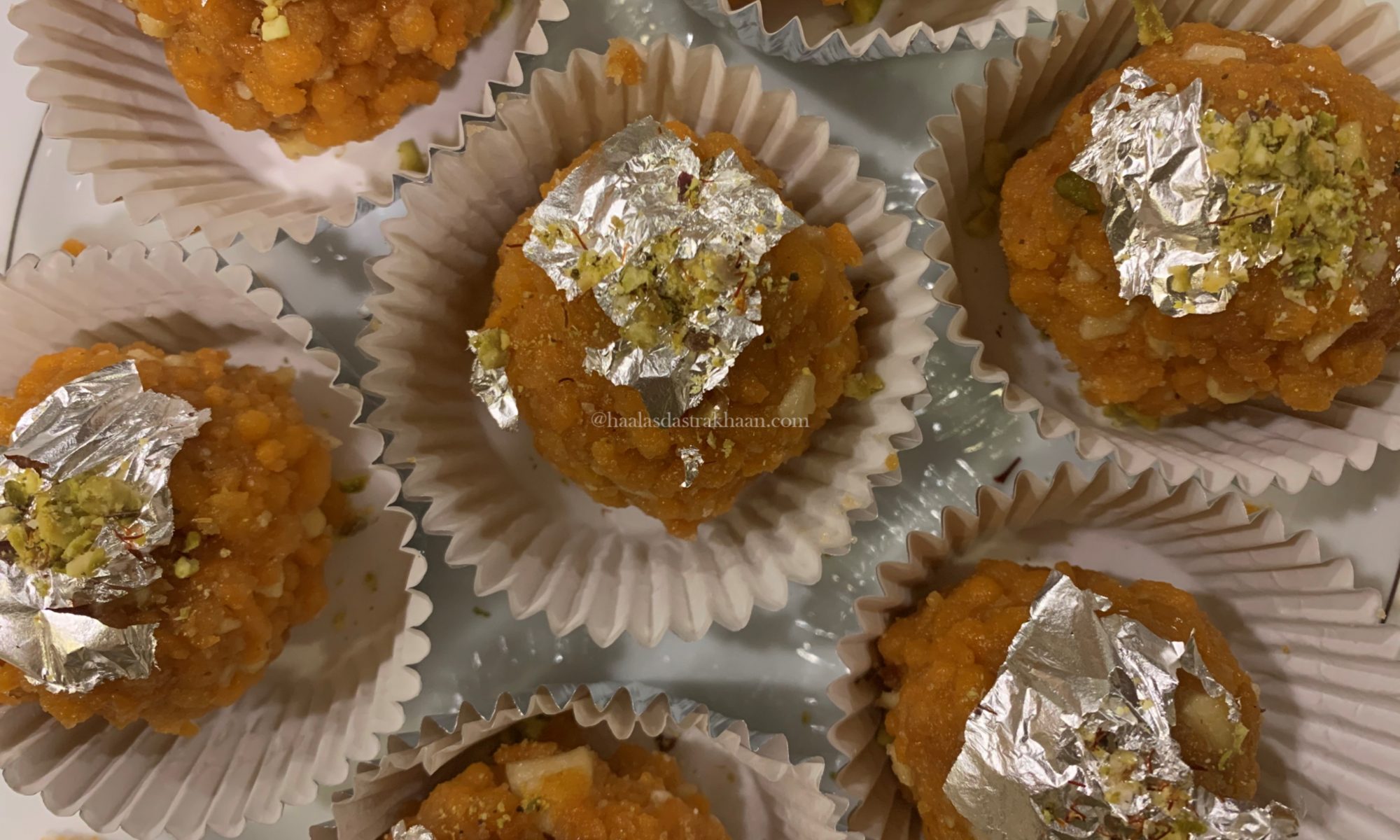
Boondi ke Laddu

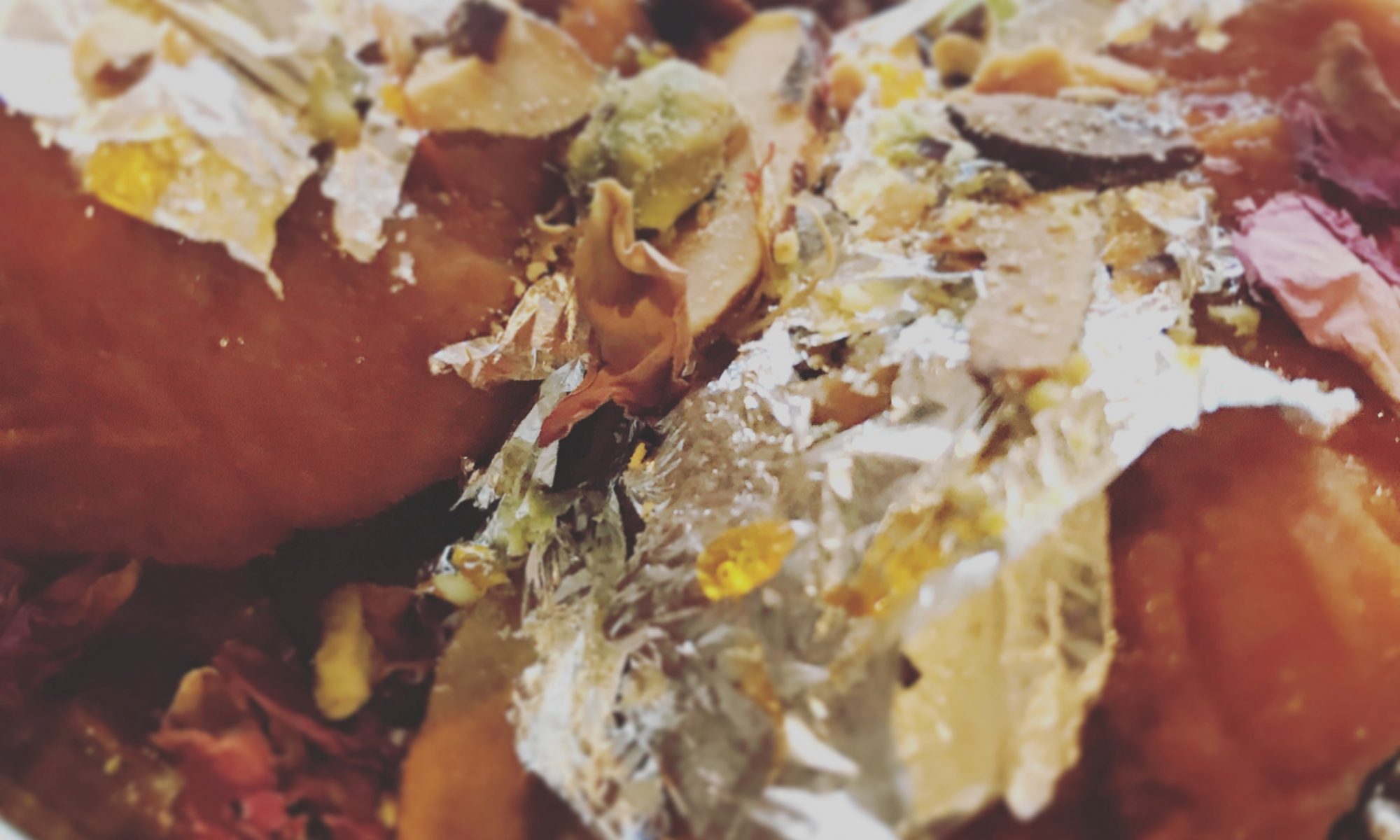
Boondi Laddu is one of those classic Indian sweets that is instantly recognizable and widely beloved. It is commonly prepared in homes and readily available in almost every sweet shop—though no two versions are ever quite the same.

Unlike Motichoor Laddu, which is made using much finer, delicate boondi and a slightly different technique, Boondi ke Laddu possess a texture and character that are distinctly their own. Their larger pearls and gentle bite give them a rustic charm that continues to make them a timeless favorite.

I have always shared a special connection with this sweet—one that I believe many who grew up in India will instantly recognize. Every Independence Day and Republic Day, schools across the country would make attendance at the flag-hoisting ceremony mandatory. Those mornings were filled with patriotic songs, earnest speeches about freedom, and moving stories of how our freedom fighters came together to secure an independent nation.

And at the end of it all came the moment every child quietly waited for—a small but unforgettable token of joy: a Boondi Laddu placed into each student’s hands.

Boondi ke Laddu was the staple sweet distributed to every child at the close of Independence Day and Republic Day ceremonies. Yet its presence in my memories extends well beyond the schoolyard. Each Ramadan, on the blessed night of Shab-e-Qadr, and again upon the completion of Qur’an recitation at our local mosque, my father would lovingly distribute Boondi ke Laddu to the community.

Over time, this humble sweet became woven into moments of both national pride and spiritual reflection—making it far more than just a festive treat in my eyes.

Somehow, this humble sweet found its way into every celebration—whether religious or national. It was simple, joyful, and universally loved. To this day, I have yet to meet anyone who can easily resist a Boondi Laddu.

Growing up in India, I rarely remember seeing Boondi ke Laddu being made at home—they were simply always available, ready to be picked up from the neighborhood sweet shop whenever the occasion called for them. However, after moving to the United States, recreating that exact familiar taste has not been quite as easy. The versions available in many Indian sweet stores here often differ from the ones I grew up with.

And so, I finally decided it was time to roll up my sleeves and make them myself.

I browsed through numerous blogs and food websites, only to find that most featured recipes and images for Motichoor Laddu instead. The truth is, sometimes you are not searching for something elaborate—you are simply trying to recreate a small, meaningful piece of your childhood.

You long for that familiar taste, the one that instantly transports you back home.

I first attempted to make Boondi ke Laddu quite some time ago, but the results were less than ideal—the boondis turned out elongated, and the mixture simply refused to bind properly. The experience, though disappointing, stayed with me.

Later, during a visit to India, my rakhi brother took me to a specialty shop that sold ladles designed specifically for making boondi. I brought one back with me, quietly determined to try again once I returned to the United States.

Even so, I believe nothing we recreate here can fully capture the quiet joy of enjoying it in our motherland. No matter how precise the recipe, it is the people and the shared moments that we miss the most. Yet, as life teaches us, we cannot resist the course of destiny—we can only make the most of where we are.

And so, I continue to cook, create, and hold on to these small pieces of home, one dish at a time. These laddus, I am certain, will stir memories of childhood for many of you. They do require a bit of extra effort—and yes, the process can get a little messy—but in the end, every bit of it is truly worth it.
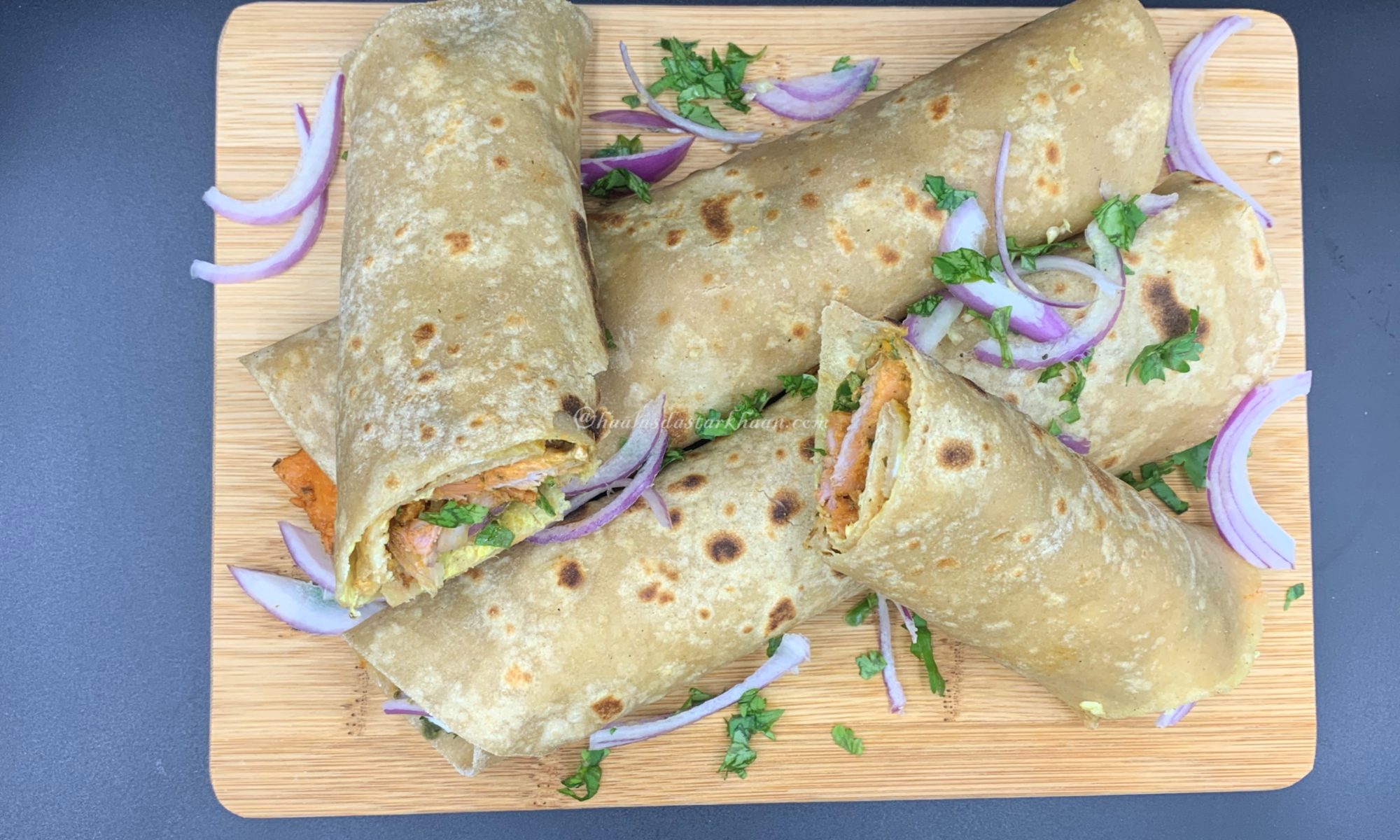
Kolkata Chicken Roll

Chicken rolls have always been a favorite in our home. Those of you who follow my blog know how much I love wraps of all kinds — whether it’s a classic chicken roll, a burrito, or tacos. I think this love goes back to my mom. During one of her trips to Mumbai, she tasted Mutton Tikka Boti Rolls at a Parsi eatery and later recreated them at home. They were an instant hit with the entire family, and from that point on, rolls became a regular comfort food for us.

So when I came across pictures of the famous Kolkata Chicken Roll, I knew I had to try making it. The flavors sounded irresistible — bold, layered, and packed with personality. From everything I’ve read, it’s one of Kolkata’s most iconic street foods, loved for its rich taste and satisfying simplicity. Although I’ve never visited Kolkata, there’s something about its food culture that deeply attracts me. Some places just connect with you through their cuisine, even from afar.

Recipes like this are wonderfully fuss-free and incredibly practical. For those of us living far from our home country, food becomes a powerful way to stay connected to our roots. At the same time, dishes like these are perfect for kids — easy to eat, nutritious, and ideal for busy days or meals on the go.

I grew up loving my mom’s Tikka Boti Rolls. She initially made them with mutton, but later switched to chicken as well, and I adored both versions. I’ve always appreciated recipes that travel well — perfect for road trips, long drives, or those moments when hunger strikes and stopping isn’t an option. Not every journey allows for leisurely restaurant breaks, and sometimes you’re just stuck in traffic after a game or a long day. That’s when homemade rolls like these truly shine — convenient, filling, and deeply satisfying.

For this version, I marinated boneless chicken with salt, ginger-garlic paste, lemon juice, and yogurt. The spice blend includes dried fenugreek leaves, tandoori masala, red chili powder, cumin powder, and fennel powder, creating a beautifully aromatic base. The chicken can be marinated overnight for deeper flavor, but even a quick 30–45 minute marinade works well when time is short.

This recipe may not be an exact replica of the rolls you’d find on the streets of Kolkata, but after many trials and countless variations, this is the version I keep coming back to. One element I borrowed from my mom’s technique is spreading a thin layer of beaten egg onto the roti and cooking it before adding the filling. I’m not entirely sure how this differs from traditional Kolkata egg rolls, but I do know that it adds richness, texture, and a wonderful depth of flavor.

Ultimately, this recipe is a blend of influences — my mother’s cooking, flavors I’ve loved over the years, and my own experiments in the kitchen. The result is a chicken roll that feels both familiar and new, comforting yet exciting.

I hope you try it, enjoy it, and share it with your loved ones — just as my family and I do. 🌯✨

Pyaaz Ke Samose

I’m from Rajasthan, and I grew up eating samosas as a regular part of life. The classic potato samosa — aaloo ke samose — was everywhere, and every shop seemed to have its own signature flavor. Some were absolutely delicious, others not so much, but one thing I always loved was the crisp, flaky outer crust. In fact, for a long time, that was my favorite part. The only filling I truly adored back then was the kheema samosa my mom used to make at home.

I never enjoyed bland fillings, so whenever the spice level was low, I would lose interest quickly. Over time, as I tasted more varieties, I realized that it was the spicy, punchy samosas that won my heart every single time.

After I got married, I discovered a completely new favorite. During one Ramadan in Bangalore, we tried the famous Ramadan special onion samosas — Pyaaz ke Samose — and instantly fell in love with them. Crisp, aromatic, slightly sweet from the onions, and perfectly spiced, they were unlike any samosa I had eaten before.

There’s a common misconception that Ramadan food for Muslims is mostly non-vegetarian, but that couldn’t be further from the truth. Our iftar tables are filled with a beautiful mix of vegetarian and non-vegetarian dishes, each with its own tradition and story. These onion samosas are a perfect example — simple ingredients transformed into something truly special.

They are most commonly made during Ramadan, though a few Muslim shops prepare them year-round. Still, there’s something about foods made in that month — perhaps the anticipation, the hunger, the togetherness — that makes them taste extra special. It’s a flavor that’s hard to recreate outside that atmosphere.

Since we don’t get these samosas where we live now, I decided to try making them at home. After several rounds of trial and error, I finally arrived at a version that tastes just the way we remember — crispy on the outside, flavorful on the inside, and utterly addictive.

If you enjoy onion samosas and want to recreate that Ramadan magic in your own kitchen, I highly recommend giving these a try. I hope you love them as much as we do. 🥟✨

Badusha

Some sweets are forever tied to celebrations. One bite, and you’re instantly transported to festivals, laughter, lights, and family gatherings. For me, Badusha — or Balushahi — will always be connected to Diwali. I still remember visiting friends during the festival and being served plates of homemade or carefully selected store-bought Badushas, each one flaky, rich, and absolutely irresistible.

This post probably should have gone up during Diwali, but honestly, sweets don’t need an occasion — just a craving, a little enthusiasm, and the time to make them. Diwali may be over, but my love for Indian mithai certainly isn’t. When the craving strikes, there’s no reason to wait.

Living in the USA, I rarely find Badusha easily available, mainly because it isn’t as widely known here. I suspect that if more people tasted it, it would quickly become a favorite. So I decided to make it myself. After several not-so-successful attempts, I finally perfected the recipe — and it was absolutely worth the effort. Some cravings are simply too strong to ignore.

This sweet also carries personal memories. My mom is a huge fan, and I’ve heard stories that Balushahi was one of the sweets served at my parents’ wedding. In my hometown of Jodhpur, there’s an old sweet market area known as “Pongal Pada,” famous for its variety of Badushas in different colors, textures, and finishes. There, they are often called Maakhan Bada, which loosely translates to sweets made with butter. While traditional Badusha is soaked in sugar syrup, Maakhan Bada is typically coated with a thick layer of crystallized sugar — somewhat like a firm fondant shell — giving it a distinct texture and appearance.

Once I finally cracked the recipe at home, there was no looking back. These turn out beautifully flaky on the outside, soft yet layered inside, and perfectly sweet without being overwhelming. And let’s be honest — this is not the kind of dessert anyone eats just one of. One quickly turns into two… and then maybe three.

Known as Balushahi in North India and Badusha in South India, this beloved mithai transcends regional names. No matter what you call it, the experience is pure indulgence — buttery, crisp, syrupy, and deeply satisfying.

If you’ve never tried making it at home, I highly encourage you to give it a go. Once you taste a freshly made batch, you may never feel the need to buy them from a sweet shop again.

I hope you enjoy these as much as I did — flaky, festive, and full of nostalgia in every bite. 🍬✨

Mutton Ghee Roast

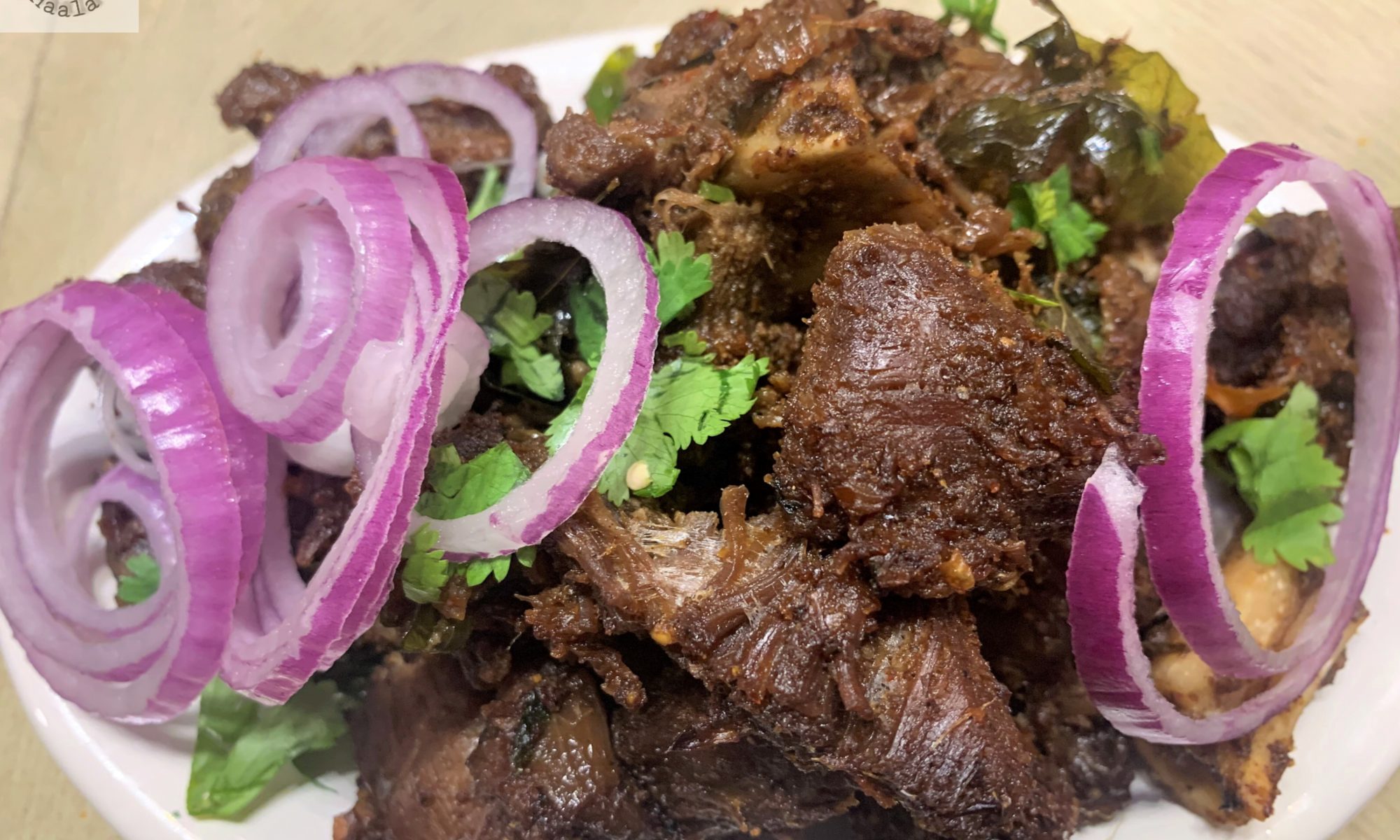
With the wide variety of Kebabs that we make, we love kebabs made from meat the most. I love the way meat Kebabs are always so juicy and tender and absorb all the flavors so naturally. The texture of meat and the spices blend in so well together. I am sure if you look into details of cooking that when it comes to Kebabs, meat Kebabs definitely make to the top of the list. I have heard a lot of people liking Beef too, but since I have never cooked or consumed beef, I don’t really have an idea. But I do think that since Beef has a lot of fat, cooking with its own fat must be adding more flavor to it.

Coming back to Ghee Roast. I came across some cuisine where they mentioned the dish and showed how the meat is boiled till it’s cooked. after roasting the whole masalas, they are ground to a powder, and then the meat is cooked in ghee with spice powder, onions, curry leaves, and green chilies. This dish is pretty easy to make and makes it to my top ten list of easy and flavorful kebabs.

The best thing about these kebabs is that they can be partly premade a few days in advance as well. You can boil the mutton a few days in advance and refrigerate or freeze it, depending on how many days you want to use it. Similarly, you can always dry roast the whole masala and grind them and store them in a dry and airtight container. These kebabs are juicy, moist, flavorful, and go really well as a side dish or by itself. If you are a fan of meat kebabs, you will love the scrumptious chunks of flavorful meat. Enjoy!!!

French Baguette

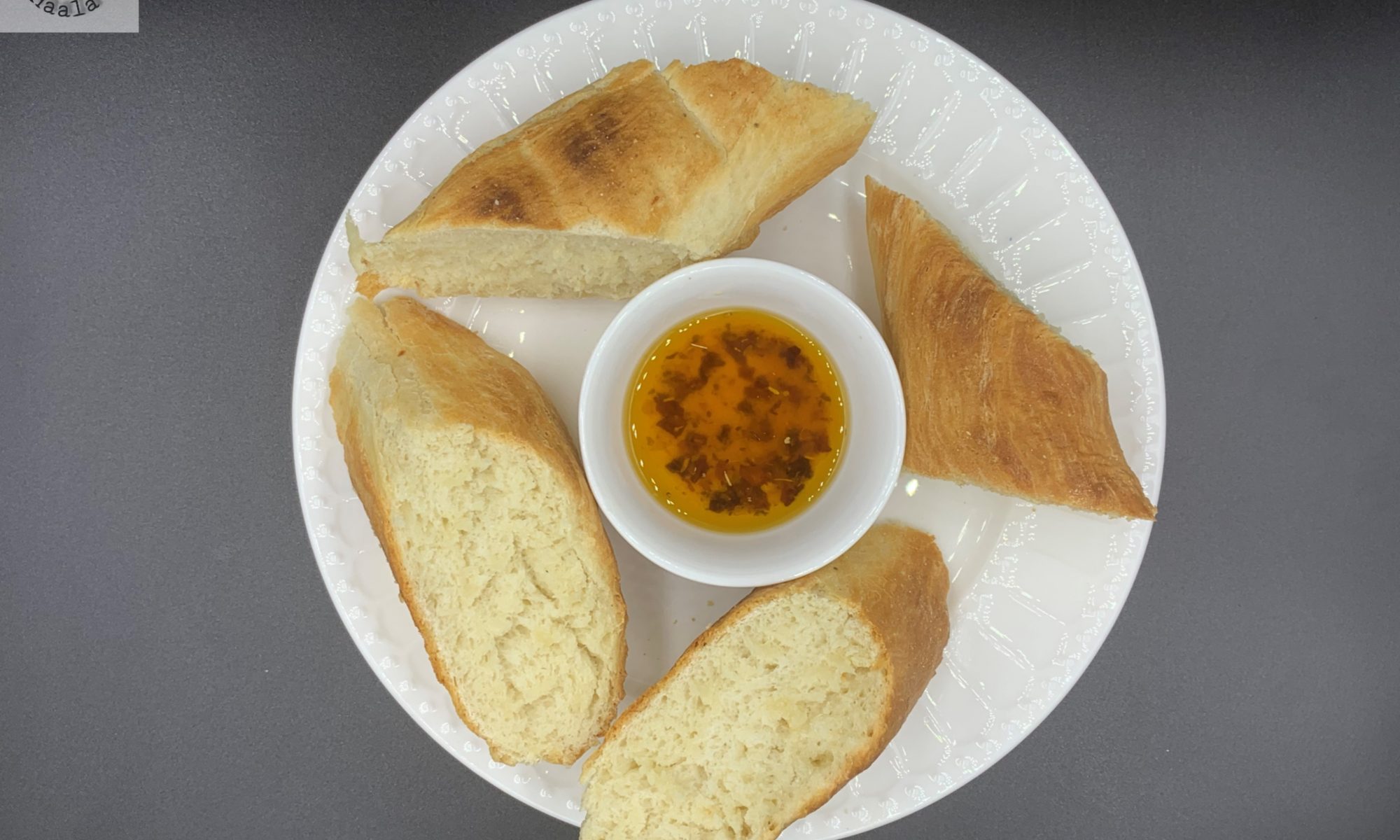
My boys love eating bread. Specially if the bread is served straight out of the oven. Baguette, the long delicious French Bread seems to be a family favorite. Every restaurant that served a good bread had us visiting them more often. Every time we bought French Baguette from our favorite baker, I would reheat it in the oven to make it taste fresh, which was great but not the same. And, that’s when I thought I should try making my own baguette at home. Honestly, looking at so many different recipes, I felt that Baguette wasn’t all that fancily difficult and I decided it was time I just make it.

Now, when I think of France, I think of high end fashionable people, Eifel Tower and also a girl riding a bicycle with a basket full of long loaves of French bagutte Those long loaves are called “baguettes.” (The term comes from the Latin word for “stick.”) They are iconic, and France’s reputation for incredibly crusty and delicious baguettes is known far and wide.

They say that nothing can come close the bread you can get in France. I’ve never been, so I can’t say for sure, but I think you’d stand the best possible chance if you make it yourself. I mean, how could anything be better than a freshly baked loaf of bread? That crackly crust, the tender, airy crumb inside, steamy and yeasty and just begging to be torn into.

This recipe has just 5 ingredients: water, Oil yeast, flour, and salt. But the results are magical. And it’s all because of the technique. Start by dissolving the yeast in warm water. While that is doing its magic, combine the flour and salt. Create a little well in the center, and add in the yeast. Stir it around, taking flour from the outside edge and bringing it into the well, a little at a time. Keep stirring, and adding Oil followed by water as needed, until a shaggy dough forms. You can also use a stand mixer. Now just cover it loosely, and let it rest. For this type of bread, there’s not a lot of kneading involved. It only needs a few quick folds, to become smooth. Place the dough into a greased bowl and cover it tightly. Allow it to proof (or rise) in a warm place until doubled in bulk.

Divide the dough into 4 equal portions, and shape into long logs (about 15 inches long) with pointed ends. Cover with oiled plastic wrap, and allow to rise a second time. While the baguettes are rising, fill a baking pan with water and place it in the bottom of your oven. Preheat the oven and allow it to fill with steam from the water. This is the key to a crusty baguette. Once the loaves have finished their second rise, remove the plastic wrap and sprinkle them with a little flour. Then quickly slash them with a sharp knife. This is not just decorative, but it also allows the crust to crack and the bread to expand in a more controlled way.

Place them in the oven and let them bake until deeply golden brown. They should feel light and dry on the outside, and when you tap them they should give a hollow sound.

Slice it into 1/2-inch rounds and it’s perfect as a base for bruschetta or crostini. Or it can be used as a dipper for your favorite party dip. And we love it toasted with garlic butter, for garlic bread. So good with a pasta dinner!

Or just tear into it and eat it with a hot bowl of soup. So satisfying!

Goat Paaya

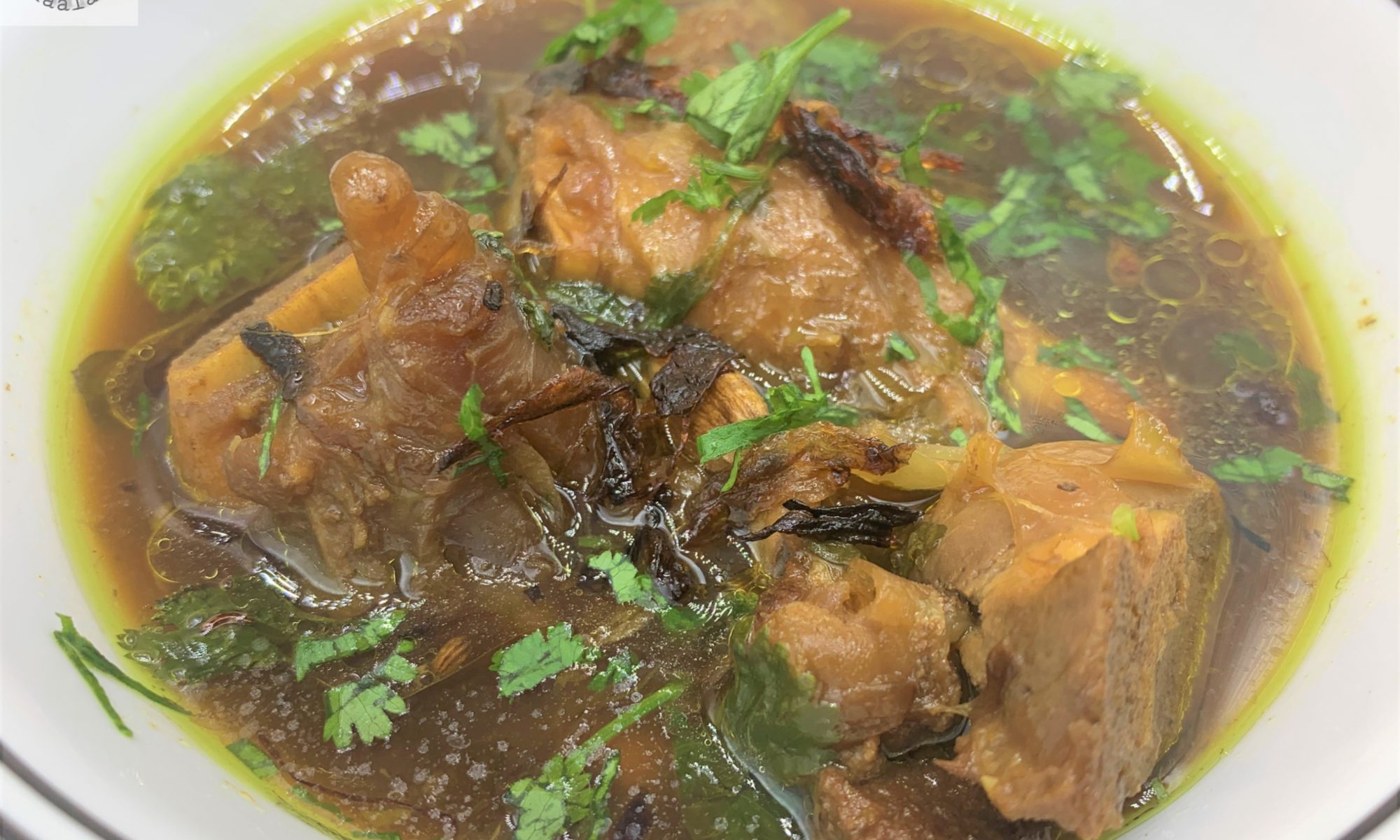
Goat Paaya or Goat Trotters is a widely loved dish in the Muslim community. It’s made in several different ways around the world, but no matter how its made, I have always seen people enjoying it with every bite. Mostly served for breakfast, Paaya is usually served with Bheja and Naan/ Roomali Roti. Paaya will be in the favorite list in any hardcore non vegetarian.

It is a dish that can be made any time of the year but during festival of Eid ul Adha, It is a must for Breakfast on the second day. It takes pretty long to cook, so in times of today when everything is made in a rush, use of pressure cooker is a must. Long before the pressure cooker, Paaya was a dish made with slow cooking and was made over coal fire and usually took around 12-15 hours to cook. A lot of people like my Late Father used to love consuming it as soup. It makes a pretty healthy and flavorful Shorba / curry.

I believe the fashion of cooking Goat Trotters must be from the Muslim rulers who travelled from other countries. A lot of dishes from the Middle east have resemblance to dishes cooked in India/Pakistan/Bangladesh. Not just Non vegetarian but even sweet dishes like Jalebi and Gulab Jamun or for any sweet dish that uses Orange blossom/ Kewra water/ Rose water are also a gift from the Middle east to us, along with Biryani. The fact is that they always traveled with a huge army and therefore made sure that every part of the animal slaughtered should be used. Goat trotters are pretty high in Cholesterol, so they aren’t a great breakfast choice for anyone in today’s date and time since our lifestyle is very sedentary, but back in days for people who did so much of physical labor and most distance were traveled on foot, this dish was not just delicious, but also nutritious and filling.

Like I always say, every dish has a story, so let me share my memories with “Paaya”. As a kid I always saw my Mom make Paaya for breakfast and the whole family, except me relish it. For some reason I am not a big fan of liking the flavor of Bone Marrow in my food. Nevertheless, to make my father happy I would slide a few bites down my throat, until one day he realized that it was tough for me and he let me slide. Paaya is specially cooked for breakfast at all Muslim restaurants that are popular for authentic Muslim food. Most of these restaurants are located in highly populated Muslim areas, like Jama Masjid in Delhi, Frazer town in Bengaluru and Mohammed Ali Road in Mumbai. I am sure there are these areas in almost all cities, I am mentioning these because these are places I have been to and relished all the awesome delicacies. My breakfast has always been bheja fry and Nahari though the family had their love for Paaya. My faher would always order what we liked and those times were a lot of fun. After marriage, I learnt that Mr. Parveez likes Paaya too and since we do not have similar arrangements of eating and enjoying authentic Muslim breakfast therefore, I started making it at home.

Paaya isn’t a difficult dish to make. It’s a heavy stew created from trotters/ feet of goat or lamb. The bones of the Goat leg are rich in gelatin marrow and are barely covered with meat once cleaned, they are just rich in bone marrow which secretes once cooked. Most people/families have their own variation of cooking Paaya, and knowing that India is so culturally varied, every other place has their own cooking style and recipes based on the local ingredients and flavors they are used to. In North India, paaya is served as a breakfast with Tandoori Roti / Roomali Roti. Is believed to be nourishing and is served to patients when sick and is kind of mandatory for new mothers, specially during the early days when her body is going through the recovery process. I usually use a pressure cooker to cook them, but you are more than welcome to cook it in a traditional way. Though time consuming, but its extremely flavorful. I do try the slow cooking method as well when I have more time in hand. Either way, its delicious, so don’t think that you are missing out on flavors if using the pressure cooker.

If you are thinking of making an authentic Muslim breakfast or cooking a non vegetarian breakfast that’s a little different, Paaya is what you need. Serve it with brain fry/ Bheja Fry and people will be praising your breakfast spread for years and looking forward to more. The recipe is in complete detail and if you follow the steps correctly, you will make a perfect dish. Again, spices make a dish flavorful, but cooking with love is what makes it delicious. Enjoy!!!

Hyderbadi Lukhmi Dough

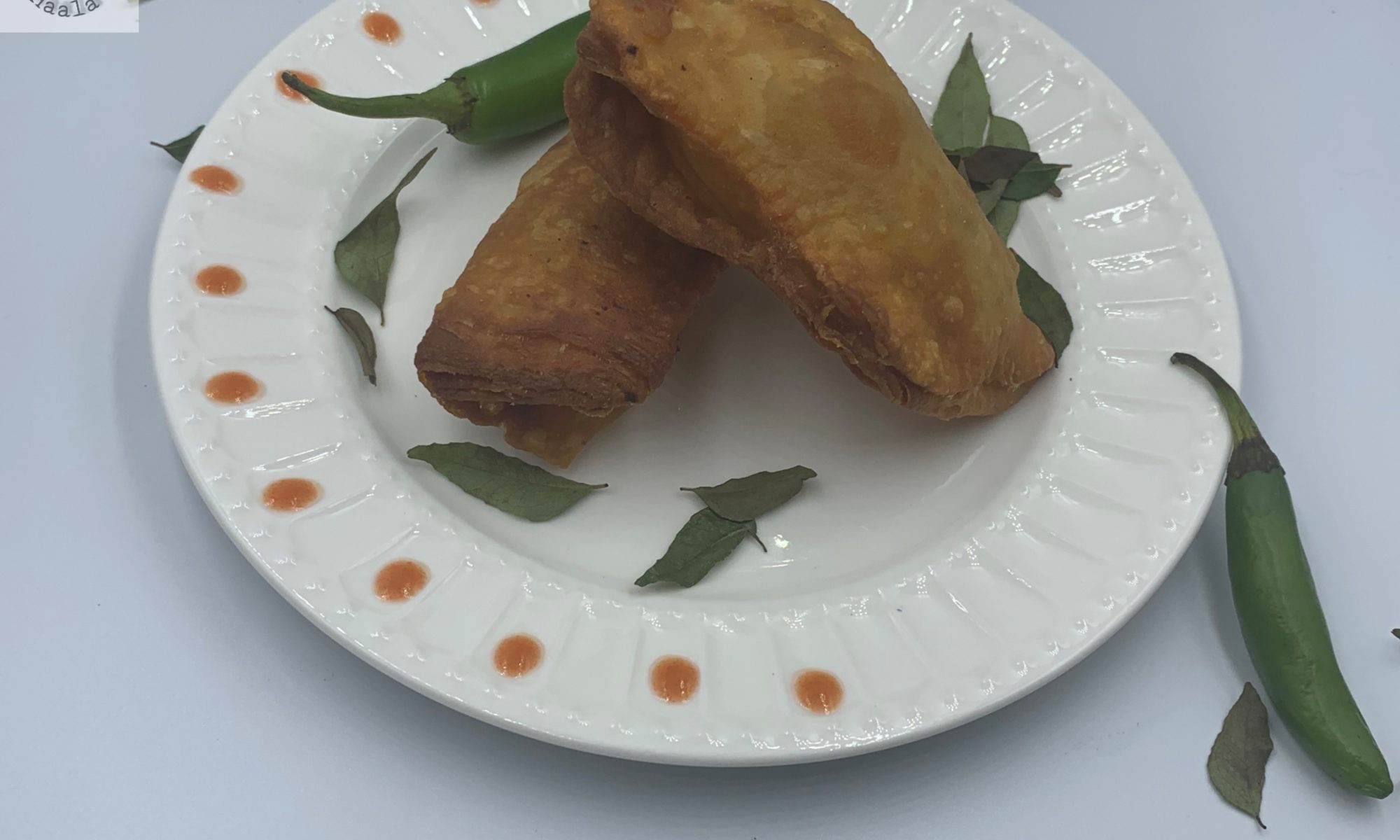
Hyderabad is also popular for its Biryani and Khubani ka Meetha. Along with that, there are loads of other popular Muslim dishes that are very popular in Hyderabad but probably not that popular outside Hyderabad. One of those dishes is Lukhmi. It is a typical rectangle/square samosa kind, which has a filling of mince meat or Chicken. Its regarded as savory or starter of the cuisine of Hyderabad. It is a local variation of samosa. Though have never visited Hyderabad, but I do want to visit it one day. 2 simple reason to it, one of course is Hyderabadi cuisine and second is the Falaknuma Palace that simply became more popular after my favorite Bollywood actor’s sister got married there…LOLzzz. I know sounds crazy, but speaking my heart out is what I do on my blog and it is what it is. So, going through popular Hyderabadi cuisine is when I came across Lukhmi and that’s when I decided to make it. My boys who are big fans of Samosas, I was kind of unsure if they’d enjoy Lukhmi. Honestly, since none of us had ever tried it before, I wasn’t even sure how it will turn out to be. But, to my amazement, not only did they love it, they went a step further by asking me to make this more than samosas, which honestly is a shock to me because my kids can kill for my chicken samosas…Okay!! May be not kill, but definitely injure someone enough if anyone dares to even look at their samosa, forget eating…LOLzzz.

 Hyderabadi cuisine has a variety of scrumptious snacks, and Lukhmi, the flaky savory stuffed with spicy minced meat/chicken is definitely one of them. A popular starter at Hyderabadi marriages, this dish also works well for a quick pair for teatime with family or friends. The name lukhmi originates from the word luqma, which means a small bite in Urdu. Unlike the samosa, lukhmi is usually a flat square/Rectangle shaped flour parcel with a flaky and crisp upper crust and stuffed with beef, chicken or mutton-based filling. You have the snack in other shapes like triangles in some cafes and a vegetarian version mostly  with potato filling is also available.

It is usually served with chopped onions and green chilies or chutney. To prepare lukhmi, all purpose flour/ Maida is kneaded with milk, butter and a little water. The mince or vegetarian filling is cooked separately, with turmeric, onions, ginger, garlic and spices. After resting, the dough is rolled out into a huge rectangular roti. More butter is added in between rolling the Roti and refrigerating it for 20 minutes or a little more. This process is repeated 3-4 times in order to create more flakes or layers to the Lukhmi. After the final process, the Roti is cut to multiple squares. Finally, these multiple small squares each housing a filling pocket forming a Lukhmi.

The edges are closed by pressing them often with a fork, and the stuffed parcel is deep fried in oil. As the color of the patty changes to golden while frying, the lukhmi is ready for consumption. The snack had lost some of its popularity over several decades, as many places in the old city stopped serving it. However, it has made a comeback of sorts in the last few years with an increased interest in lost Hyderabadi recipes.

I really enjoyed making these beautiful and scrumptious pockets of goodness and these are now a family favorite for me. I hope you like them too. If you need help with variations, please feel free to ask. Enjoy!!!

Aate ka Halwa

This sweet dish takes me back to my childhood days. Though this sweet dish is the most easiest and simple sweet dish you could ever make, but you know how somethings are simple yet delicious.

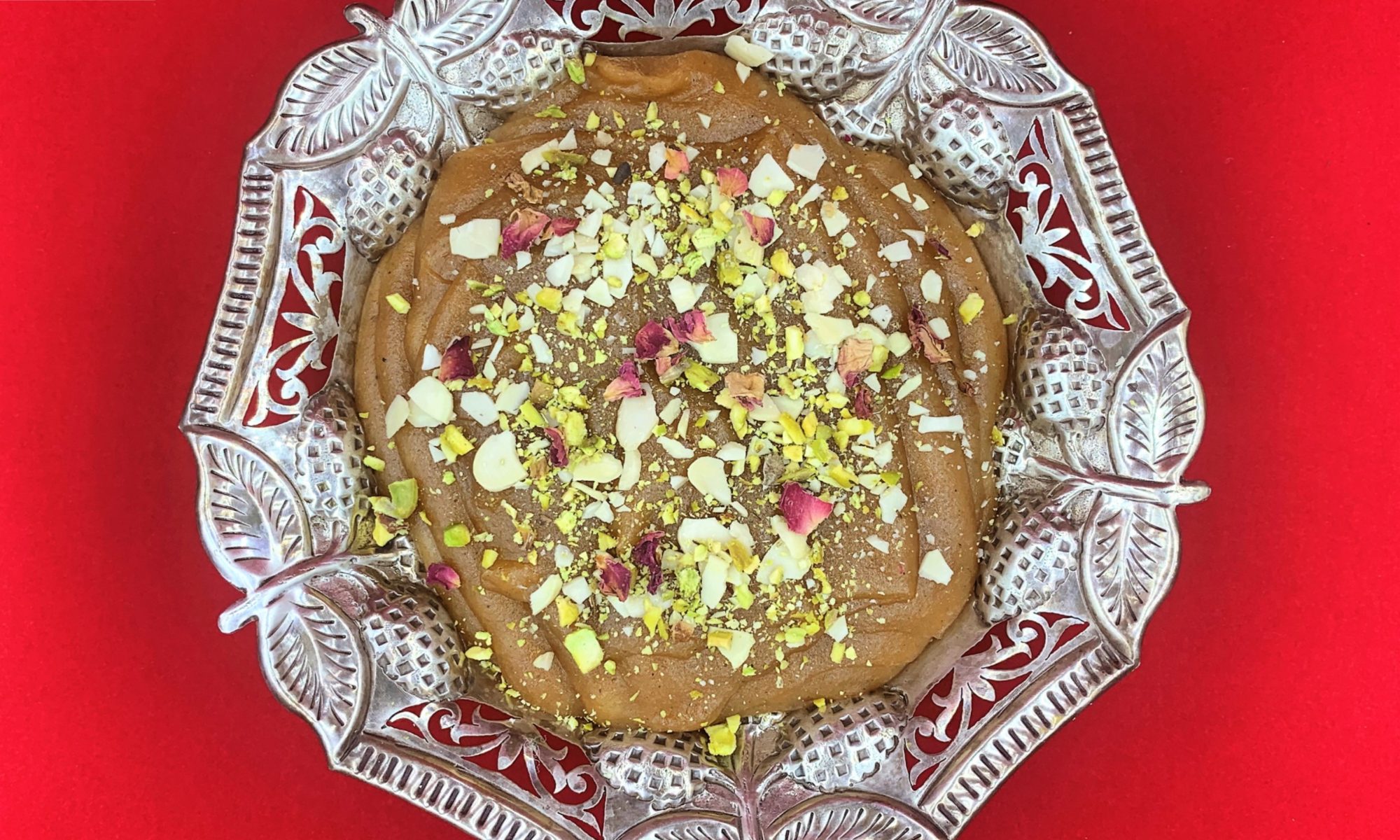
A delicious 4 ingredients Indian Dessert, Aate Ka Halwa is very easy to make and is quite scrumptious. Loaded with ghee and dry fruits, Atta Halwa or Wheat Halwa is definitely indulgent. This is easy to make at home with some simple tricks. It is usually served for breakfast or before bedtime to keep the body warm. You can also serve it as dessert after meals.

Although you can use any whole wheat flour available to make this halwa, making it using coarsely ground flour will give you the best result. If you have access to freshly milled flour, then the results will be best. This halwa should be made in ghee or clarified butter for the best result. If ghee is not available, then you can use unsalted butter, but not oil. If you are conscious and prefer your halwas in Oil, then I would say that you are depriving yourself with real taste of Halwa. Secondly, I see a lot of people use White sugar and Brown sugar, but the actual Aate ka halwa is made with Gudd/Jaggery.

My mother has often made this Halwa during weekends, specially in winters for breakfast. I loved the fact that it would be ready on demand and everyone at home enjoyed and loved it. Its always made our weekend more special and sweet. As much as I did try, I do not think I can make it as delicious as how my mother made it, but its still pretty close.

You can easily store the halwa in an airtight container in the refrigerator for 3-4 days. When you want to consume, just take it out and heat for a few minutes before serving. You can also freeze it in freezer-safe container for up to 3 months. My steps are simple and I keep it as basic as I can so it’s easy to follow and the taste connect us to the authentic flavor too. Enjoy!!!

Bengali Fish Curry

I do not have an idea about what connects me to Bengal, but I am one big fan of their cuisine. It all started from the Kolkata Chicken Roll, went on to Biryanis, from their to their mind blowing Bengali sweets and now to the awesome fish curries that they make.

Honestly, I am a no fish curry person. I have no idea why, but I could just never bring myself down to liking fish curries. God bless my Late Father, he was a big fan and always looked forward to the fish curries my mom made. Jodhpur, the city I belong to does not get fresh fishes very often. The chicken market also sold fish when the season would be on and my father happened to be one of their regular customers. My father would always get enough to be made into curry and to be fried as well. I would never try the fish curry and would love the fried fish and that’s how it continued.

When I got married, Mr. Parveez loved the fish fried on the side with Daal-Chawal, but he also loves his Fish curry, so he would make his favorite fish curry just few times a year. I tried my level best to like it but its just something that puts me off. Then, one fine day comes in the phase of me finding my new love in Bengali cuisine and you know how Bengali food and fish go hand in hand. So, I came across this wonderful recipe of Bengali fish curry. now, honestly my search was for an authentic “Machhar Jhol” recipe and my search is still on. But this fish curry is the closest I could get to an authentic Machhar jhol.

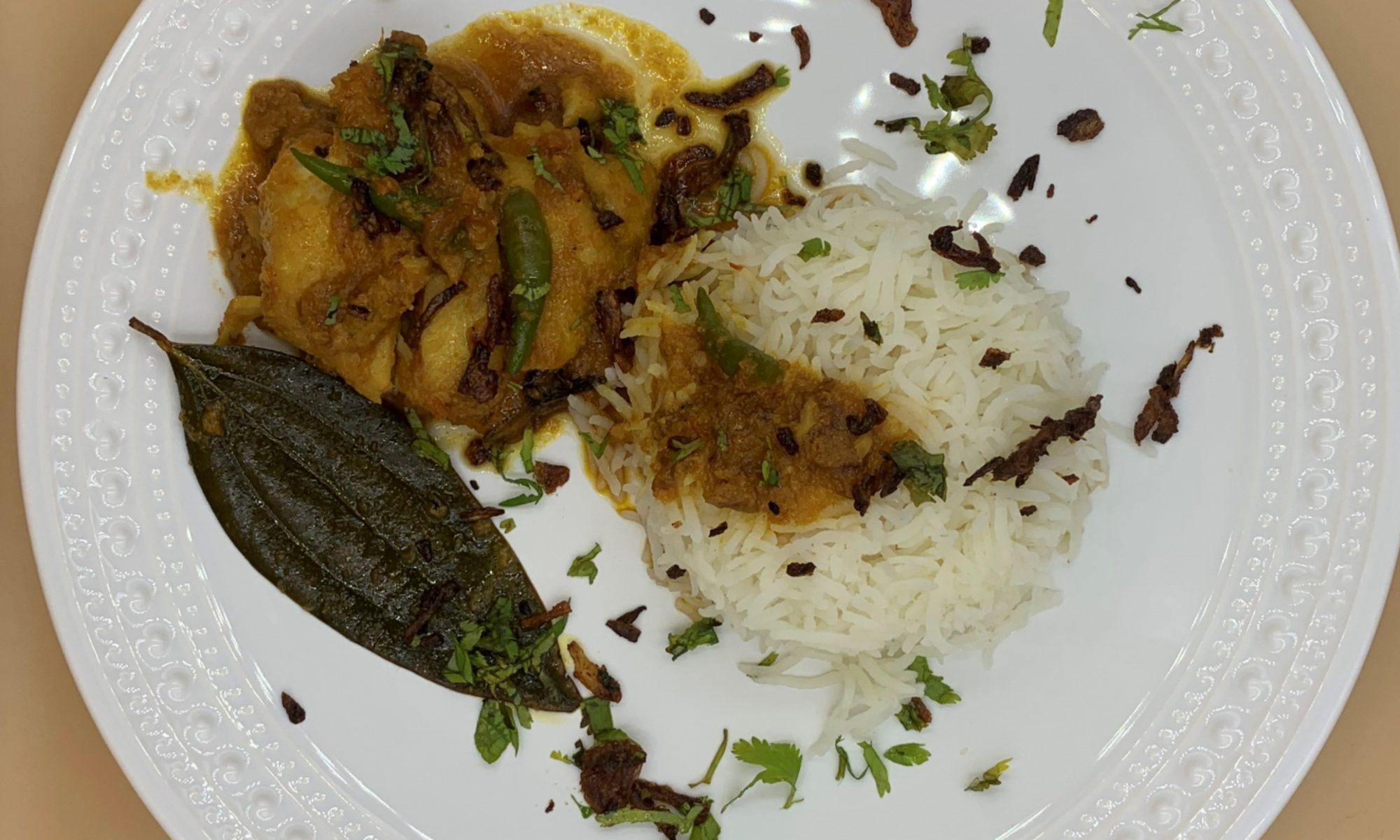
This fish curry is also made in Bengali style and the taste is amazingly delicious. The flavor is mild and different from the regular fish curries. The recipe is pretty simple and easy to make, and the the recipe does not require any fancy ingredients either. I made this curry using Tilapia fillet, but you can use Halibut, Sea Bass or any other fish of your choice. The fish should be slightly mild for this recipe, so whichever fish you pick, it should not be extremely fishy in taste. Enjoy!!!