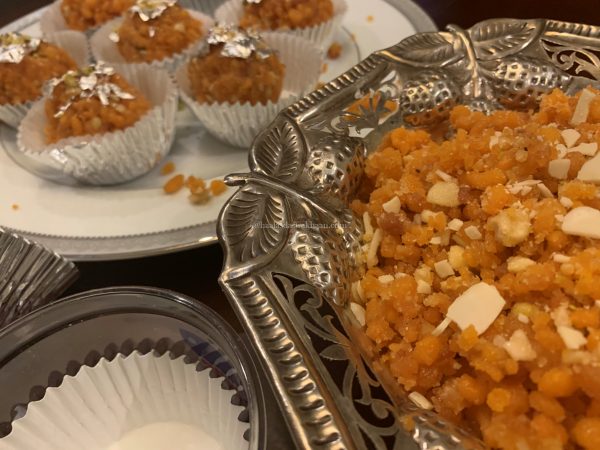
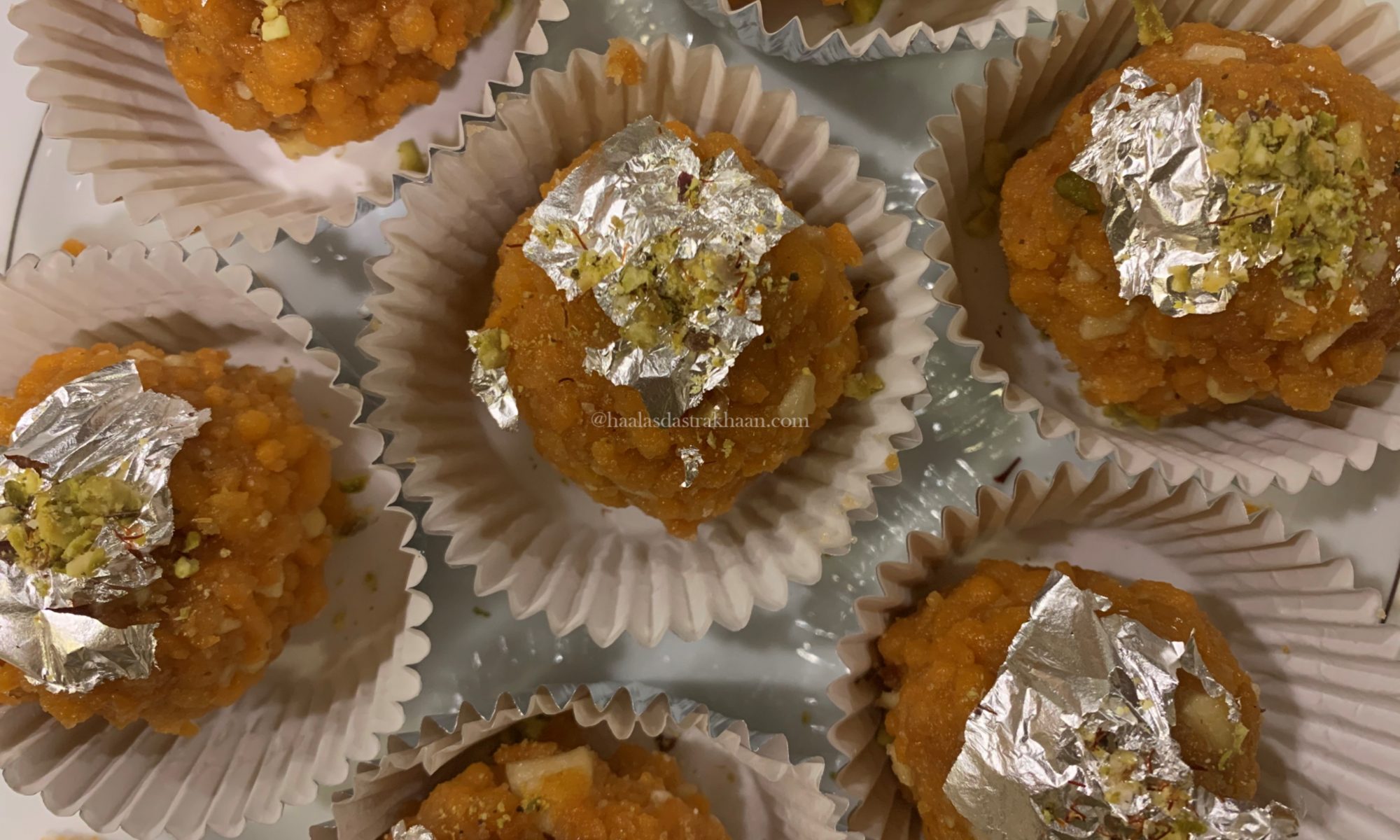
Boondi Laddu is one of those classic Indian sweets that is instantly recognizable and widely beloved. It is commonly prepared in homes and readily available in almost every sweet shop—though no two versions are ever quite the same.
Unlike Motichoor Laddu, which is made using much finer, delicate boondi and a slightly different technique, Boondi ke Laddu possess a texture and character that are distinctly their own. Their larger pearls and gentle bite give them a rustic charm that continues to make them a timeless favorite.
I have always shared a special connection with this sweet—one that I believe many who grew up in India will instantly recognize. Every Independence Day and Republic Day, schools across the country would make attendance at the flag-hoisting ceremony mandatory. Those mornings were filled with patriotic songs, earnest speeches about freedom, and moving stories of how our freedom fighters came together to secure an independent nation.
And at the end of it all came the moment every child quietly waited for—a small but unforgettable token of joy: a Boondi Laddu placed into each student’s hands.
Boondi ke Laddu was the staple sweet distributed to every child at the close of Independence Day and Republic Day ceremonies. Yet its presence in my memories extends well beyond the schoolyard. Each Ramadan, on the blessed night of Shab-e-Qadr, and again upon the completion of Qur’an recitation at our local mosque, my father would lovingly distribute Boondi ke Laddu to the community.
Over time, this humble sweet became woven into moments of both national pride and spiritual reflection—making it far more than just a festive treat in my eyes.
Somehow, this humble sweet found its way into every celebration—whether religious or national. It was simple, joyful, and universally loved. To this day, I have yet to meet anyone who can easily resist a Boondi Laddu.
Growing up in India, I rarely remember seeing Boondi ke Laddu being made at home—they were simply always available, ready to be picked up from the neighborhood sweet shop whenever the occasion called for them. However, after moving to the United States, recreating that exact familiar taste has not been quite as easy. The versions available in many Indian sweet stores here often differ from the ones I grew up with.
And so, I finally decided it was time to roll up my sleeves and make them myself.
I browsed through numerous blogs and food websites, only to find that most featured recipes and images for Motichoor Laddu instead. The truth is, sometimes you are not searching for something elaborate—you are simply trying to recreate a small, meaningful piece of your childhood.
You long for that familiar taste, the one that instantly transports you back home.
I first attempted to make Boondi ke Laddu quite some time ago, but the results were less than ideal—the boondis turned out elongated, and the mixture simply refused to bind properly. The experience, though disappointing, stayed with me.
Later, during a visit to India, my rakhi brother took me to a specialty shop that sold ladles designed specifically for making boondi. I brought one back with me, quietly determined to try again once I returned to the United States.
Even so, I believe nothing we recreate here can fully capture the quiet joy of enjoying it in our motherland. No matter how precise the recipe, it is the people and the shared moments that we miss the most. Yet, as life teaches us, we cannot resist the course of destiny—we can only make the most of where we are.
And so, I continue to cook, create, and hold on to these small pieces of home, one dish at a time. These laddus, I am certain, will stir memories of childhood for many of you. They do require a bit of extra effort—and yes, the process can get a little messy—but in the end, every bit of it is truly worth it.
| Prep Time | 10 minutes |
| Servings |
No.
|
- 1 cup Besan Gram Flour
- 1/8 tsp Baking soda
- 3/4 cup Water for the batter
- 1/8 tsp Orange/yellow food color
- 1/4 cup Dry Milk Powder
- 1 tsp Ghee
- 3 cups Oil For deep frying
- 1 cup Sugar
- 1/2 cup Water For the sugar syrup
- 1/2 tsp cardamom powder
- 1/8 tsp saffron Dissolved in 1 tbsp of screwpine water
- 1/4 cup Almonds + Pistachios chopped or crushed
- 1 -2 No. Silver leaves optional
Ingredients
|
|
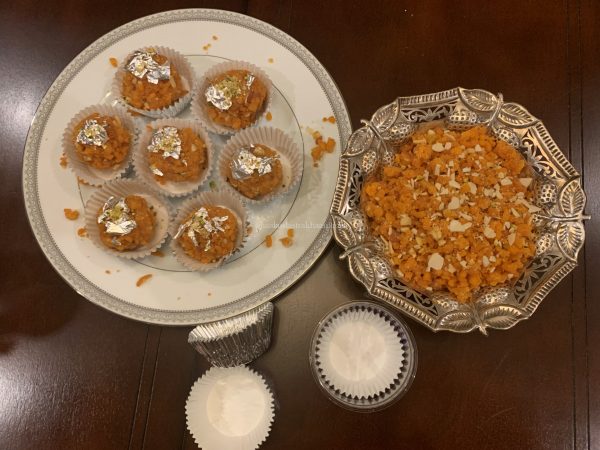
- These laddus can make any occasion more colorful.
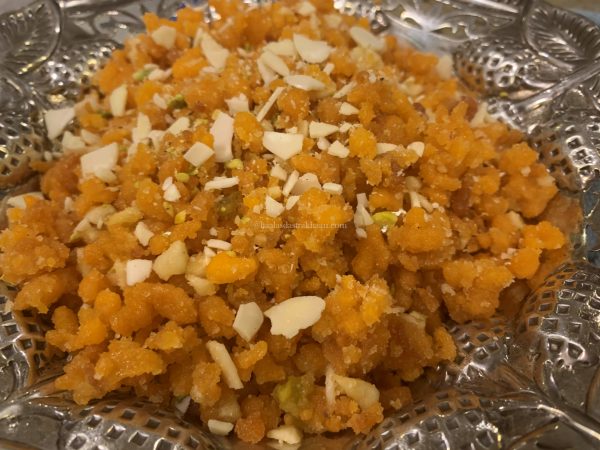
- You can also serve Boondis by itself.
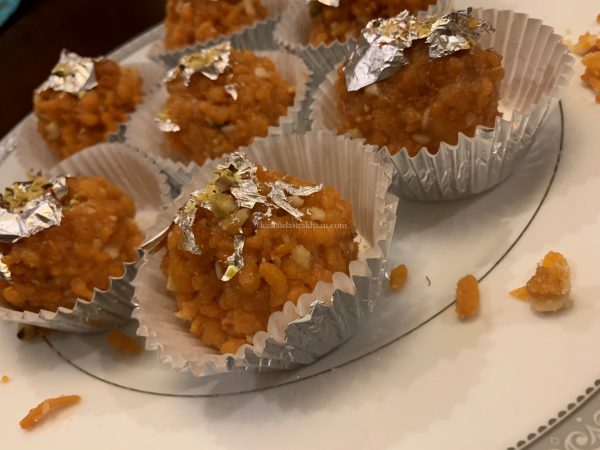
- Laddus can also be made in different colors other than Orange/yellow. It's just that orange happens to be the most used and traditional color for Laddus.
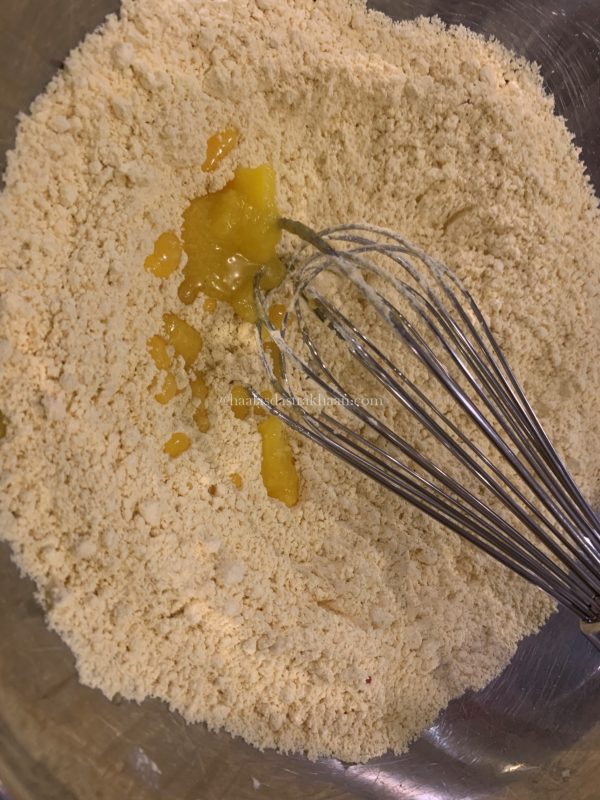
- Mix the Besan, food color, baking soda, and ghee. Mix well.
- Add water a little at a time making sure there are no lumps.
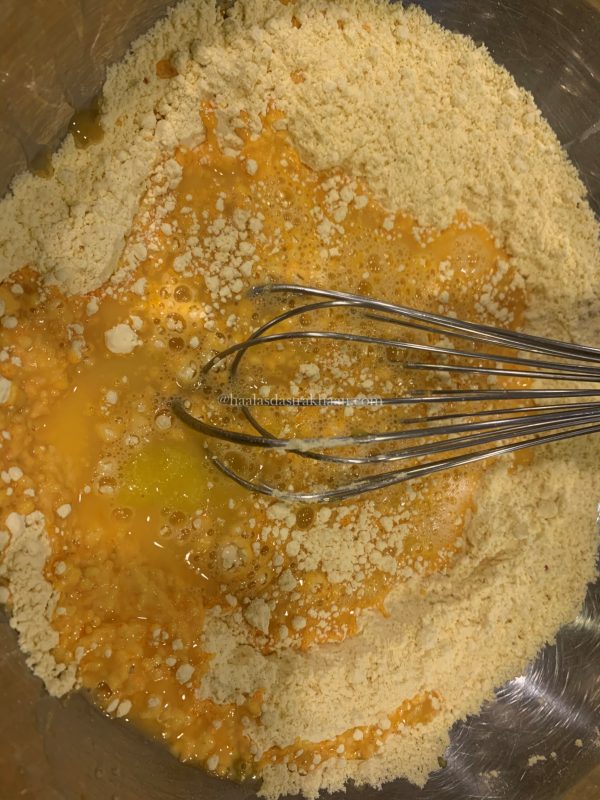
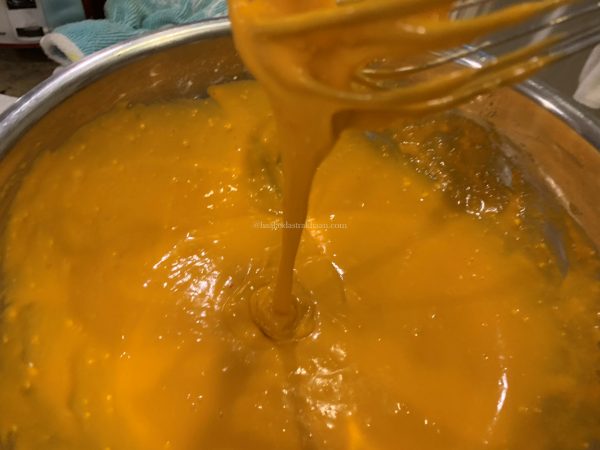
- The batter should be smooth and lump-free. Don't make it runny.
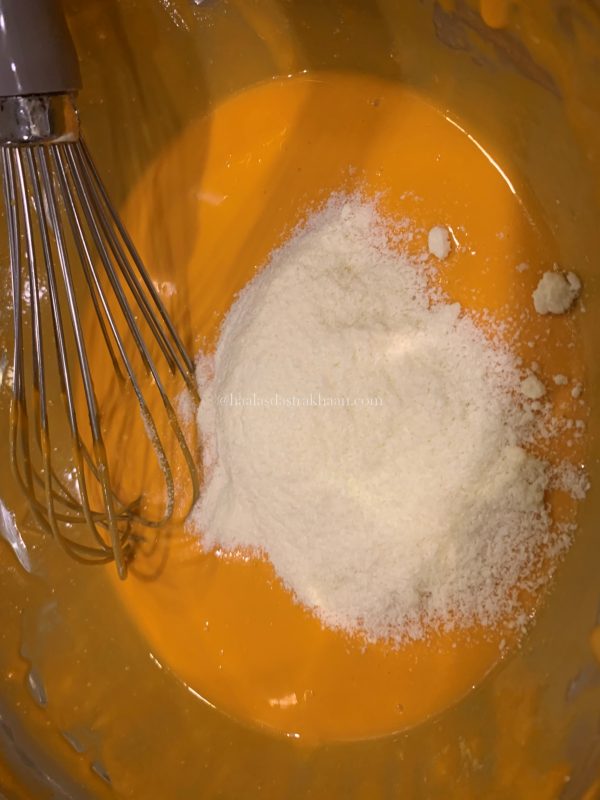
- Add the Milk powder and you can also add a little more water if you feel the batter looks too dry.
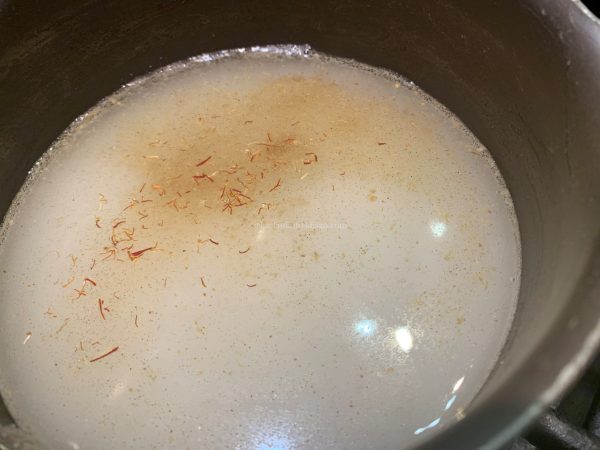
- Mix sugar with water. Heat and cook till the sugar dissolve completely. Add the saffron strands dissolved in screwpine water and cardamom powder.
- Heat the oil in a kadhai/pan. Take the ladle and spread the batter and let the batter fall into the oil-like drops.
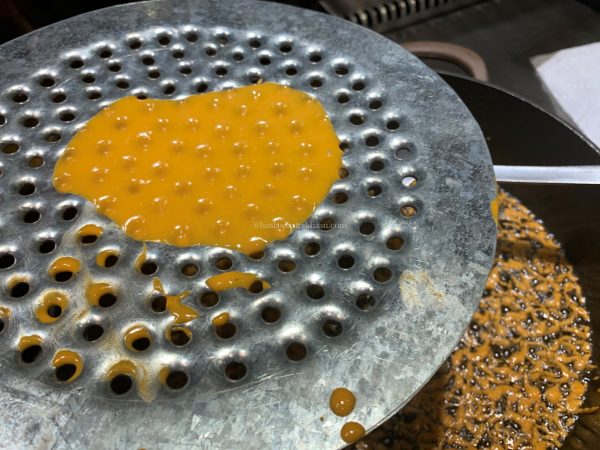
- Fry till they look crunchy.
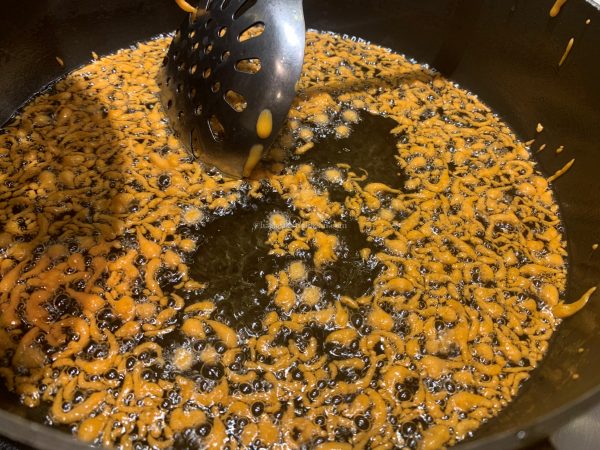
- Take them out on a Kitchen towel to take away excess oil.
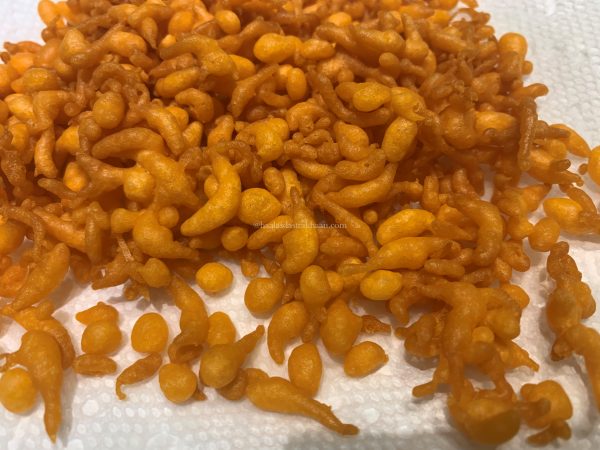
- The chashni or sugar syrup should be slightly warm and not too hot.
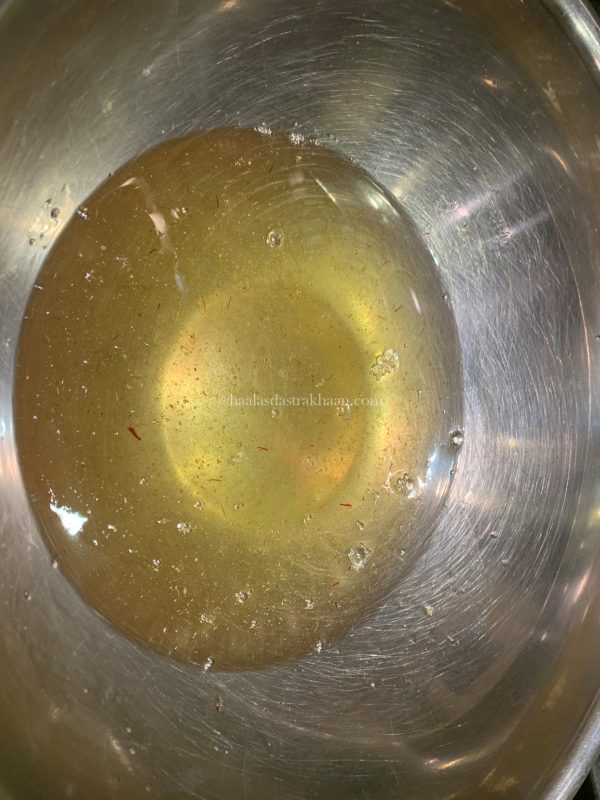
- Add the crunchy Boondi to the syrup.
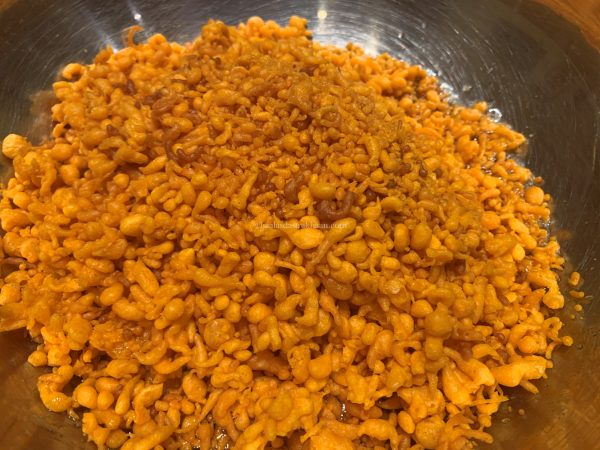
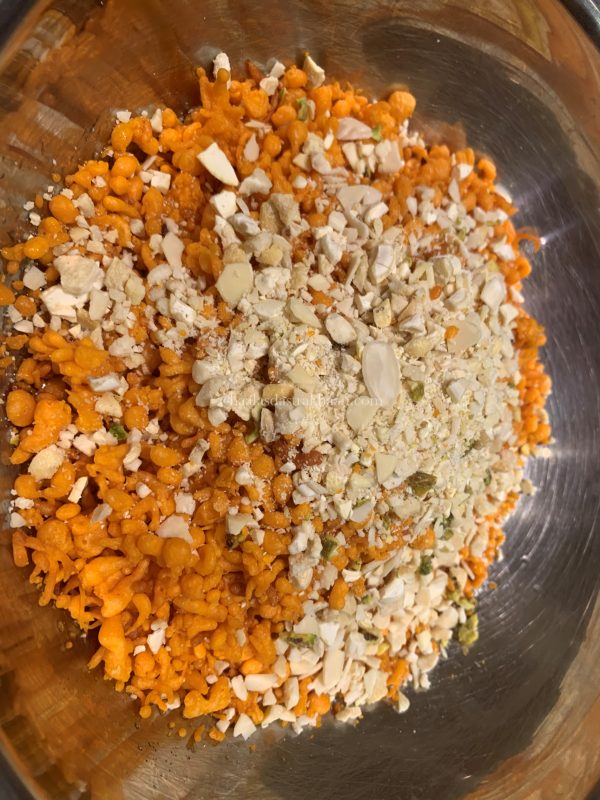
- Add the almonds and pistachios to the boondi.
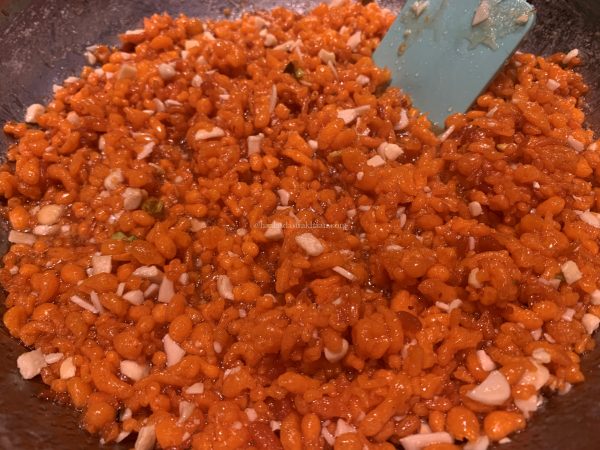
- Mix everything well.
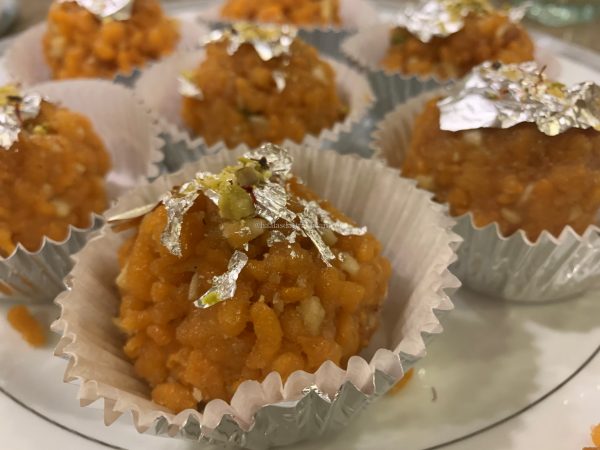
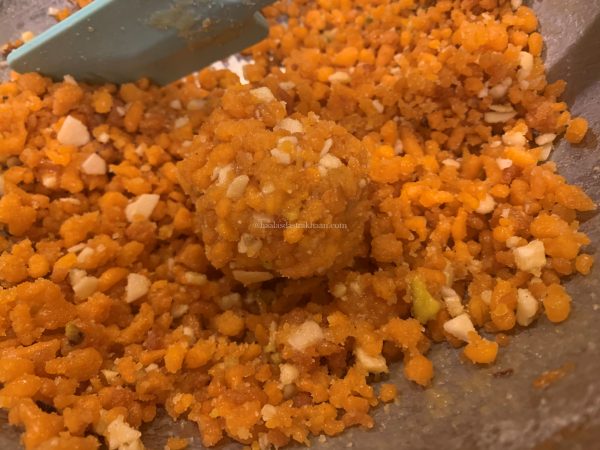
- Shape the boondis as Laddus
- Decorate with silver leaf and serve. Keep them in airtight container.