A Dish My Father Loved
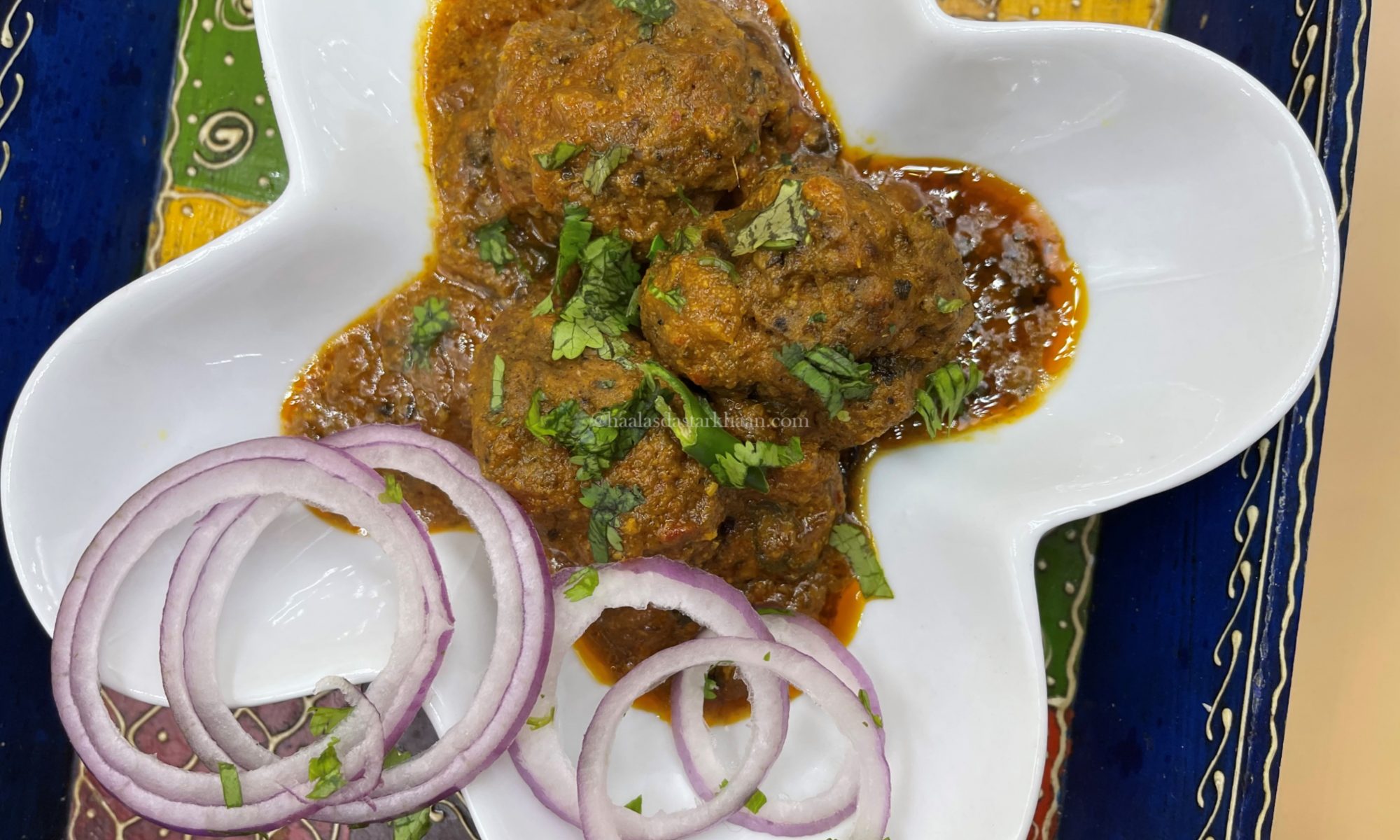
Mutton Koftas—minced meatballs simmered in a rich, spicy gravy—were one of the special dishes my mother made when I was growing up. I remember the aroma filling our home, the warmth of the kitchen, and my father savoring every bite with quiet joy.
For me, it was a dish I liked, but never craved. It wasn’t something I’d ask for on my birthday or during celebrations. But for my father, it was comfort food. If you asked him to name a favorite, I’m certain Kofta Curry would be near the top of his list.
Even though it wasn’t my personal favorite, it became special because of him. It’s funny how food does that—how a recipe becomes a memory, a connection, a tribute.
Koftas: A Journey Through Empires and Kitchens
Koftas—minced meatballs seasoned with spices—have traveled far and wide, leaving their mark on countless cuisines. Though their exact origin is hard to pin down, the word kofta comes from the Persian kufta, meaning “to pound” or “to grind”—a nod to the preparation of the meat2.
While early Arab cookbooks featured lamb koftas glazed with saffron and egg yolk, it was the Mughal Empire that brought this dish to the Indian subcontinent, transforming it into a rich, spiced curry. In India and Pakistan, koftas evolved into a variety of gravies—bland, spicy, creamy—each tailored to regional tastes and ingredients.
Today, koftas are beloved across the Middle East, Balkans, Central Asia, and North Africa. From Turkish köfte to Greek keftedes, Moroccan lamb koftas to Indian nargisi kofta, each version tells a story of cultural exchange and culinary creativity.
Whether grilled, baked, or simmered in gravy, koftas remain a dish of comfort and celebration. And in your kitchen, Haala, they carry the added weight of memory—your father’s joy, your mother’s touch, and your own evolving relationship with the dish.
🍖 Bangalore Kofte: A Recipe Rooted in Love and Reinvention
After we got married, Mr. Parveez introduced me to Bangalore Kofte—a dish made with minced mutton, seasoned with spices, gently steamed, and then fried to perfection. These koftas are often served on their own, or paired with a warm parantha or roti. In our family, they’re a cherished part of Eid-ul-Adha celebrations, loved by everyone at the table.
Learning to make them was more than just mastering a recipe—it was a moment of connection, a passing down of flavor and tradition. But as my culinary journey unfolded, and I began exploring new dishes and revisiting familiar ones, I found myself drawn to reinterpret the flavors I grew up with.
So I returned to the kofta, this time through the lens of Kofta Curry—infusing it with the spices, textures, and stories I’ve gathered along the way. It’s a dish that reflects not just where I come from, but how far I’ve come.
And now, I’m sharing it with you. Because every recipe carries a memory, and every bite is a step in the journey.
Preparing the Mutton Koftas
Start with minced mutton and grind it further to achieve a finer texture. This helps the meatballs hold together better and gives them a smoother finish.
To this, add a flavorful paste made by blending fried onions, ginger-garlic, fresh coriander leaves, and a slice of bread. A spoonful of roasted chickpea flour goes in as well—both the bread and the flour help absorb excess moisture, making the mixture easier to shape.
Mix in your spices and ensure everything is well combined. Cover the mixture and refrigerate for about 20 minutes. This resting time allows the flavors to meld and makes shaping the koftas much easier.
The koftas shouldn’t be too spicy, or else the spicy koftas served with the spicy gravy become hard to handle. This dish might look difficult, and you might find the steps a little tedious to follow if you are a beginner, but if you follow the steps correctly, you can make this dish easily.
Cook’s Note
When preparing koftas, balance is key. If the meatballs are too spicy and the gravy is equally bold, the dish can become overwhelming. A gentle hand with the spices allows the flavors to complement each other rather than compete.
This recipe may look a bit intricate at first glance, especially if you’re new to cooking. The steps might seem tedious—but trust the process. If you follow each stage with care, you’ll find that it’s absolutely achievable. The result is a dish that’s rich, comforting, and deeply satisfying.
Good food isn’t about shortcuts—it’s about patience, intention, and love. And this dish is worth every bit of it.