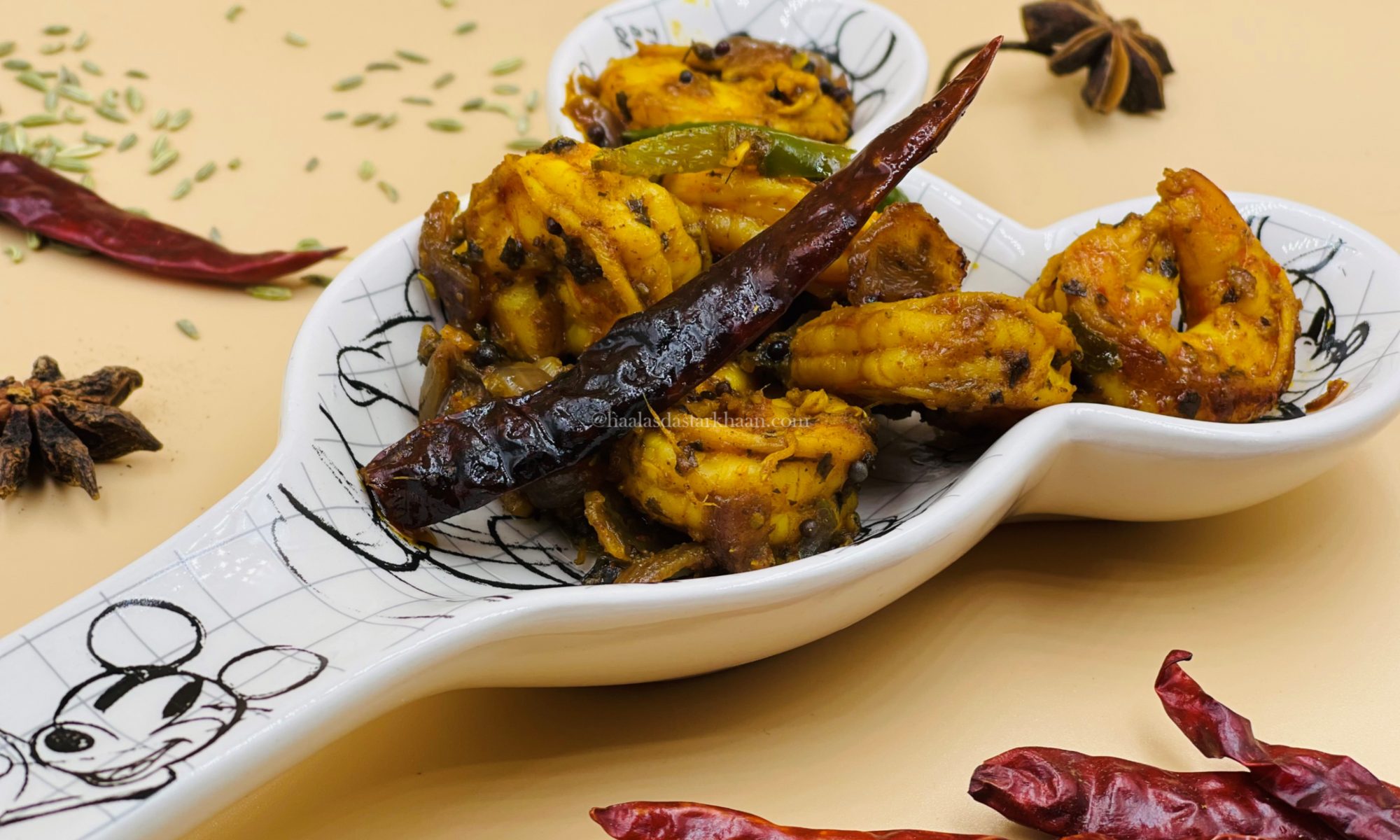
Andhra Shrimp Dry

Shrimp seem to be everyone’s favorite. But my first bite was a disaster. I was eight, visiting family friends in Mumbai—Bombay, back then. They served shrimp curry for dinner. The flavor was mild, almost timid, but I hated it instantly. One bite in, and I was running to spit it out. Right there, I swore I’d never touch shrimp again.

That promise held for years. Growing up in Jodhpur, seafood was never really on the table. Fresh catch was a rarity, and shrimp didn’t exist in my world at all.

It wasn’t until my early twenties, back in Mumbai with my parents, that everything changed. My father took me to a small restaurant in Juhu and ordered tandoori shrimp. Reluctantly, I tried it. Oh my God—what a revelation. Smoky, spicy, charred just right. In a single bite, all those bitter childhood memories were erased. I was in love. To this day, I thank my late father for insisting I give shrimp a second chance.

Years later, after I married and moved to the U.S., shrimp became more than a dish—it became a staple. As Muslims, our meals were halal or seafood, and shrimp quickly took center stage. I started experimenting in my own kitchen: pasta tossed with shrimp, sandwiches, wraps, rolls. Before long, I was simmering shrimp curries and skewering shrimp kebabs. Each new recipe felt like another chapter in a love story that had once begun with such a rocky start.

One of my favorite ways to cook shrimp now is Andhra style. It’s spicy, crispy, and absolutely delicious. I go heavy on curry leaves, mustard seeds, and dried red chilies, layering in all those bold flavors. The result is a dish that’s simple to make but bursting with character. It pairs beautifully with daal chawal—comfort food elevated by a punch of heat and crunch.

Garlic Lemon Butter Tilapia with Shrimp

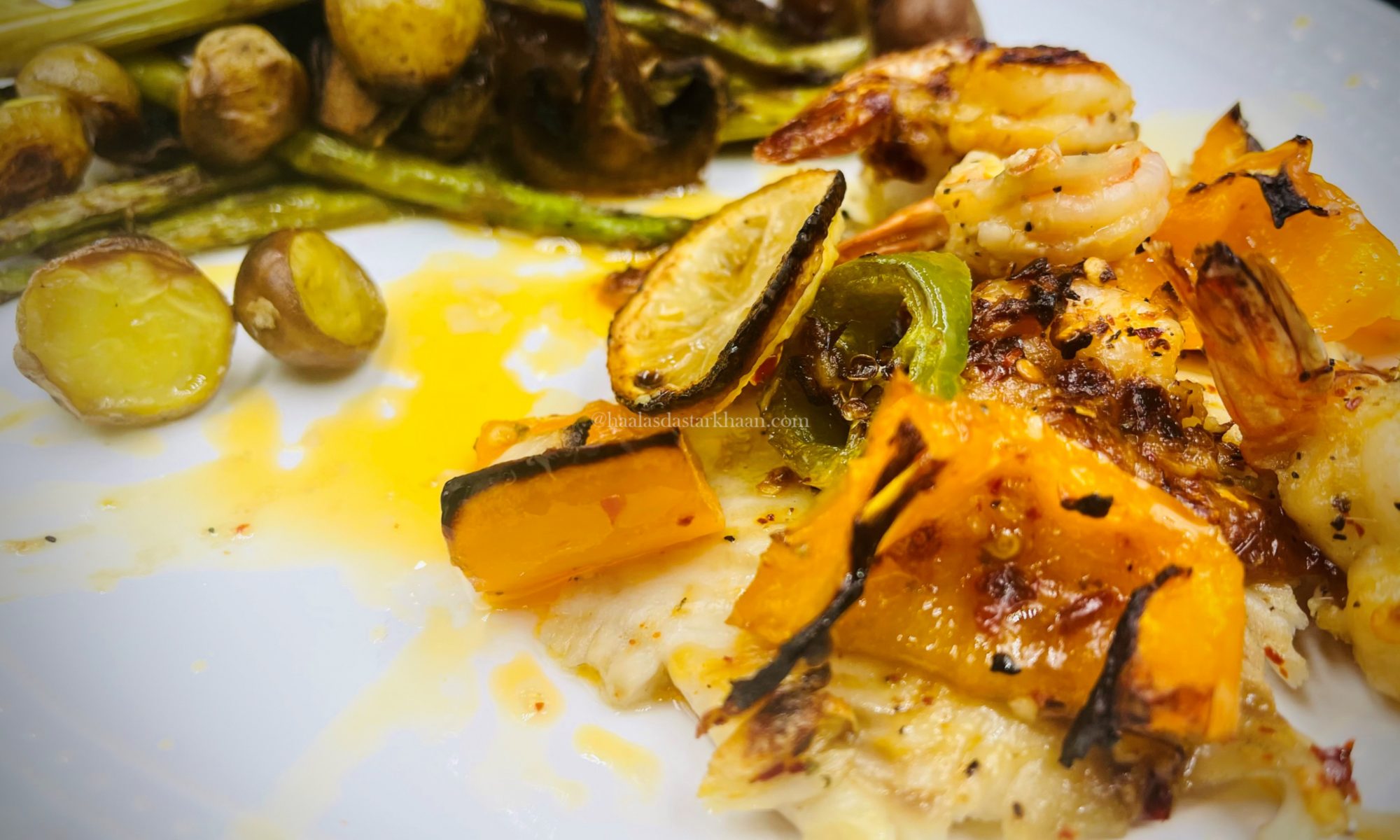
Seafood has amazing recipes. I usually don’t enjoy baked fish, as I feel baking tends to make the fish dry but this recipe for baked fish is just outstanding. This recipe doesn’t require any mayonnaise, or cheese, or any kind of flour or bread crumbs. All you need is butter, lemon, garlic, a few spices, and salt. This Fish by itself is also Keto friendly. I paired the fish with baby potatoes, asparagus, and mushrooms. I also cooked the Fish and shrimp with bell pepper and jalapenos. But the choice of vegetables is always a personal choice. You can always substitute the vegetables you like. This dish is super simple, low carb, gluten-free, and amazingly delicious.

What kind of Tilapia is good?

If you have a store that sells fresh and clan fish, there can be nothing better. That kind of seafood is the best in quality. But mostly, the fish that I buy, especially Tilapia is frozen which is good too. There is always a possibility that any fish you buy has been frozen at some point in order to keep it fresh for transport.

Frozen fish sometimes are better than the Fish that appear fresh but you don’t see them live. Frozen fish is said to be freezer right after the catch, therefore feel absolutely sure to use the fish that is frozen since it is just as good to use as a live fish, and in most cases better than fish from the counter.

Tilapia is generally best and healthy if it’s wild-caught which is the case with most seafood. Farm-raised fish is also considered very healthy. Tilapia is a great source of protein. Though if you are buying farm-raised fish, make sure you check the reputation of the farm and the kind of feed they use for their fish.

I used Shrimp for some extra flavor which I feel goes fabulously with Tilapia. Baked or grilled veggies are a great source of fiber and fill you up too. This dish is great for kids too. The dish is filling, healthy, and low in carbs. Enjoy!!!

Honey Lemon Chicken Wings

Chicken wings are an undeniable favorite for many people, yet interestingly, I had never tried them until after moving to the United States. Back home in India, chicken wings rarely featured in our everyday cuisine, particularly in the form of kebabs or appetizers.

In the beginning, chicken wings were something we only enjoyed when dining out. It was not that I had never considered making them at home—rather, while both Mr. Parveez and I liked them, we were not particularly obsessed with them. There was, however, a small halal restaurant nearby that served the most delicious green masala chicken wings. Every once in a while, we would stop by just to enjoy that flavorful treat.

A few years later, the restaurant closed its doors—and with it disappeared those memorable wings we had grown so fond of.

Yet, even then, I still wasn’t quite inspired to start making chicken wings at home. A few months later, however, we discovered another excellent halal gyro spot that served hot, saucy chicken wings. For a while, they were absolutely fantastic and quickly became a favorite. Over time, though, something seemed to change. The flavors gradually faded, and the wings no longer tasted the way they once had. I often wondered if the management had changed and a new chef had stepped in—someone who simply couldn’t recreate the original magic.

That was the moment it truly occurred to me: if I wanted to continue enjoying good chicken wings, I would probably have to start making them myself. The very first wings I prepared at home were the classic Buffalo style. The kids loved them, and before long they became a regular appetizer for brunches and playdates.

After making them for several years—and watching my little fan club grow—I began experimenting with different flavors and marinades. That experimentation led to my Green Chicken Wings, followed by Haala’s Special Hot Saucy Wings, and eventually, this version.

The inspiration behind this recipe was simple: to create a balance between sweetness and heat. It is ideal for those who enjoy a gentle kick of spice without overwhelming heat—a comforting middle ground that is flavorful, satisfying, and always a crowd-pleaser.

Why Wings?

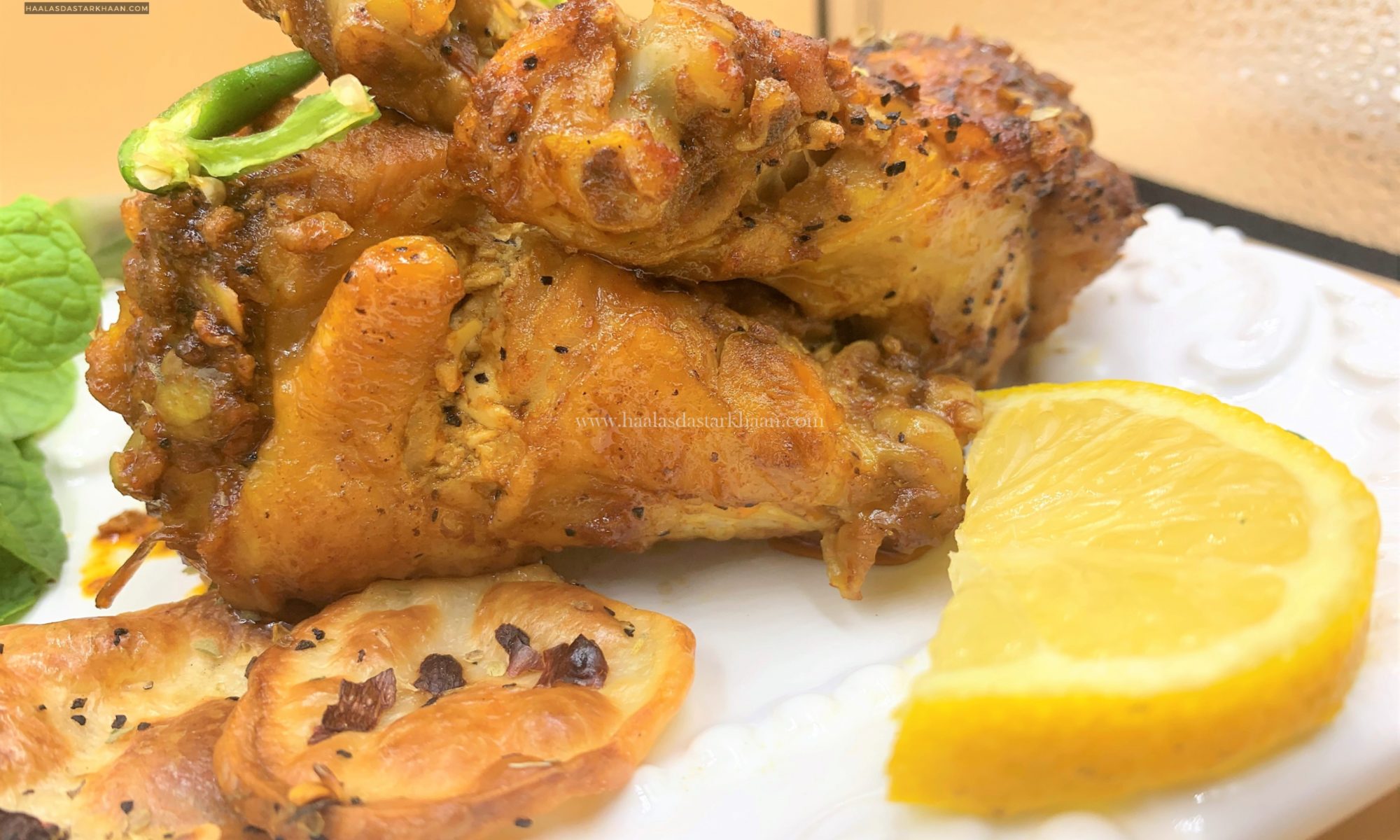
Chicken wings are best cooked with the skin on. When pan-fried or deep-fried, the skin turns beautifully crisp, giving that perfect crunch. And honestly, any saucy flavor tastes even better when paired with that crispy texture—it’s what makes wings so irresistible.

Why use honey and not sugar?

Honey blends much better with spices than sugar. Sugar often tends to crystallize or make the sauce watery, while honey gives it body and balance. It adds just the right amount of sweetness without overpowering the flavors—making it the perfect choice for sauces and glazes.

These wings strike the perfect balance—lightly sweet, lightly spicy, and absolutely irresistible. The flavors play a little game of hide and seek on your taste buds, keeping every bite exciting. Sweet and spicy together are already a winning combo, but when paired with crispy chicken wings, the result goes beyond just delicious. If you love chicken wings, this is one recipe you’ll definitely want to try.

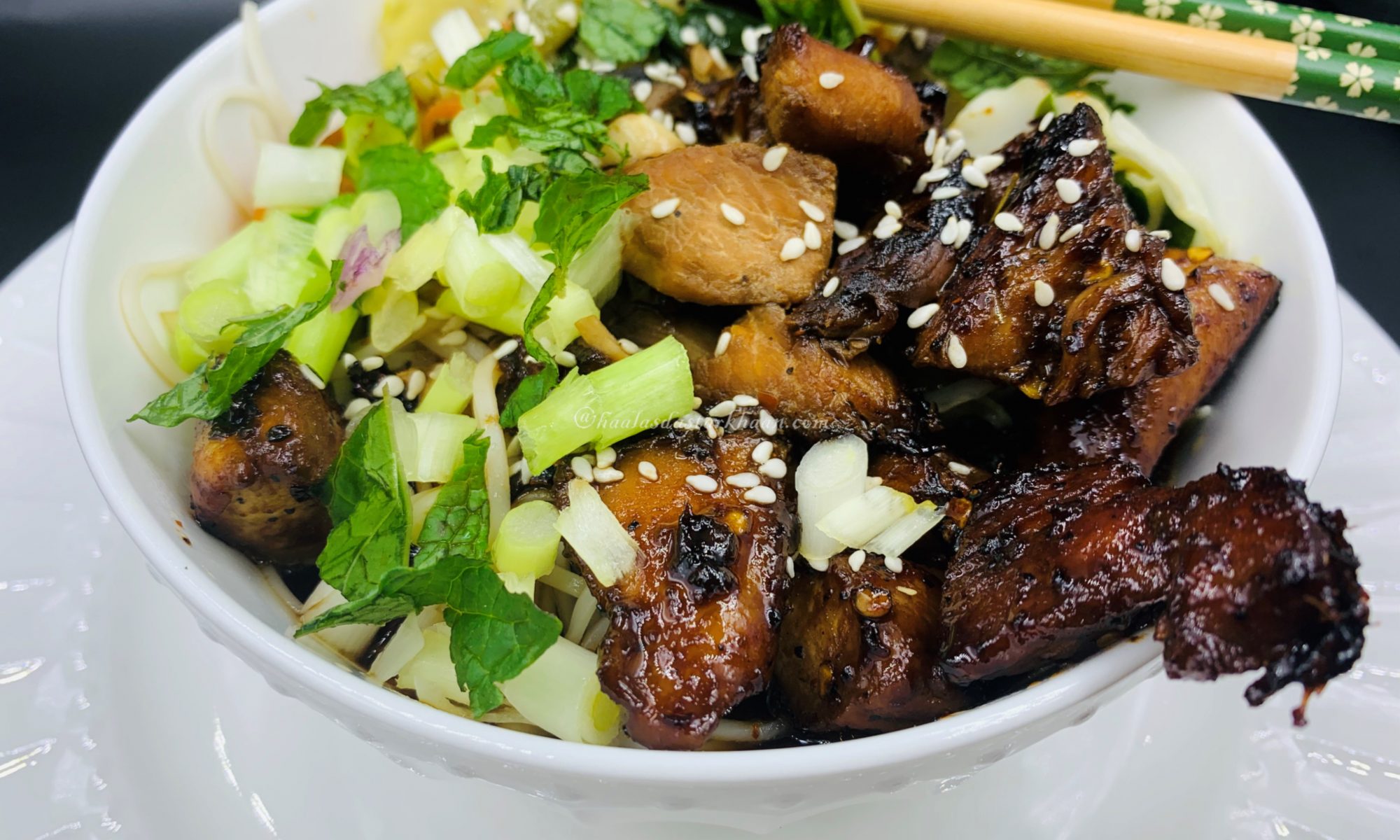
Korean Chicken Bites

Asian cuisine is wonderfully diverse—Chinese, Japanese, Indonesian, Thai, Malaysian, and Korean—each offering its own distinctive flavors while still sharing certain ingredients and cooking techniques. Over the years, we have enjoyed sampling dishes from many of these cuisines, though often limited to seafood. Being Muslim, staying within the boundaries of halal food can sometimes be challenging, particularly when so many tempting dishes traditionally include non-halal meats.

While I do have friends who are comfortable eating non-halal chicken or meat, for us that is simply not an option. I firmly believe that when there are ways and choices available to remain true to our beliefs, it is important to honor them. Fortunately, that has never stopped us from exploring the flavors we love. The beauty of having curious taste buds—and a genuine passion for cooking—is that you can always adapt a dish and make it your own.

This recipe was inspired by a dish I once tried with scallops and instantly fell in love with. Naturally, I made a few adjustments along the way. In its original form, the scallops were neither marinated nor batter-fried, which meant they relied almost entirely on the sauce for flavor. While the sauce itself was pleasant—mild with a gentle kick—I felt the dish could benefit from a little more depth and texture.

When I decided to recreate it using chicken, I introduced a few changes to build those extra layers of flavor. The chicken was first marinated and lightly battered to add both seasoning and a satisfying crunch. Unlike seafood, chicken tends to absorb whatever flavors you give it, so even a simple marinade with spices, seasoning, or just a touch of salt can make a remarkable difference. Whether you are adding chicken to noodles or tossing it in a sauce, that first layer of flavor is something you should never overlook.

For the chicken, begin by marinating it in a mixture of buttermilk, chili flakes, onion powder, garlic powder, black pepper, white pepper, oregano, and salt. Allow it to rest for at least an hour—longer if possible—so the flavors have time to fully penetrate the meat.

Once marinated, coat the chicken pieces in a mixture of flour, cornstarch, and a little salt, then fry them until they turn golden and crisp. This step creates a light, crunchy exterior that pairs beautifully with the sauce.

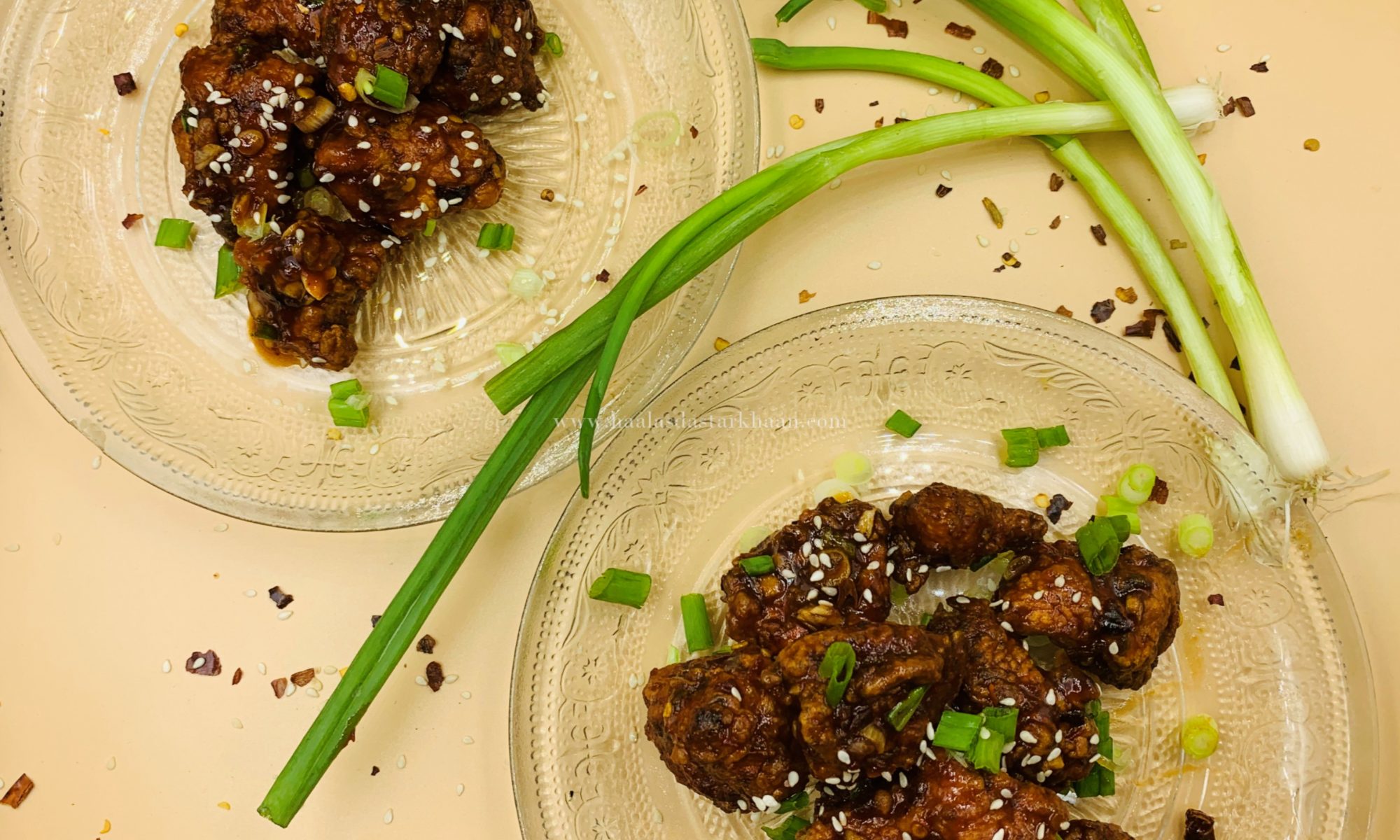
The sauce is what truly brings the dish together. It is prepared with crushed garlic and ginger, soy sauce, sesame oil, gochujang—a sweet and mildly spicy Korean chili paste readily available in most Asian markets—along with honey, brown sugar, vegetable oil, and red chili flakes. Allow the sauce to cook until it thickens slightly, then toss in the fried chicken pieces, coating them thoroughly so every bite is infused with flavor.

For garnish, scallions and sesame seeds work beautifully. While scallions can certainly be added directly to the sauce, I prefer sprinkling them on top just before serving, allowing them to remain crisp and provide a pleasant contrast in texture.

Substitute for Buttermilk?

To make buttermilk at home, take the same quantity of milk as the buttermilk required and add 1 tablespoon of lemon juice to it. Mix well and let it rest for a few minutes before adding the chicken.

The flavor of this chicken is a perfect balance of sweet and spicy, making it an excellent choice for all taste buds—kids and adults alike—unless someone prefers completely mild food. I find this dish a great hit for playdates, family gatherings, or small get-together parties.

Cooking in advance

You can fry the chicken bites and keep them in the oven. The oven needs to be preheated. Keep it on warm or at 200°F. Anything above it would overcook the chicken, making it chewy or burning it.

Thai Chicken Curry

Malaysian and Thai cuisines have always been favorites in our home, though finding halal options can sometimes be a challenge. It was actually Mr. Parveez who first introduced me to both. What I appreciate most about these cuisines is how familiar their flavors feel. There is a comforting connection between Indian food and many Southeast Asian dishes, where similar ingredients create layers of warmth and depth. Thai cuisine, for instance, often relies on ingredients such as peanuts, red chilies, and coconut milk or coconut cream, producing a beautiful balance of spice, sweetness, and richness—flavors that feel both comforting and intriguingly different at the same time.

Since we only consume seafood, we often miss out on experiencing certain dishes from various cuisines. Preparing them at home, therefore, becomes our way of exploring those flavors—and in many ways, it turns out to be a blessing in disguise. Not only does it allow us to experiment and learn new cooking styles, but it also offers a healthier approach to enjoying these dishes. Cooking at home means choosing fresh ingredients, controlling exactly what goes into the food, and serving it immediately. That freshness not only enhances the flavor but also adds genuine nutritional value, making every bite feel lighter, brighter, and more satisfying.

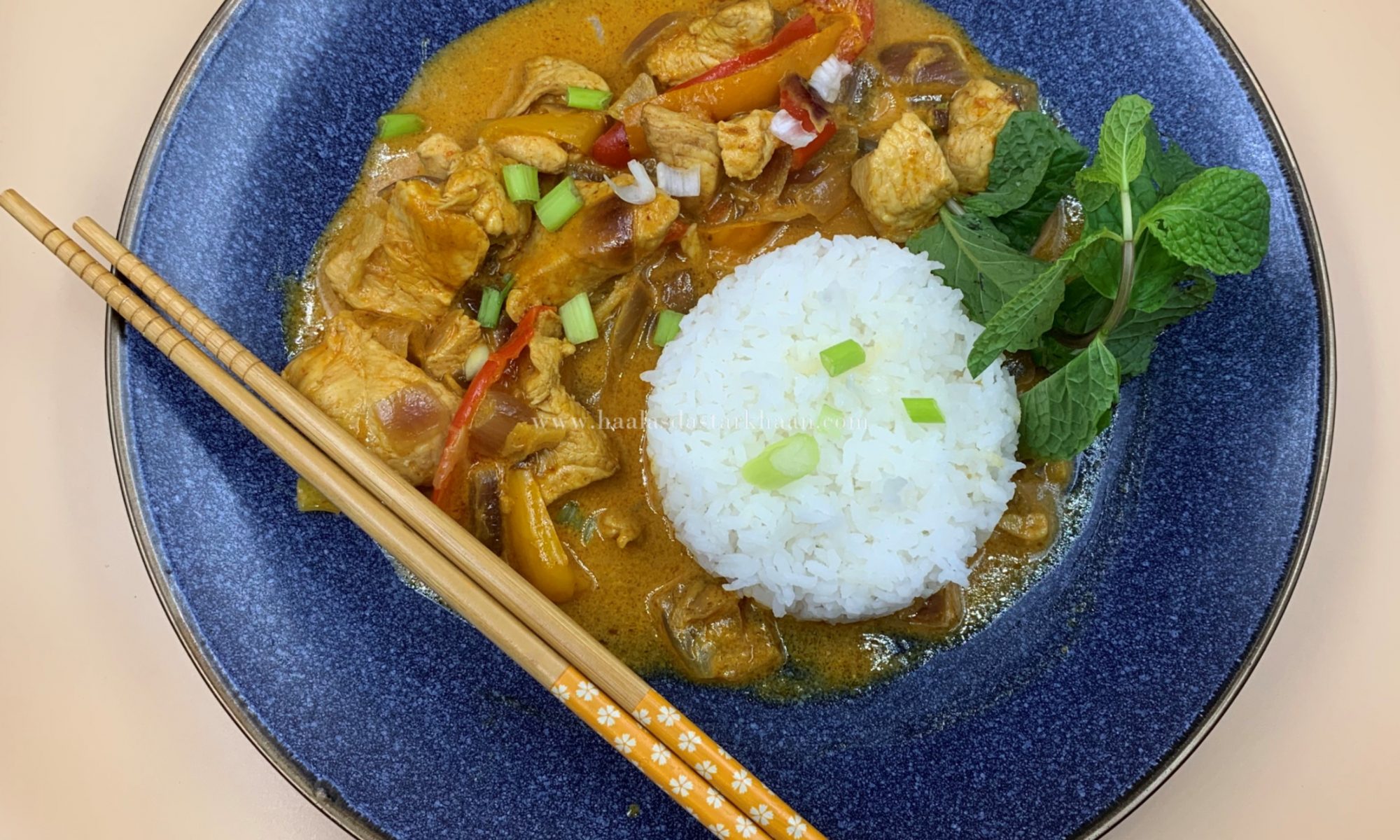
This particular curry is wonderfully simple to prepare. For convenience, I used a store-bought Thai red curry paste. Since it was my first time attempting this dish, I wanted to stay close to the authentic flavor profile rather than risk altering the balance of spices too much. For the vegetables, I included bell peppers, onions, scallions, and garlic, though the choice is quite flexible. Baby corn, snap peas, or other vegetables can easily be added. That is one of the joys of Thai curries—their versatility allows each cook to create a slightly different combination of flavors and textures with every preparation

Serve it with some boiled Rice and enjoy it warm.

Tava Tangdi Chicken Kebab

My experiments with kebabs always have to be innovative, unique, and, of course, absolutely delicious. My boys love trying different styles of kebabs and are always excited to see what new version I come up with next. I think that’s what keeps me inspired—to keep experimenting, mixing flavors, and creating something different each time.

After making so many different styles of chicken kebabs, it does get challenging to come up with something new using the same set of spices. It’s amazing how the same ingredients can create entirely different flavors—just by changing the order in which you add them or the stage at which they cook. That’s the real beauty of cooking: learning how timing and technique can transform familiar spices into something completely fresh.

These kebabs hardly need any marinating time, which makes them perfect for those moments when you want to serve something that’s both easy and impressive. Whether you decide on the menu at the last minute or find yourself hosting uninvited guests who show up expecting a feast, these kebabs will save the day. They’re quick to prepare, full of flavor, and always a hit at the table.

These kebabs can easily be made without an oven, and the ingredients are simple—nothing fancy or hard to find. I’ve used chicken legs for this version and called them Tangdi Kebabs, but you can just as easily use other cuts or even boneless chicken.

If you’re using boneless meat, go for thigh or leg pieces rather than breast. Chicken breast tends to be thicker and can turn chewy with this recipe, especially since the marination time is short and the spice blend is simple. Thigh meat, on the other hand, stays tender and absorbs the flavors beautifully, giving you juicier and more flavorful kebabs.

This recipe is perfect for beginners and bachelors—simple to make yet impressive enough to wow a crowd. Even if you’re new to cooking, you’ll find it easy to follow and full of flavor. Give it a try and let me know how it turns out. Enjoy!

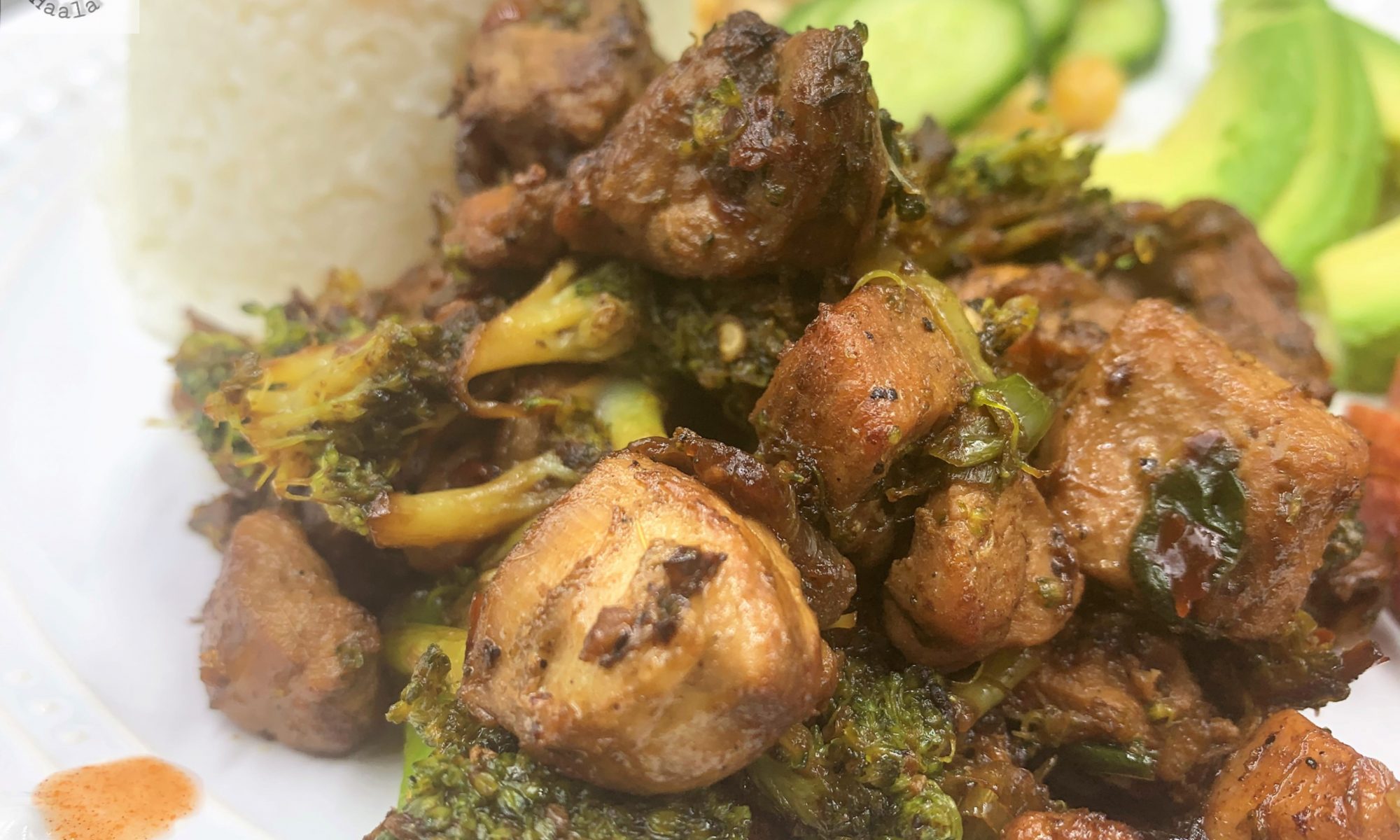
Chicken Broccoli and Rice

With all the different kinds of foods that we consume, at times you just feel that your tummy needs a break. You feel you need more veggies, less oil, fewer carbs, in all just a healthy meal. But, the problem that people like me face is that we also need something that tastes scrumptious and good along with all the health benefits.

Specially, if you have children as demanding as mine, you basically fight a battle. When the demand is to make veggies look more appealing and to make their protein go leaner without them noticing. That’s when dishes like this are invented.

Eating Green or eating more greens is always good and if you manage to make recipes that makes your kids consume more greens. This Chicken cooked with Broccoli is one such recipe. I serve it with boiled white Rice, but you can always serve it with Brown Rice, Quinoa or even Barley.

I like to mix and match veggies and I feel Broccoli, onions go really well with Chicken. Add little Olive oil to a pan, followed by chopped Garlic. Once the garlic changes color, add the boneless pieces of Chicken followed by chopped onions. Further season with Red chili flakes, Black pepper powder, Garlic powder, Onion powder, salt, cumin powder and paprika. Once the Chicken is cooked, add the chopped Broccoli and stir fry for 5-7 minutes and its ready to serve. Serve with cucumbers and Avocado on the side and boiled Rice. You can always choose to serve it with any other grain of your choice.

My purpose for introducing these meals on my website is to just make more people aware of the fact that eating healthy does not mean eating tasteless. You can always incorporate more vegetables in your diet with excellent flavors. I hope you enjoy this quick meal which is not only nutritious but also filling and delcious.

Chicken Ramen Noodles

This Japanese dish was made almost without any prep work. My boys watch some Japanese show which had the character in love with Ramen Noodles and the boys had been on about how delicious the dish looks. now, I have never tried Ramen Noodles only for a simple reason that we never find any Halal Japanese restaurants. And, honestly they never appealed me to try out the seafood version.

But is there any way I could have my boys think the same way. Oh! No, never. They are just out and about and want to try everything under the sky that’s religiously permissible. There are barely any restaurants that serve Halal Asian food around us and my boys are at an age where they really like trying different varieties and since, their mom can cook well and enjoys cooking different cuisines, they just trick me into trying everything they want.

So, I started looking into different recipes over the internet and with 3 hours for research. Yes, 3 hours is all I got because they just started behaving worse than me when I was pregnant with them. The more confusing part was that I didn’t even have basic ingredients. Most recipes I saw have Buk choy, Lemon grass, Broccoli but all I had was Spinach, carrots, Mushrooms, cabbage and zucchini. I could have added Onions, but I think onions have a pretty distinctively sharp taste and adding them to something that soupy. Also onions tend to get a bit too soft and the mushiness in the soup, so avoiding onions is better.

Though I am not a pro at cooking Japanese food, but I am becoming a big fan and try to make them as close to the actual food flavors as I can. A few changes here and there to make it more adaptive to our taste. This is one of the amazing ways of serving your kids more vegetables. Hope you like and enjoy it just the way we did.

Cheesy Garlic Pull Apart Bread

Who doesn’t like Garlic bread? No one I ever met said they didn’t love a good Garlic bread. Growing up I always thought that Garlic bread and Pizza go hand in hand thanks to a food joint. I could just not take the fact of people not ordering garlic bread as an appetizer before eating Pizza. And, I am sure that famous “Pizza” joint and it equally good famous competitors must have seen so many like me.

As much as my family and I love getting the Garlic bread and Pizza, at times its just not possible to order restaurant food. I mean, there are Big names and Big companies, but at times the thought of you not knowing how fresh is the food that you are consuming or is it a mix of preservatives. With all that confusion and realizing that you are blessed that you can cook, we decided we make our own. Now, it isn’t that I feel people who order take outs are doing something wrong, but I do feel that eating that kind of food every day or every other day isn’t very healthy. And then when making it at home is pretty easy.

Typically, Garlic bread is made using a French baguette, or sometimes a sourdough like ciabatta which is partially sliced downwards, allowing the condiments to soak into the loaf while keeping it in one piece. The bread is then stuffed through the cuts with oil and minced garlic before baking. Alternatively, butter and garlic powder are used, or the bread is cut lengthwise into separate slices which are individually garnished.

I made mine a little differently. I made the dough using warm milk, yeast and egg with flour, sugar and salt and added butter. Once the dough had risen, I added minced garlic, butter and scallions. Sprinkle some cheesy and bake….Serve hot and enjoy the oozing flavors.

Salmon New Orleans

Being Muslims we adhere to eating only seafood when other meat options are not halal. Salmon New Orleans was one of those dishes that we tried at one of our favorite restaurant and were immediately in love with. The only problem is only that the restaurant is pretty far away and as much as we would love to be there every weekend, we cannot.

So one beautiful Sunday, when Mr. Parveez happened to be working on a weekend project, my boys craved Salmon New Orleans and there was no other option than me trying to make it at home. Following the flavors I could remember, this is the closest I can get to the dish, but considering that variations are acceptable in every dish, this dish came out fabulous. The boys couldn’t make out any difference except for what we made tasted more fresh. I guess fresh seafood and mixing of spices at the time does always help. And, this doesn’t mean I am advocating you to stop exploring restaurants, but while sharing this recipe at the time of pandemic Covid-19, I feel this is the best option to try out your restaurant favorite foods at home, as there ain’t any other option anyways.

If I was told before I started making this meal, that it will be done, finish to start in around 30 minutes and that too using just one pan, I would not really believe it, but honestly its true. I seasoned the Salmon with salt and pepper. Make sure you don’t add too much salt, because Salmon usually absorbs salt very quickly, so you might wanna hold your hand a little.

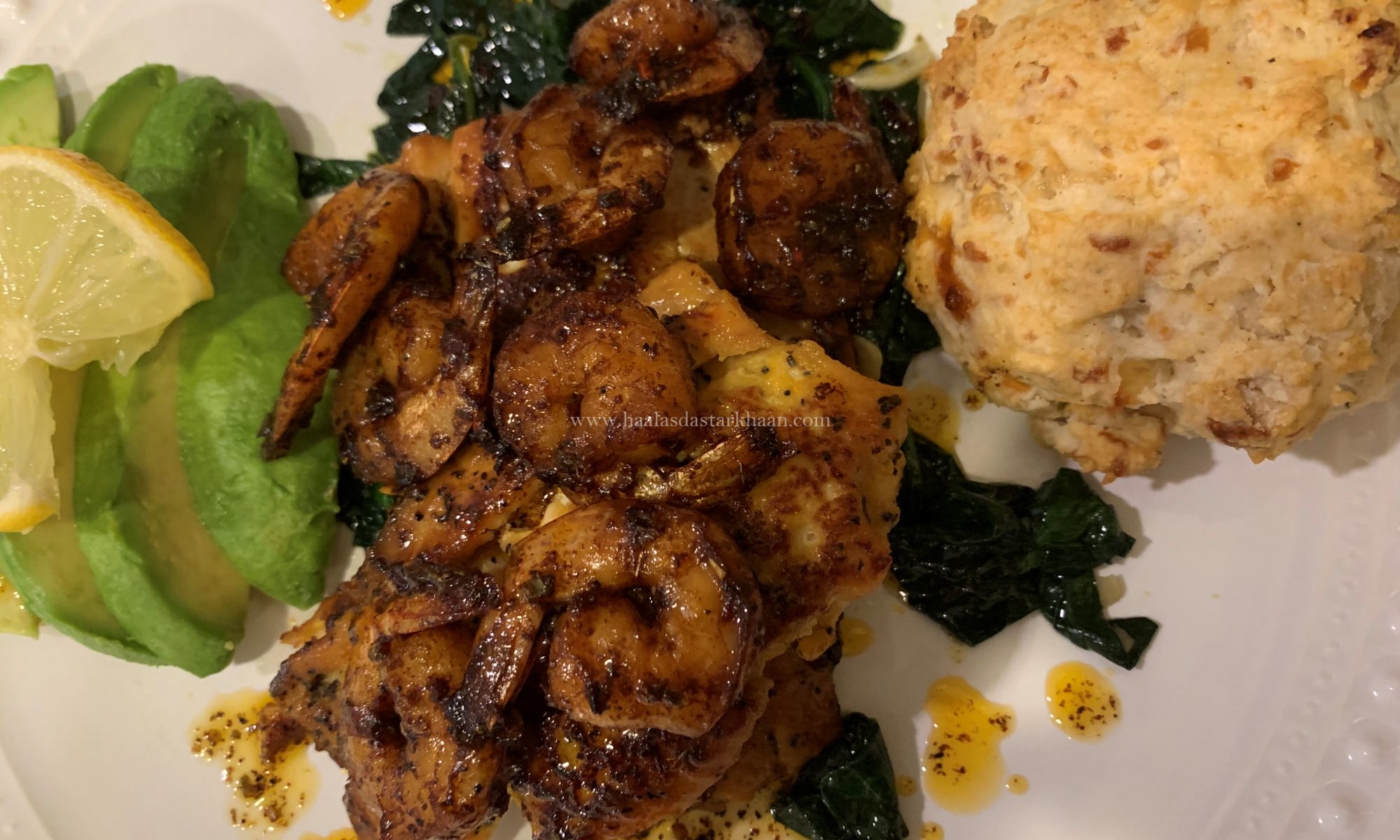
There are always different ways you serve your fish. I like mine with some veggies, preferably carrots, spinach, avocados, broccoli or asparagus. Here I used Spinach and avocados. I first cooked the spinach with garlic, saute’ed it lightly so the flavors blend in nicely without overcooking the spinach and making it lose its color. The light garlic tasting spinach adds that perfect flavor with the sweet salmon and shrimp medley. Another side of avocado slices with a little drizzle of lemon goes in so perfectly. If you like, you can always serve with a buttermilk biscuit like me or with anything you like. A little rice or mashed potato. The side should be a little mellow in taste to compliment the flavor of the fish.

Later we need to melt the butter and whisk a little honey. That’s where the slight sweetness of honey cooked with butter creates caramelization that our salmon will be cooked and come out with awesomely delicious results. I like my Salmon fillets to be thin. I feel that makes them juicer and crunchier. If you prefer them thick, then you can always take a fillet that weighs between 6-8 oz or else you can get thinner fillets that are around 3-4 oz each.

I made my cajun seasoning at home. You can always use store bought, but in case you want to make it at home, its pretty simple with ingredients easily available in your pantry. A little garlic powder, Onion powder, black pepper powder, white pepper powder, salt, red chili powder, red chili flakes and dry parsley. I believe the actual cajun spice might have a little more spice added to it, but with my caliber this is all I could guess and trust me doing this at home, the results would amaze you.

After this saute your shrimp in the same pan you used for the salmon, along with some more butter and that cajun seasoning. Top your salmon with a few shrimp and drizzle the cajun butter sauce from the pan right over the top. Garnish with a little chopped cilantro or parsley if you like and you’re done.

That’s it. So simple to make but believe me, you will be amazed with the results. This is Restaurant-quality at home with no-fuss. Isn’t that what we all desire?

Hope you try this recipe and enjoy it as much as we did.